
Municipality in financial distress paid R69.7 million for a financial management system which should have cost R34.9 million



The Merafong City Local Municipality is accused of procurement irregularities after awarding a R69.7 million tender for a system which should have cost R34.9 million.
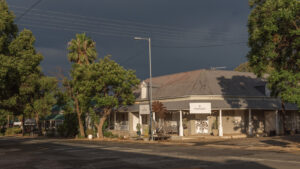
The municipality is situated in the West Rand District in Gauteng and includes Carletonville, Fochville, and Wedela.
Merafong was historically built around the West Wits goldfields and is home to some of the world’s deepest underground gold shafts.
As deep-level mining activity has scaled back over recent decades, the municipality has faced unemployment and economic contraction.
Merafong City Local Municipality also faces a financial and administrative crisis, with systemic deficits, governance failures, and decaying infrastructure.
For multiple financial years, the Auditor-General issued disclaimers or adverse opinions on Merafong’s financial statements.
Investigative reports and Auditor-General audits have highlighted numerous irregular procurement practices.
One of these is opting for inflated financial management systems and bypassing bid committee recommendations.
An investigation by the Organisation Undoing Tax Abuse (OUTA) shed more light on the inflated contract.
The municipality awarded a contract costing almost double the price recommended by its own bid evaluation committee.
The bid evaluation committee recommended a qualifying bidder at R34.9 million. However, the municipality awarded a contract worth R69.7 million.
This equates to a R34.9 million difference between the winning bid and the bid recommended by the municipality’s evaluation committee.
| Bidder | Bid price | Evaluation score |
| Company A (recommended bidder) | R34.859 million | 80.00 |
| Company B (appointed bidder) | R69.759 million | 0.09 |
R34.9 million price difference without a good reason
OUTA’s investigation found that the municipality’s Bid Evaluation Committee recommended Company A after assessing the competing bids.
Despite the difference in both price and evaluation scores, the Bid Adjudication Committee recommended Company B, which was subsequently appointed.
That means the municipality appointed a company which was 100% more expensive than the bidder recommended by the evaluation committee.
OUTA’s preliminary findings also raise concerns about whether the applicable 80/20 preference-point procurement framework was correctly applied.
The investigation found that Company B’s bid should not have proceeded through the evaluation process under the applicable framework.
While the lowest-priced bid does not automatically win a government tender, it is a good foundation for selection.
Any decision to appoint a substantially more expensive bidder must be lawful, properly motivated, and supported by the procurement records.
OUTA’s investigation has also identified two conflicting technical evaluation reports prepared by the technical evaluator Investment Holdings.
It said that one report supported the appointment of Company B, while the other recommended Company A.
The technical evaluator subsequently withdrew the report favouring Company B, stating that it had been prepared unilaterally and without the necessary authorisation.
Rudie Heyneke, an OUTA senior project manager, highlighted that this debacle occurred in a municipality that struggled to pay its creditors and provide basic services.
“A decision to award a contract costing almost R35 million more than the recommended bid demands a very clear explanation,” he said.
“Municipal officials cannot disregard evaluation recommendations without demonstrating that their decisions were lawful, justified and in the public interest.”
OUTA calls for an independent forensic investigation

OUTA has called for an independent forensic investigation into the tender, including the bid evaluation process, conflicting technical reports, and final appointment decision.
It also wants a financial reconciliation of the contract, showing what has been committed, invoiced and paid.
The organisation also wants to know whether the system is operational and what value the municipality has received from it.
It further requested scrutiny by COGTA, the Gauteng Provincial Treasury, the National Treasury, and the Auditor-General.
This scrutiny is needed to establish whether the procurement complied with the law and whether it has affected the municipality’s financial recovery.
There must be a referral of evidence of possible criminal conduct to the appropriate investigative authorities.
These authorities include the Hawks, and consideration of an SIU investigation where legally warranted.
There must also be public disclosure of the procurement records, including the reasons for departing from the Bid Evaluation Committee’s recommendation.
“Where unlawful conduct is established, those responsible must face appropriate disciplinary, civil, or criminal consequences,” said Heyneke.








 Loading ...
Anybody see the irony in the headline? Pity the financial management system could not be back-dated to identify this bogus transaction. Oh, but then somebody would have temporarily switched it off. We just can’t win.