
ANC BEE policy stops 5,000 rural schools in South Africa from getting free internet connectivity from Elon Musk’s Starlink



The South African government maintains that black people must own at least 30% of Elon Musk’s Starlink before the service will be allowed to operate in the country.
This, in turn, prevents 5,000 rural schools across South Africa from getting free internet connectivity from the service.
Last year, Starlink owner SpaceX announced an Equity Equivalent Investment Programme (EEIP) to satisfy South Africa’s empowerment laws.
This programme includes connecting 5,000 schools for free and collaborating with the National Sea Rescue Institute (NSRI) to use their service to boost maritime safety.
The NSRI welcomed Starlink’s commitment to South Africa and its expansion of operations and infrastructure investments in the country.
It said that Starlink’s service signalled a breakthrough in maritime search-and-rescue communication.
“South Africa’s coastline stretches nearly 3,000 kilometres, with extensive remote waters,” the NSRI said.
During rescues in such isolated locations, NSRI rescue crews frequently face communication issues, with lines limited or completely cut off.
“Maintaining reliable communication between vessels and rescue bases, as well as with partner rescue services, is one of the biggest challenges in maritime rescue.”
Starlink’s low-latency satellite network offers the potential to bridge this gap. The system will enable high-speed, stable broadband connectivity for NSRI vessels.
However, the poor schools and NSRI will have to wait, as the government refuses to budge on its black economic empowerment requirements.
It wants a black South African to own 30% of SpaceX’s Starlink license in the country before it can operate here.
Efforts by American diplomats to broker an agreement between Starlink and South Africa have also been ignored.
For now, 2.4 million South African schoolchildren and the NSRI must remain without reliable Internet until a rich and connected black person gets a lucrative Starlink deal.
U.S. Ambassador to South Africa comments on the situation
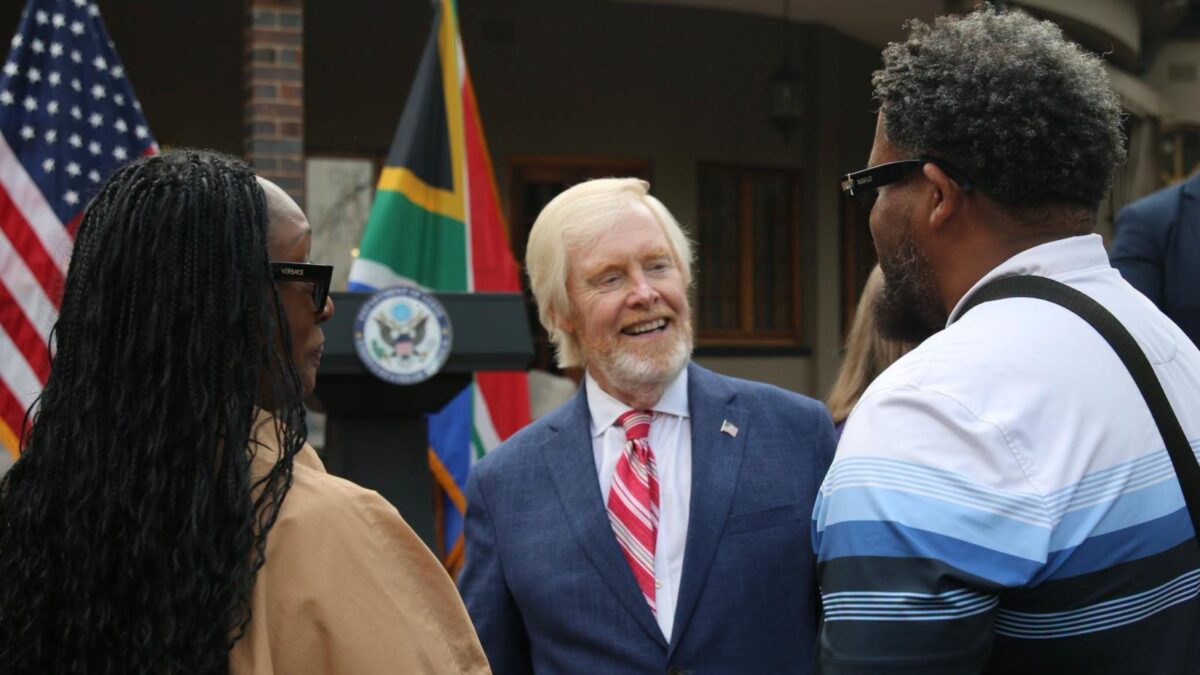
U.S. Ambassador to South Africa Leo Brent Bozell III said that SpaceX CEO Elon Musk offered to pay for high-speed Internet at schools across South Africa in perpetuity.
However, the government’s insistence that Musk give away 30% ownership of his company to a black South African sank the potential deal.
In an interview with The Common Sense, Bozell said it was preposterous to expect Musk to give away a slice of his company to operate in South Africa.
Instead, he proposed a R500 million equity-equivalent deal to connect schools and other institutions to the Internet for free.
Starlink said it supported South Africa’s objectives for racial and economic transformation.
It said that it was willing to support these objectives through EEIPs, which were recognised in the country’s ICT Sector Code.
“For more than 20 years, EEIPs have enabled companies such as Microsoft, IBM, and AWS to make substantial empowerment investments,” Starlink said.
“However, the Independent Communications Authority of South Africa (ICASA) licensing regulations are anomalous and do not recognise EEIPs.”
Starlink said that it shared the plan with government leaders. However, they would not budge on the strict BEE ownership requirements.
“Musk offered a great deal, but he refused to give away a part of his company. The government said that it wants 30%,” Bozell said.
This means that South Africa, which can benefit tremendously from Starlink, is one of the only African countries without the service.
AfriForum weighs in on Starlink debacle
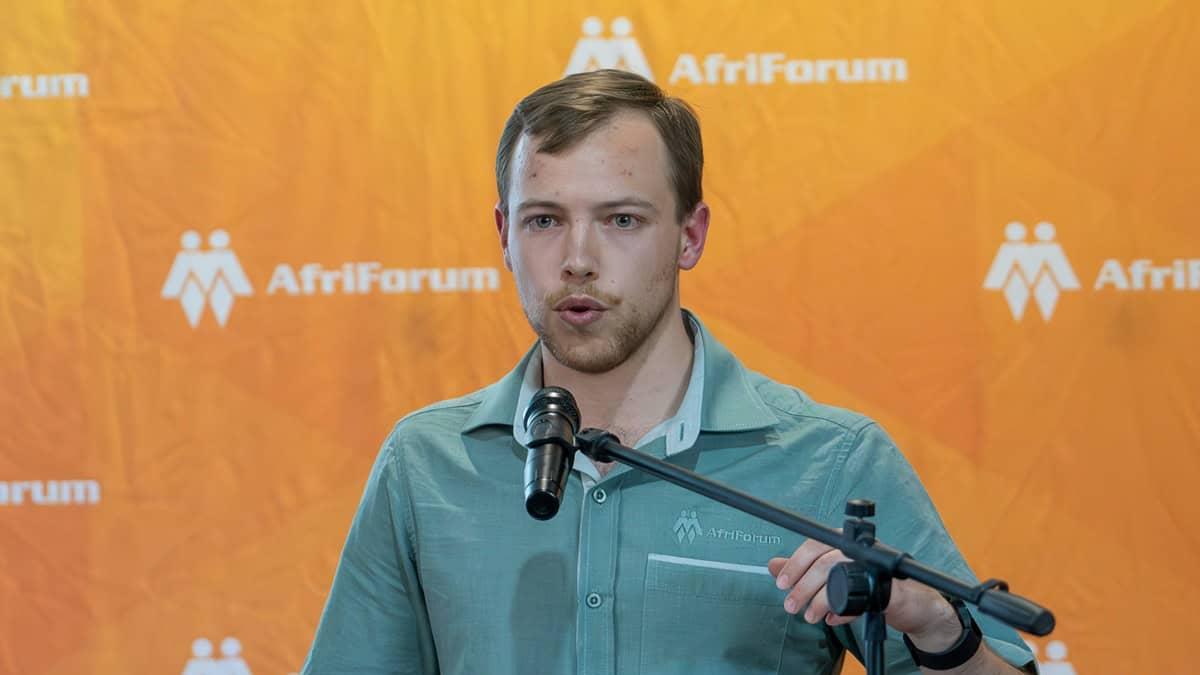
AfriForum urged the South African government to set aside its obsession with race and prioritise the interests of schoolchildren.
“The government should accept SpaceX’s offer to provide free internet connectivity to 5,000 rural schools in the country,” said AfriForum spokesperson Louis Boshoff.
Boshoff said the ANC-led government is so obsessed with race that it is willing to make decisions to the detriment of the country’s residents.
“Providing free internet access to rural schools would benefit predominantly poor, black children,” he said.
“In contrast, a 30% black ownership stake in Starlink would benefit only a small group of businesspeople.”
“It is therefore clear that the government prioritises the interests of the elite over those of the poorest segments of society.”
AfriForum warned that such ideologically driven decisions jeopardise the continuation of tariff-free trade with the United States.
The civil rights organisation further argued that granting Starlink the necessary licence should be considered part of the solution to the diplomatic crisis with the US.
“The denial of access to Starlink is one element of the current diplomatic crisis with the United States,” Boshoff said.
“The US government’s proposals offer mutual benefits for both South Africa and the US. Yet, the ANC rejects them purely on ideological grounds.”






 Loading ...
So let’s apply logic here. A man builds, from scratch, a business. He invests, takes risks, and sacrifices his time to build this business. Upon expanding this business globally, where no other country, besides South Africa, has asked this man to give away, for free, 30% of his business, to a brown person. Not because said brown person invested, sacrificed or worked for it, just because he/she is brown, no other reason. Only in South Africa can such absurdity prevail.