
South Africa’s problems started with the advent of democracy in 1994 – Herman Mashaba


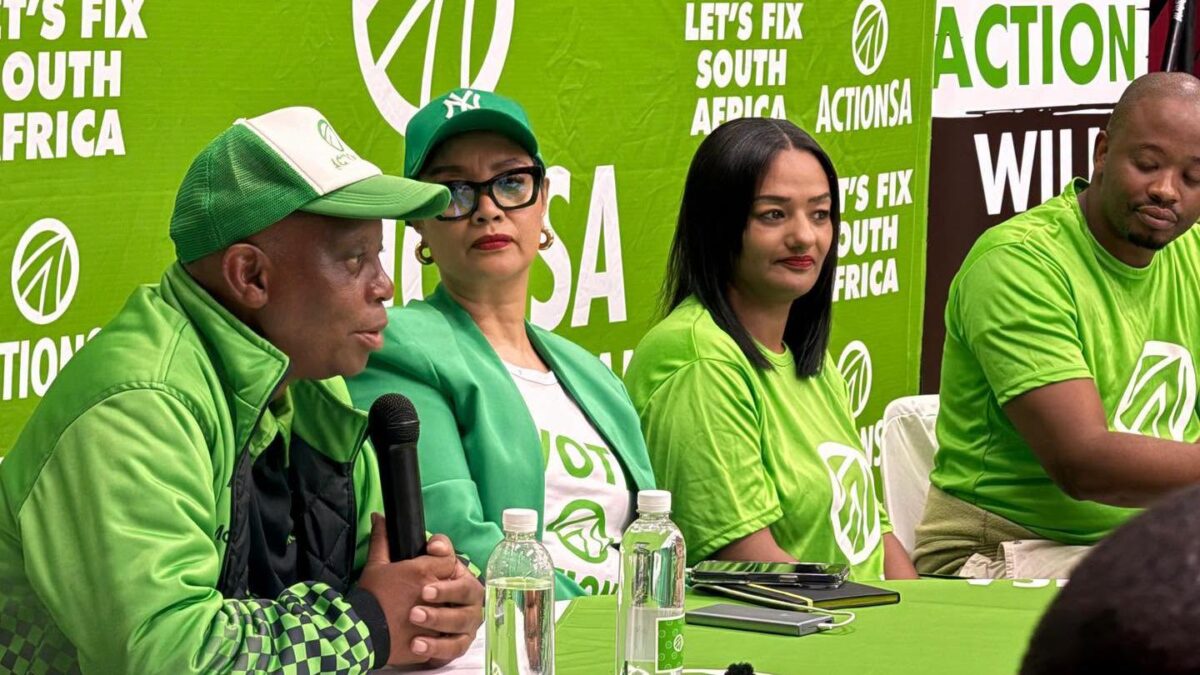
ActionSA founder Herman Mashaba said that South Africa’s severe decline began at the advent of democracy rather than under historical regimes.
He shared this information in an interview titled ‘Herman Mashaba: What went wrong with South Africa and how we fix our cities’ on the Inside Metros channel.
“South Africa’s problems started with the advent of our democratic dispensation, unfortunately,” he said.
“While we don’t want to go back to that evil system of apartheid, the current government, unfortunately, has become corrupt from day one.”
He added that, apart from widespread corruption, the ANC’s cadre deployment strategy compromised the state.
Mashaba cited the homeland Bophuthatswana, which, under the rule of Lucas Mangope, was a thriving and safe area.
“If you look at the situation in hindsight, Bophuthatswana under Lucas Mangope had law and order,” he said.
“I started Black Like Me in 1985 in the Garankuwa Industrial Area under Mangope. His focus was to create a conducive environment for investment.”
He said there were many large, advanced factories in the Garankuwa Industrial Area, including BMW, PG Glass, and Black Like Me.
“In those days, the only people who didn’t work were those who didn’t want to work. South Africa actually had a labour shortage,” he said.
“But look at it now. Go to the Garankuwa Industrial Area, or go to the industrial area in Hammanskraal, and it is nothing like under Mangope.”
South Africa has poor labour laws which kill industries
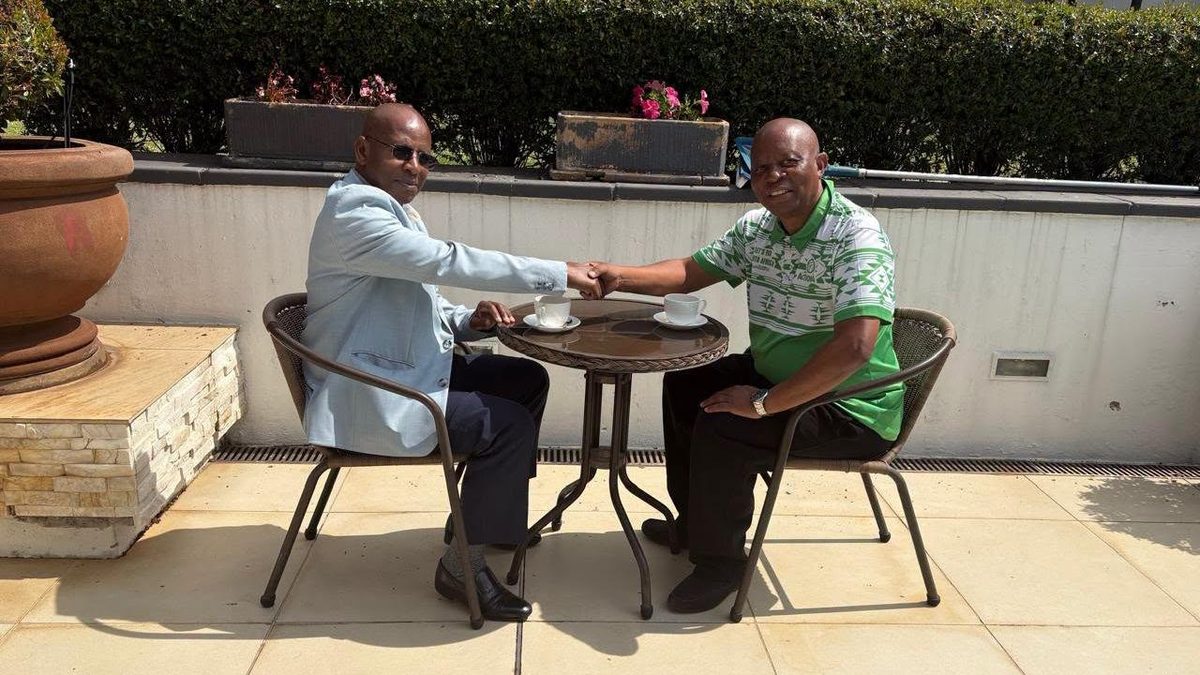
Mashaba dismissed the argument that South Africa’s de-industrialisation has been caused by global factors, such as China’s rise.
Instead, he said, it was caused by poor labour laws, which are business unfriendly and drives away investment.
“What really caused the collapse of South Africa’s industrial base is what I call draconian labour laws,” he said.
“Our labour laws, honestly, are the worst in the world in terms of encouraging investment in the country by setting ridiculous minimum wages.”
Mashaba cited his own life, during which he worked for 30 months for two different companies. “You know what I did? I exploited my employers,” he said.
He said that he worked for Spar for seven months, which he described as a hostile, racist environment, where he wasn’t going to succeed by just being passive.
However, by using his brainpower, he did what was needed to gain experience at Sper before moving to the next company.
He received another job offer from Motani Industries, which would pay him almost double his current salary.
“When Spar said they were prepared to match the other offer, I said, ‘No, it’s not about that. If you valued me, why didn’t you do it all along?” he said.
“The same thing happened at Motani. However, by then, I had developed the idea of going into business.”
He said he realised he needed a car to buy and sell goods within the communities. So, he started saving money.
“The owner at Motani helped facilitate a deal at Carbine Motors in Laudium, the biggest Toyota dealership at the time, so I could buy a brand-new Toyota,” he said.
Mashaba achieved this by convincing the owner that he sometimes needed to work late, which meant he needed his own transport.
“They were encouraging because they saw how enthusiastic a worker I was. I wasn’t someone who just looked at a rigid job description,” he said.
“As soon as I finished my work, I always volunteered to help elsewhere. I was empowering myself, and I was taking advantage of the situation.”
“They thought they were exploiting me, but I was actually using the opportunity to grow. That is advice I would really like to pass on to our people.”








 Loading ...
Mashaba is right. No one wants to say it but Mandela was complicit in the downfall of SA. He was the first president to ever spend R10-million of taxpayer money on his own house. This was against the rules.
He turned a blind eye to corruption from the politically connected.
The other problem was that he said the ANC comes before the county. This is a fatal problem when you become the government, you need to put the people before party but he refused.
It is unpopular to criticize Mandela but he was unfortunately the start of the rot.