
South African coastal city to go ahead with R3.6 billion plan to turn wetlands into concrete


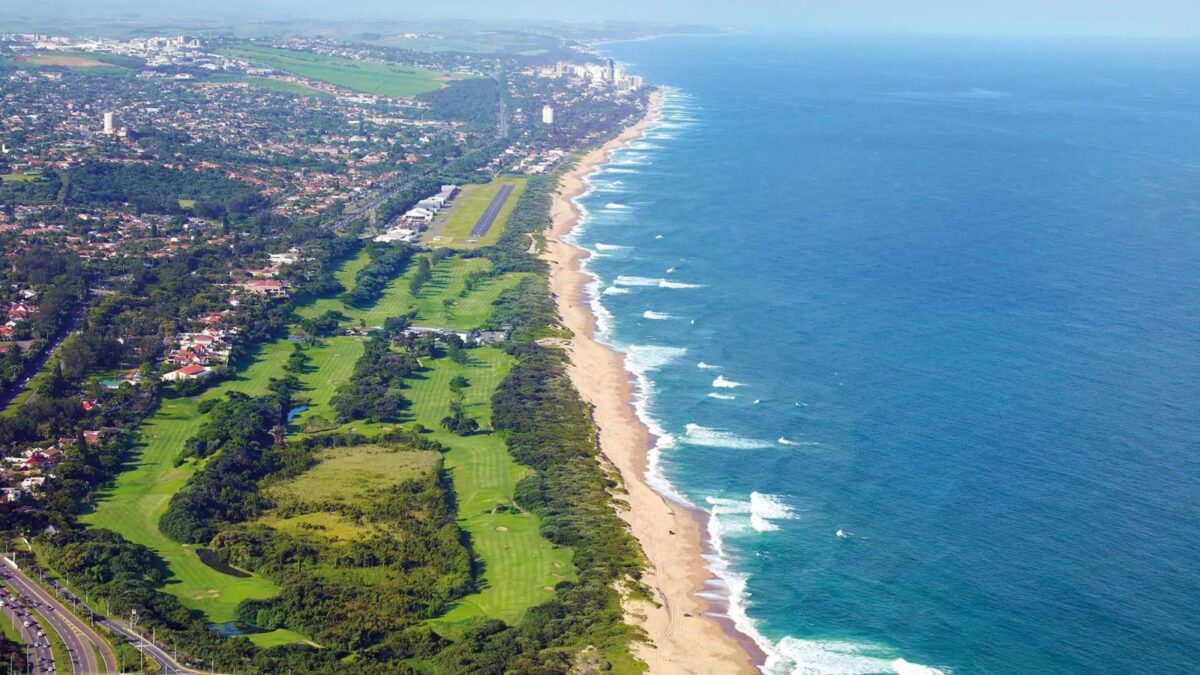
The High Court of South Africa has dismissed an application seeking to review and overturn a planned development by the eThekwini Metropolitan Municipality.
The planned R3.6 billion development was approved by the municipality in July 2023, with plans to build a residential estate on the grounds of the former Beachwood Golf Course.
The 42-hectare property sits between the coastline and Virginia Airport in Durban North, and was sold to Beachwood Investments in 2017 for R108 million.
Beachwood Investments submitted a combined land development application to the eThekwini municipality on 31 October 2022 to build the Beachwood Coastal Estate.
Residents and environmental activists have opposed the development, with a group called the Friends of Beachwood applying to the High Court to review the application.
The concerned parties have raised questions around the environmental impact, saying it is like “watching concrete replace the last functioning wetland between the highway and the sea.”
Beachwood Investments dismissed these concerns, with director Gavin Strydom saying that just 23% of the land will actually be built upon.
The remaining 77% will reportedly consist of dune forests and mangrove buffers, with Strydom saying millions had been allocated to restoring and upgrading the natural landscape.
“This includes the contamination of the mangroves by the polluted stormwater running off the neighbouring M4 highway,” Strydom said.
“This is in addition to the severe erosion of the sand dunes and the thinning out of the dune forests as a result of unmonitored public parking and illegal dwellers on the property.”
Angela Wilson, a spokesperson for the Friends of Beachwood, told the Mail & Guardian in 2023 that all of the close to 3,000 formal objections to the development had been ignored.
In its review application, the group sought to have the development’s classification as a catalytic project declared unlawful.
They also challenged the municipality’s decisions on subdivisions, the removal of restrictive title conditions, servitudes, and rezoning.
The High Court rejected all of the review grounds, confirming that there was no evidence that the project’s catalytic designation had influenced the development’s technical assessment.
They also dismissed the challenge against the catalytic classification, saying that the authority to classify it as such falls solely with the local government.
The eThekwini municipality welcomed the dismissal, with City Manager Musa Mbhele saying it confirmed the municipality had acted lawfully when considering the development.
“This ruling reinforces eThekwini’s unwavering commitment to building a resilient economy, attracting major capital investment, and driving sustainable job creation,” Mbhele said.
“A catalytic designation is not a shortcut. Every project undergoes rigorous technical evaluation in terms of the Spatial Planning and Land Use Management Act and the City’s Planning By-Law.”
According to the municipality, 2,500 jobs are expected to be created during the development’s rollout phases.









 Loading ...
Ja, go build on wetlands. Let’s see what happens to your buildings!