
South Africa’s strategic oil reserves fell by 96% from 158.5 million barrels to 6.9 million barrels


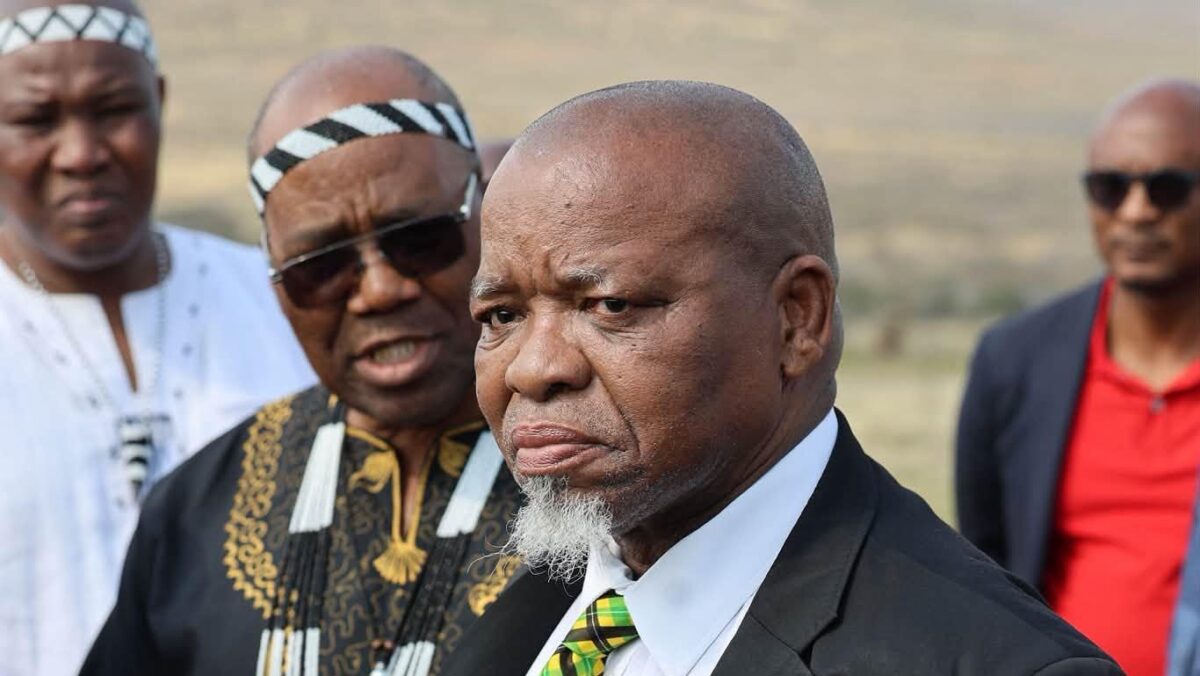
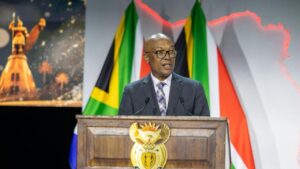
Minister of Mineral and Petroleum Resources, Gwede Mantashe, revealed that South Africa only has 6.9 million barrels of oil in its strategic fuel fund.
He shared this information in response to a Parliamentary question from National Assembly member Mikateko Mahlaule.
Mahlaule asked Mantashe whether South Africa has adequate security of petroleum supply, considering the level of strategic stock held by the Strategic Fuel Fund.
He also asked for details on the volume of strategic stock available and the number of days of national consumption it represents.
Mantashe responded, saying that South Africa’s petroleum sector showed resilience amid the instability caused by the war in Iran.
However, South Africa’s refining capacity has declined significantly, making it vulnerable to geopolitical events.
Mantashe explained that the strategic stocks held by the strategic fuel fund in South Africa are 6.9 million barrels,
“Given the current 200,000 barrels per day crude processing capacity, this would equate to about 30 days of crude oil cover,” he said.
Although the decline in refining capacity is concerning, Mantashe said that Sasol’s coal-to-liquid facility in Secunda is a stabilising factor.
He highlighted that South Africa has abundant coal resources, which means that this facility complements imported and locally refined fuel.
However, the low strategic oil reserves remain a concern, which is why his department has published a draft Strategic Stocks Policy.
“The policy seeks to improve the strategic stocks position by keeping both crude oil and refined products,” he said.
It is also proposed that oil companies maintain a certain level of strategic stock to buffer South Africa against global shocks.
South Africa’s Strategic Fuel Fund

The Strategic Fuel Fund has been a cornerstone of South Africa’s fuel reserve management and energy policy.
South Africa established the Strategic Fuel Fund in 1964 as a state-controlled agency to procure and store emergency crude oil reserves.
This was in response to international oil sanctions and Middle Eastern supply risks during the Apartheid era.
To house these reserves, South Africa repurposed disused coal mines, such as those near Ogies, into underground crude storage containers.
The country later built large concrete underground storage facilities, most notably at the Saldanha Bay Terminal.
In the 1970s, South Africa’s crude oil stock reached a peak of 158.5 million barrels, sufficient to supply South Africa for a year.
However, under the new democratic government, South Africa’s strategic oil reserves and refining capacity dwindled.
To add to the woes, there was also an illegal and secretive sale of South Africa’s strategic crude oil reserves.
Between December 2015 and January 2016, 10 million barrels of strategic oil reserves were sold off at a large discount.
The sales were engineered without public tenders, board approval from the Central Energy Fund (CEF) or Strategic Fuel Fund (SFF).
Implicated figures included SFF Acting CEO Sibusiso Gamede, who received suspicious payments, and former Energy Minister Tina Joemat-Pettersson.
In November 2020, the Western Cape High Court overturned the oil sales, declaring them corrupt, unlawful, and invalid.
The deals compromised South Africa’s national emergency self-reliance and left taxpayers facing hundreds of millions of dollars in restitution or buy-back costs.
Today, South Africa’s strategic oil reserve of 6.9 million barrels is 96% lower than its peak in the seventies.






 Loading ...
The most concerning issue is, where has all these reserves gone to? if sold to whom and why wasnt it replemished? what comes to mind is the sale of our 10 million barrels which were sold for less then they bought it for, OILGATE Scandle….SIU needs to do a investigation into political interference.