
South Africa must kiss Mathematics Literacy goodbye


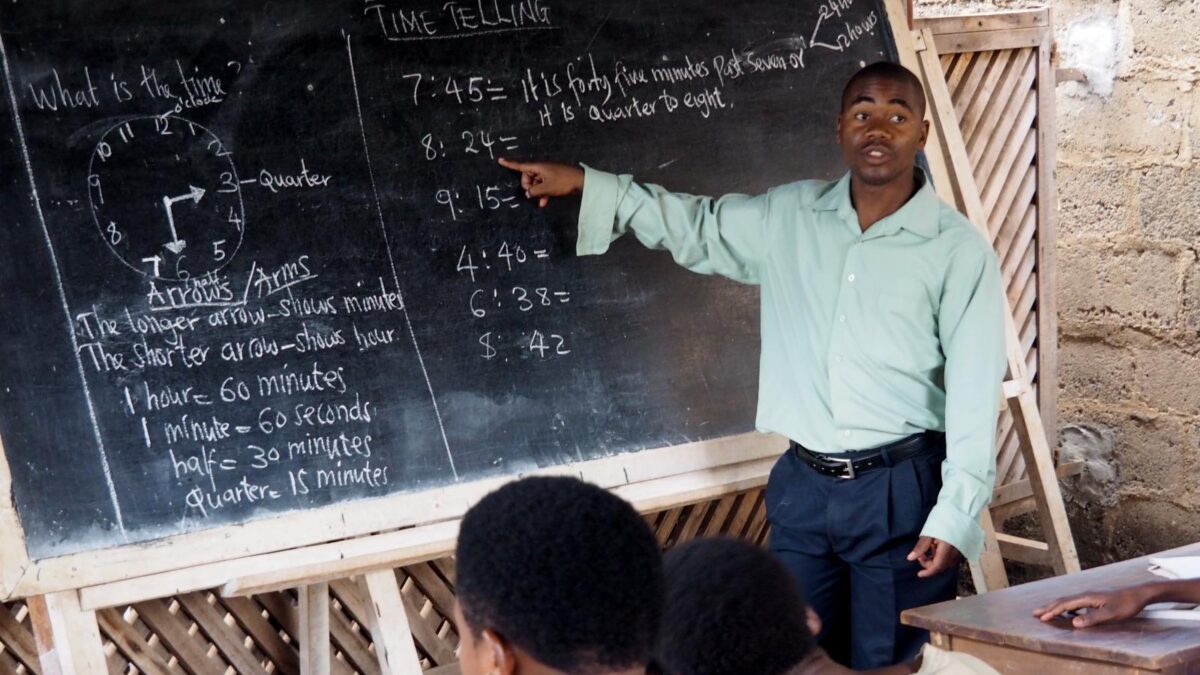
Educational experts have warned that Mathematical Literacy, also known as Maths Lit, can close doors for learners who see it as an easy subject in school.
Some experts, including Dr Mamokgethi Phakeng, a former professor of mathematics education, said that it should be done away with in schools.
Professor Sonja van Putten of the Department of Science, Mathematics, and Technology Education at the University of Pretoria also weighed in.
She explained that the choice between Mathematics and Mathematical Literacy is often framed as a simple ‘easy versus hard’ debate.
However, it is more than that. It plays a crucial role in the learner’s study and career choices after they leave school.
“This is one of the most significant academic decisions many South African learners make during high school,” she said.
Mathematics Literacy excludes learners from studying Engineering, Commerce, Health Sciences, data-related fields, and many science qualifications.
“Learners choose Maths Lit because they want immediate relief from academic pressure, without fully considering the long-term implications,” she said.
Van Putten explained that Mathematics is a doorway which tells the university that the student has a capacity for abstract reasoning and complex problem-solving.
“If you are thinking about a career in Engineering, Medicine, or Commerce, Mathematics is a non-negotiable entry ticket,” she said.
Choosing Maths Lit effectively shuts the doors to most Science, Technology, Engineering, and Mathematics and data-related fields.
“Maths Lit is useful for daily living, but it does not provide the theoretical foundation required for many technical degrees. Therefore, Maths Lit can be a door-closer.”
South Africa must stop offering Mathematical Literacy in schools

Dr Mamokgethi Phakeng said that while introducing Mathematical Literacy was well-intended, it should be done away with in schools.
Phakeng told the CheckPoint Podcast that Mathematical Literacy was well-intentioned but is not serving the purpose for which it was designed.
South Africa previously had Higher Grade and Standard Grade Mathematics. This distinction has fallen away.
Under the new system, there are Mathematics Core and Mathematical Literacy. Students have to pick between the two.
She said weaker students used to move from Higher Grade to Standard Grade Mathematics. They are now pushed to much easier Mathematical Literacy.
“I think Mathematical Literacy should be done away with,” she said, adding that it does not help students to enter courses in university.
“Even if you achieve a distinction in Maths Lit, students do not get any points for that in the university scoring system,” she explained.
She explained that schools incentivise learners to move from Mathematics to Mathematical Literacy because it increases the school’s average performance.
“The school’s average looks good, but the Department of Basic Education does not look at why the performance is good,” she said.
“Even when they count the number of distinctions for a school, they do not exclude Mathematical Literacy.”
She argued that if Mathematical Literacy had never been introduced, it would not have created a problem of learners moving away from Mathematics.
Instead of moving children away from Mathematics when they struggle with it, schools should encourage them to spend more time on the subject to improve.
She advocated for changing the incentive structures for schools to reward them for achieving good Mathematics results.









 Loading ...
I completely agree. We have so many graduates applying with Maths Lit but we can’t use them. They aren’t able to cope with the work if they have Maths Lit.
I wish teachers could give these kids better advice and tell them to stop taking the easy way out. They are going to pay for it later on.