
Tony Leon did nothing wrong: Frans Cronje


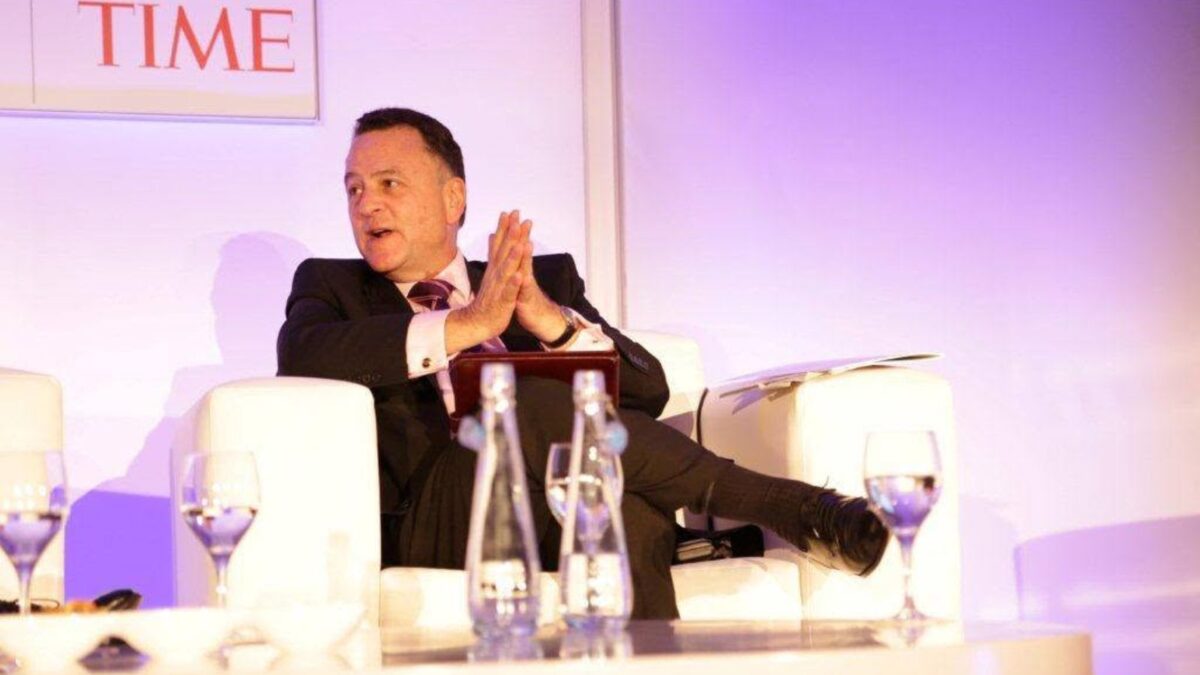
Renowned political analyst Frans Cronje said that although Democratic Alliance (DA) leader Tony Leon has been accused of many things, this does not include any crimes.
Leon found himself under the microscope after former Minister of Agriculture John Steenhuisen spoke about him in a News24 interview.
In the interview, Steenhuisen accused Leon’s company, Resolve Communications, of pressuring politicians and influencing their decisions.
Steenhuisen also alleged that Leon was using his previous position in the DA to set meetings between South African Ministers and private companies.
He highlighted a meeting between the Minister of Communications and Digital Technology, Solly Malatsi, and a representative from the American company Starlink.
Steenhuisen also alleged that Resolve Communications had been instrumental in pushing negative public narratives against him.
Malatsi responded to the interview, saying that he had met with a representative from SpaceX, Starlink’s parent company, but the meeting was not facilitated by Resolve Communications.
The meeting was held to discuss the introduction of Low Earth Orbit (LEO) satellites to provide affordable internet access for South Africans.
Malatsi said he was not pressured by either Starlink or Resolve Communications to attend this meeting, as his department was already pursuing this idea.
Steenhuisen was recently removed from his role as Agricultural Minister by DA leader Geordin Hill-Lewis and was appointed as the Deputy Minister of Trade, Industry, and Competition.
Frans Cronje defends Tony Leon
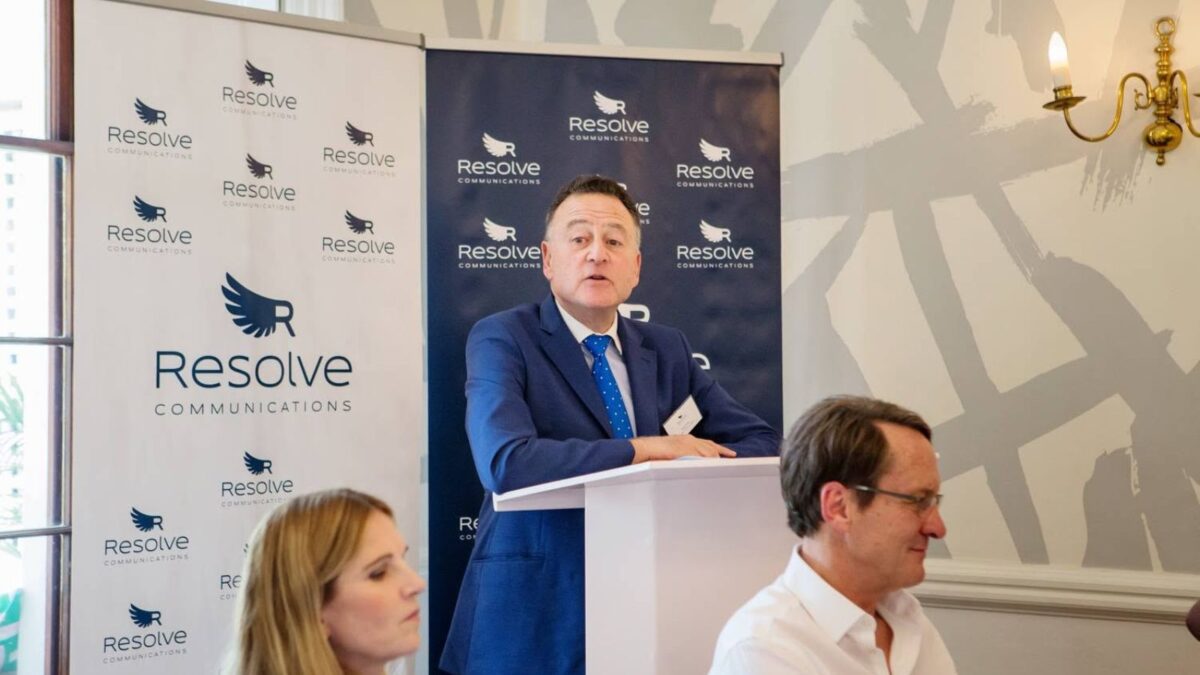
In an interview with BizNews, political economist Frans Cronje spoke about the allegations against Tony Leon.
He said he struggled to understand the allegations against Leon, as he and his company had not been accused of any crimes.
Lobbying companies, such as Resolve Communications, facilitate meetings between private investors and public officials to share ideas between the public and private sectors.
This is done to ensure that businesses feel represented by public officials and to give politicians new ideas for their portfolios.
Cronje said that unless Resolve Communications had committed a crime, such as bribing officials, the company was functioning like any other lobbying group.
“What has gone wrong with the world that we don’t understand the difference between right and wrong anymore? It’s obvious where the line exists,” he said.
He dismissed allegations that Leon was involved in state capture, saying they would go beyond mere advice to public officials.
The state capture scandal rocked South Africa when businessmen influenced politicians to gain control of government companies for their own benefit.
The controversy centred around the Gupta family, who were accused of several instances of state capture.
“State capture wasn’t the Gupta family offering advice to the Minister. It was the Gupta family bribing the Minister,” Cronje said.
Steenhuisen also accused Leon’s company of drafting questions for Ministers to ask in parliament.
Cronje noted that this is a regular occurrence in politics, where private groups often write questions for Ministers.
He said that even if Resolve Communications drafted questions, Ministers were never compelled to use them.
Finally, Cronje addressed the claim that Leon had pressured Ministers to adopt ideas from his company’s clients.
“I hope they were put under pressure by investors. Had they been put under greater pressure, the economy might be growing faster than 1%,” he said.
Communication between politicians and businesses is vital to effective governance, and lobbying groups are part of that relationship.



 Loading ...
I agree with Mr. Cronje. When this came to light my first thought was he (Tony Leon) is ex DA, obviously has a lot of “political” connections, and he then approached those connections to see if he could solicit some business from them. He didn’t unduly pressure anyone, didn’t offer any bribes and didn’t offer any kickbacks should he secure work/contract/deals for his Resolve company. He asked, they said no, he didn’t get anything… where’s the crime?! John Baksteenhuisie is just suurgat because he did a k@k job as minister and his ego can’t accept his demotion.