
Failed BEE deals cost South African pensioners billions


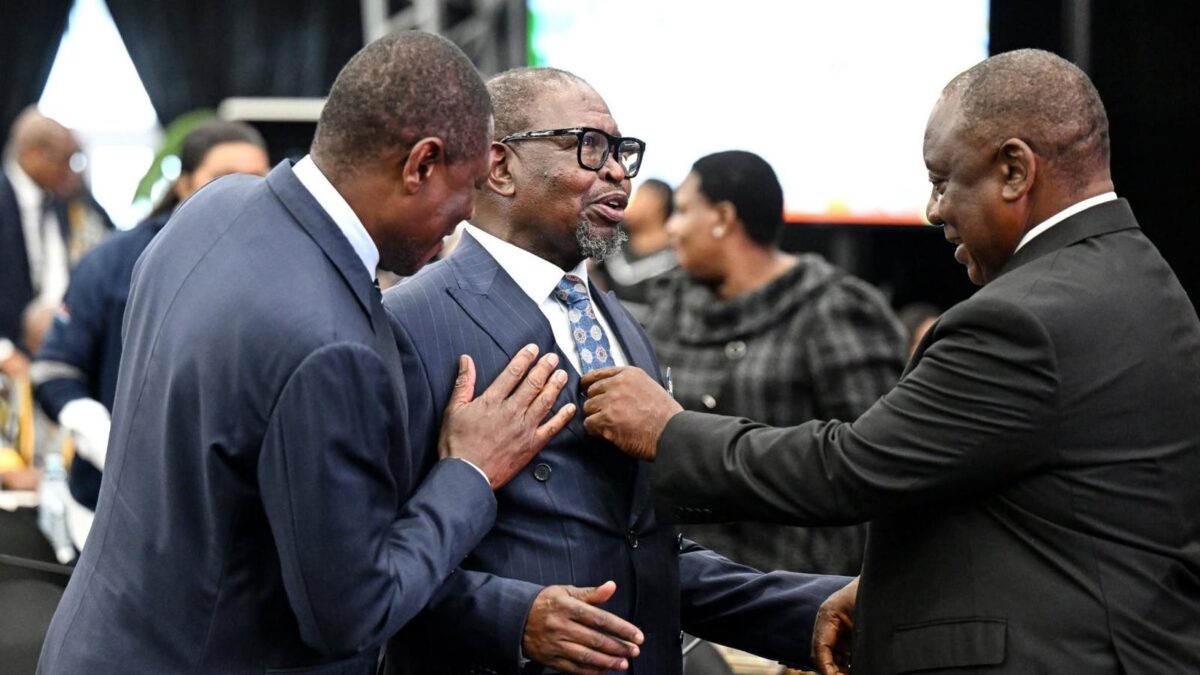
The Public Investment Corporation has lost billions during State Capture and continues to throw away money through poor black economic empowerment (BEE) deals.
This is the view of Mark Burke, Member of the National Assembly and the DA’s Federal Finance Chairperson.
The PIC is an asset management firm wholly owned by the government of the Republic of South Africa, represented by the Minister of Finance.
Its clients are primarily public-sector entities, including the GEPF, the Unemployment Insurance Fund (UIF), and the Compensation Commissioner Fund (CC).
It manages a R3.6 trillion investment portfolio comprising multiple asset classes, including listed equities, real estate, capital market, private equity and impact investing.
The Public Investment Corporation uses the Isibaya Fund as a specialised, unlisted developmental investment vehicle.
In recent weeks, the Isibaya Fund has come under fire for numerous poor investments which lost billions of rands.
There is also a battle around a shareholder arrangement tied to Lanseria International Airport involving the PIC and Acapulco Trade & Invest 164.
It led to friction between Finance Minister Enoch Godongwana, Deputy Finance Minister and PIC Chairperson David Masondo, and PIC CEO Patrick Dlamini.
Godongwana is reportedly at odds with Masondo over the handling of a PwC report commissioned by Dlamini and a subsequent whistleblower tip-off.
The whistleblower accused Dlamini of overstepping his legal mandate and breaching strict governance limits by ordering the PwC forensic review.
The friction has played out in public view, drawing sharp criticism from political parties and economic oversight bodies.
It prompted the finance minister to hold a special board meeting with the Public Investment Corporation to evaluate the current challenges.
The PIC released a press statement following this meeting, stating that these factors unnecessarily undermine public trust and confidence in the organisation.
“The meeting agreed to develop a programme to address public and client concerns about legacy investments in the PIC’s unlisted portfolio,” it said.
The Minister and PIC board added that all stakeholders must work together to address the legacy issues arising from certain historic PIC investments.
Criticism from Mark Burke

Burke said that boardroom battles at the PIC and social media battles among the top leaders at the institutions are harming the institution.
“The DA is concerned with reports of PIC boardroom battles playing out on social media. South African pensioners deserve better,” he said.
He highlighted that the PIC has been battling reputational issues stemming from corruption allegations for over a decade.
“The last two years have seen at least three senior PIC officials suspended under a cloud of allegations, two subsequently leaving,” he said.
Burke said that the Public Investment Corporation has lost billions of pensioners’ money during the State Capture era. This is continuing through the Isibaya Fund.
“The PIC continues to waste money in the unlisted space. Recent examples include the Enable Capital scam and the bailing out of Daybreak Foods,” he said.
“The PIC’s culture and investment practices point to an organisation that has not turned around, but which is in perpetual crisis.”
“South African government employees grind for decades, saving for retirement. Their money deserves better-calibre stewards.”
Burke has written to the chairperson of Parliament’s Standing Committee on Finance requesting an urgent hearing with the asset manager’s board.
Isibaya Fund under the spotlight
The Isibaya Fund is currently under scrutiny for its dubious investments, which have cost pensioners billions.
The Internal Rate of Return for the Isibaya portfolio, dating back to 1 March 2006, is 4.25%. This is well below the average market return.
This poor performance is mainly due to poorly thought-out and potentially corrupt investments, especially during the state-capture era.
The Mpati Commission in 2020 exposed the PIC as a politically captured institution plagued by poor governance, weak accountability, and corruption.
Its most severe findings concentrated on the unlisted investment portfolio managed by the Isibaya Fund.
It stated that the Isibaya Fund had been vulnerable to governance failures, political capture, and a disregard for internal due diligence.
These problems led to the Isibaya Fund investing in numerous companies where it lost most or even all its money.
An analysis of its investments showed that 23 companies in which it invested had an internal rate of return of -100%.
These companies include Berlin Beef, Concor, Daybreak, Educor, Independent Media, LA Crushers, Naturecell, Urban Lifestyle, and VBS.
Andrew Bateman, the DA’s deputy spokesperson on appropriations, said that the party will probe the billions lost at the Isibaya Funds
It will examine how the PIC has lost billions of rands set aside for government pensions and other public purposes through reckless investments in its Isibaya Fund.
An example is the Daybreak chicken farm investment, which is now worth a small fraction of the PIC’s investment of approximately R2 billion,” said Bateman.
The DA has submitted detailed parliamentary questions to the Minister of Finance about the issue.
“He has already confirmed the losses on each investment. We must investigate why these deals were approved, who benefited, and who should be held to account,” he said.
| Company | Investment | IRR |
| Afrisam | R11.038 billion | -100% |
| VIA Bounty | R1.374 billion | -100% |
| Independent Media | R888 million | -100% |
| Allied | R777 million | -100% |
| Urban Lifestyle | R499 million | -100% |
| S&S Refinery | R492 million | -100% |
| Daybreak | R483 million | -100% |
| Musa | R450 million | -100% |
| Educor Property | R400 million | -100% |
| Educor | R355 million | -100% |
| Concor | R315 million | -100% |
| Amalooloo | R188 million | -100% |
| Solar Cap – Orange | R168 million | -100% |
| Bayport | R149 million | -100% |
| Eden Gardens | R130 million | -100% |
| VBS | R110 million | -100% |
| Magae Makhaya | R83 million | -100% |
| Yalu | R75 million | -100% |
| ZarX | R68 million | -100% |
| Berlin Beef | R60 million | -100% |
| Ekuzeni | R52 million | -100% |
| Naturecell | R39 million | -100% |
| LA Crushers | R30 million | -100% |

 Loading ...
When will all the responsible CEO of PIC and polital leaders be criminal charge for there corruption and abusing of our Pension funds. When will the criminal case be open for investigation. All relevant parties involved in the plundering of the GEPF pension funds assest must freeze and forfeited back to our fund. Appoint the right board with politacal involvement. Let the GEPF members voted irw investment and without our permission no investment