
South African municipality that owes Eskom R2.23 billion has a dubious financial recovery plan


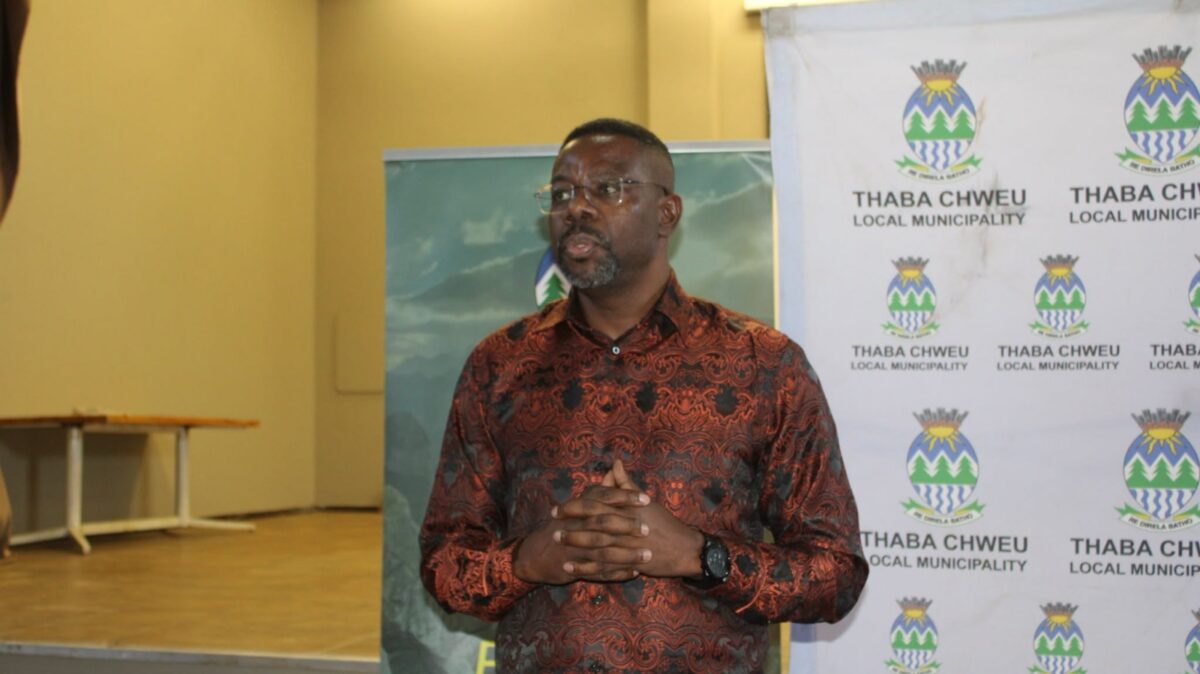
The proposed financial recovery plan for the Thaba Chweu Local Municipality has raised concerns around its viability and transparency.
Located in Mpumalanga, Thaba Chweu falls under the Ehlanzeni District Municipality, with Mashishing (Lydenburg) as its municipal seat.
The municipality has been in a state of financial distress for at least the past two years, now facing an unfunded budget deficit of R1.04 billion.
The municipality has put forward a financial recovery plan centred on restructuring an R2.23 billion Eskom debt and freezing interest for the duration of the intended agreement with the utility.
Thaba Chweu councillor Gerda Venter has criticised this plan, saying it is based on assumptions which have not been sufficiently supported with evidence before Council.
“Councillors have not received supporting documentation confirming that these terms have been formally accepted and signed by both parties,” Venter said.
“Without this confirmation, it is difficult to say with certainty that the financial relief projected in the financial recovery plan will materialise.”
According to the municipality’s latest quarterly report, it owed Eskom R2.344 billion for bulk electricity purchases as of 30 September 2026.
This figure does not correspond with the R2.23 billion debt mentioned in the restructuring proposal, with Venter saying further clarification was needed on this.
She also said that restructuring the debt as a long-term liability would not remove the municipality’s responsibility to repay Eskom.
Venter questioned how the municipality would finance future electricity purchases while still paying off existing Eskom debts.
Additionally, she pointed out that the municipality had already incurred expenditure of R337.4 million this year against a budget of R252.7 million.
The municipality’s interest expenditure has already reached R32.1 million, while its total annual interest budget is just R1 million.
Venter also pointed out contradictory figures in the financial recovery plan, which refer to an additional R70 million in income for the municipality.
According to Venter, the underlying calculations for this comprise R250 million in once-off revenue and R261 million in sustained revenue.
This totals R511 million, much higher than the R70 million put forth by the municipality in its recovery plan. Venter said this needed to be clarified and corrected.
“Residents have the right to be assured that proposals involving billions of rands in debt and the future of service delivery are based on accurate figures and enforceable agreements,” Venter said.
“Transparency and accountability are essential for restoring confidence in the municipality’s financial recovery process.”
Venter called on the Thaba Chweu Municipality to disclose all relevant agreements, financial calculations, debt schedules, approvals, and cash-flow projections for the proposed recovery plan.


 Loading ...