
South Africa’s crude oil refining capacity decreased by 60% from 520,000 bpd to 208,000 bpd


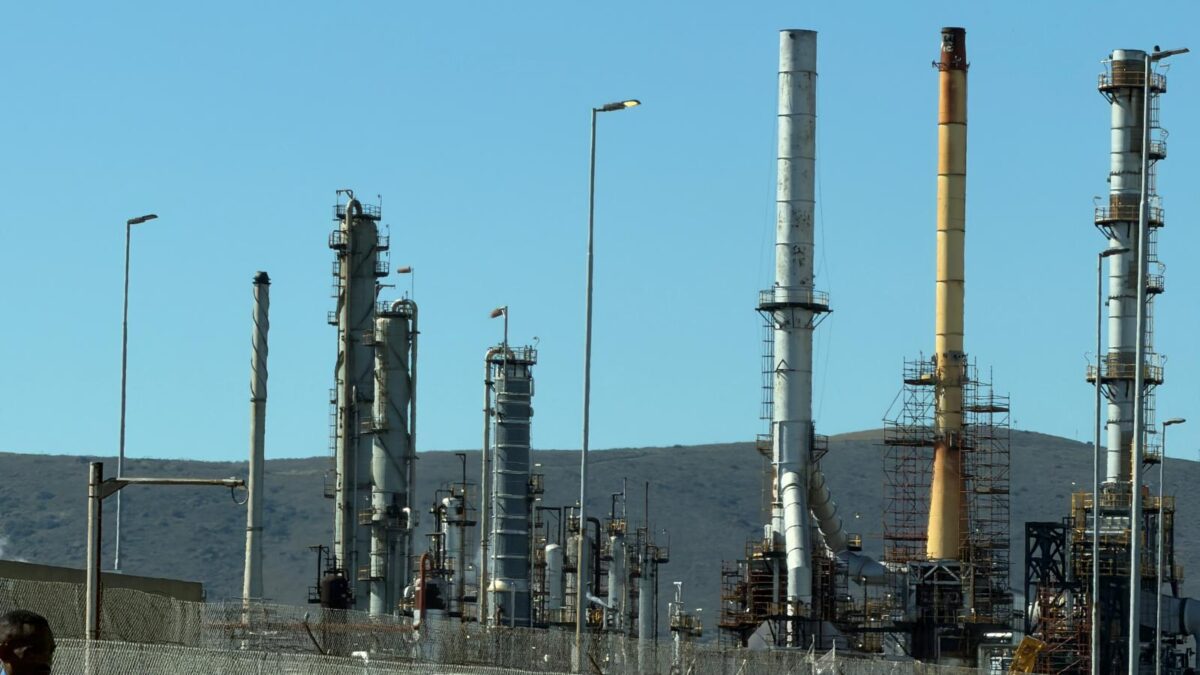
South Africa’s crude oil refining capacity has plummeted from 520,000 barrels per day in 2018 to 208,000 barrels per day eight years later.
This is relevant, as the country is currently struggling with high petrol and diesel prices, partly due to its reliance on imported refined fuels.
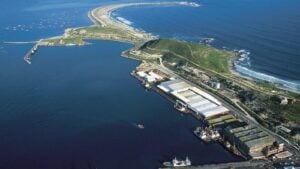
In 1994, South Africa had numerous refining facilities, including Natref in Sasolburg, Calref in Cape Town, Sapref and Enref in Durban, and PetroSA in Mossel Bay.
In 1994, these facilities had a nameplate capacity of 450,000 barrels per day (bpd), which increased to 520,000 bpd by 2018.
This increase was a result of multi-decade upgrades across all the major oil refining facilities in South Africa.
Synthetic fuels output from Sasol Secunda and PetroSA added another 200,000 bpd equivalent in South Africa.
Total daily petroleum consumption in South Africa was 680,000 bpd, which means local processing covered approximately 90% of the country’s fuel requirements.
However, there has been a rapid decline since this peak, which has placed South Africa at the mercy of international suppliers.
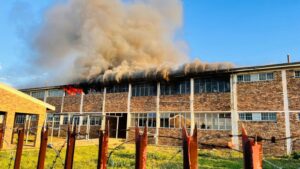
Engen’s Enref facility in Durban suffered a fire and explosion in December 2020, and its parent company, Petronas, elected not to rebuild.
In March 2022, Sapref, South Africa’s largest crude refinery, was placed on pause by its owners, Shell and BP, due to impending Clean Fuels II compliance costs.
Just weeks later, severe flooding in KwaZulu-Natal damaged the facility, sealing its fate. This removed the biggest facility in South Africa.
Today, only the Astron Energy Refinery (Calref) in Cape Town and the National Petroleum Refiners of SA (Natref) in Sasolburg are operational.
Their combined capacity of 208,000 barrels per day is much lower than the 520,000 barrels per day in 2018.
South Africa’s strategic oil reserves fell by 96%
The decline in oil refinery capacity is not South Africa’s only problem. Its oil reserves have also dwindled.
Minister of Mineral and Petroleum Resources, Gwede Mantashe, revealed that South Africa only has 6.9 million barrels of oil in its strategic fuel fund.
“Given the current 200,000 barrels per day crude processing capacity, this would equate to about 30 days of crude oil cover,” he said.
To put this into perspective, in the 1970s, South Africa’s crude oil stock reached a peak of 158.5 million barrels, sufficient to supply South Africa for a year.
However, under the new democratic government, South Africa’s strategic oil reserves and refining capacity dwindled.
To add to the woes, there was also an illegal and secretive sale of South Africa’s strategic crude oil reserves.
Between December 2015 and January 2016, 10 million barrels of strategic oil reserves were sold off at a large discount.
The sales were engineered without public tenders, board approval from the Central Energy Fund (CEF) or Strategic Fuel Fund (SFF).
In November 2020, the Western Cape High Court overturned the oil sales, declaring them corrupt, unlawful, and invalid.
The deals compromised South Africa’s national emergency self-reliance and left taxpayers facing hundreds of millions of dollars in restitution or buy-back costs.
Today, South Africa’s strategic oil reserve of 6.9 million barrels is 96% lower than its peak in the seventies.
This means that South Africa is not in a position to absorb high increases in oil and fuel prices, as is currently the case due to the war in Iran.
As a result, South African motorists will experience record-high petrol and diesel prices at the pump.
The ANC complains about high fuel prices
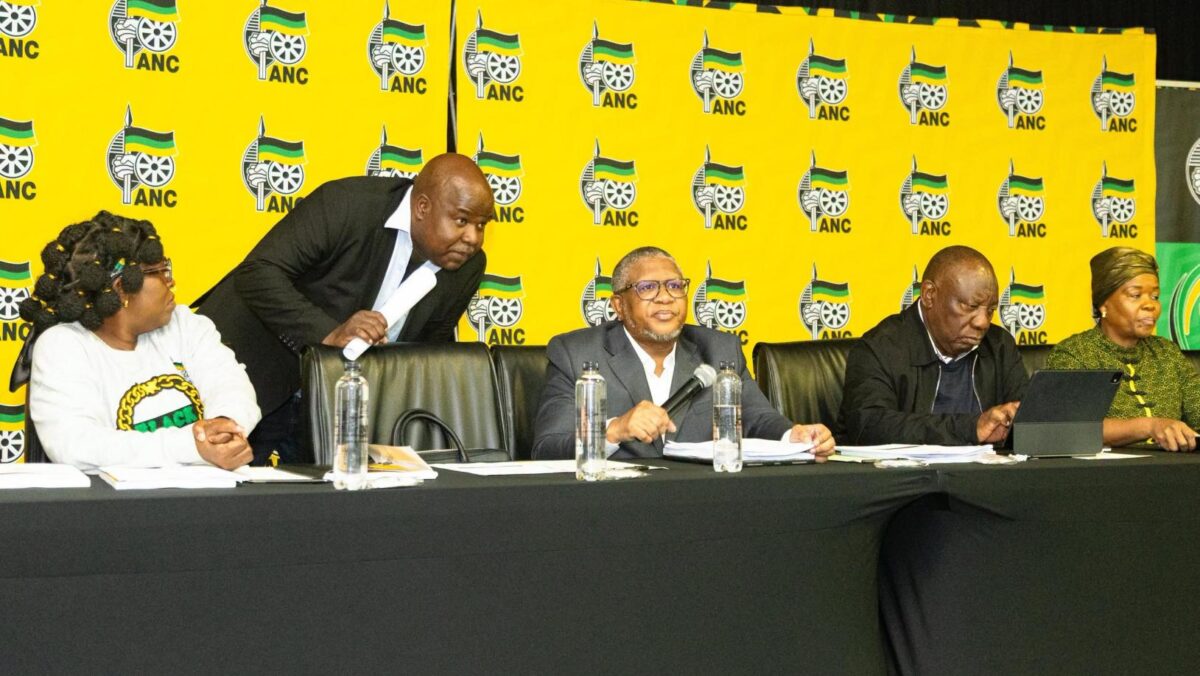
The ANC Study Group on Minerals and Petroleum Resources said it was concerned about fuel price increases.
It blamed factors beyond South Africa’s borders, explaining that global prices are outside the government’s control.
The ANC argued that permanent relief lies in reducing the country’s dependence on imported refined fuel.
“The shutdown of several domestic refineries in recent years has left South Africa reliant on imports for the majority of its fuel,” it said.
“South Africa is therefore fully exposed to international fuel and oil supply disruptions and shipping costs.”
The ANC said that it supports building domestic refinery capacity, as shown by the SANPC and the SANPC Bill.
Strengthening the domestic refinery capacity will be the long-term solution to our country’s import dependency,” it said.
It called on the Department of Mineral and Petroleum Resources to fast-track the processes to re-establish South Africa’s domestic refining capacity.
As a temporary solution, it called on the National Treasury to reconsider the fuel levies and taxes, including the General Fuel Levy and the Road Accident Fund Levy.
“The government has done this before, when the General Fuel Levy was temporarily reduced in 2022 in response to a similar spike in international oil prices,” it said.
The same happened earlier this year, and the ANC Study Group on Minerals and Petroleum Resources said it was time for similar action.




 Loading ...
This is when a,state fails to plan , same as the Eskom matterc way back in 2007/8 when it was informed about the electricit future needs in action .
It is either gross incompetence or by design to let matters deteriorate to such a crisus . The reason is that at the heart of he matter of money. The bigger the crisis the more money is required, thus the bigger the kickbacks and fraud that can be committed. Eskom the prime example.
This is deliberate and the tapiayer to foot the bill. In the meantime the country is going to pay an enormuos economical price, with all that pain that is to follow.