
The worst municipalities in South Africa


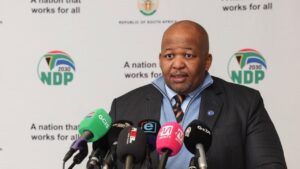
Minister of Cooperative Governance and Traditional Affairs (CoGTA), Velenkosini Hlabisa, has revealed the worst municipalities in South Africa.
Hlabisa shared this information in response to a Parliamentary question by National Assembly member Wiseman Ngobese.
Ngobese asked Hlabisa for details on the municipalities classified as financially distressed or dysfunctional.
He also asked for details on the interventions received, and measurable improvement has resulted from the specified interventions.
Hlabisa responded, saying 38 municipalities had been identified as distressed municipalities and were receiving structured support.
This structural support is done through the Municipal Performance Turnaround Strategy and related support measures.
“These municipalities were identified based on governance, financial, institutional, and service-delivery challenges that require focused support,” he said.
He added that 37 municipalities were subject to ongoing interventions, as required under the South African Constitution.
Hlabisa said that the Department assesses progress against measurable indicators, including audit outcomes and the implementation of municipal support.
They also consider financial recovery plans, infrastructure grant expenditure, revenue enhancement initiatives, and financial sustainability indicators.
The available information indicates that measurable improvements have been recorded in certain municipalities participating in support and intervention programmes.
- 7 of the 38 distressed municipalities recorded improvements in their audit outcomes during the 2024/25 audit cycle. 28 remained unchanged, and 2 regressed.
- 35 of the 38 distressed municipalities had adopted Municipal Support and Improvement Plans or Financial Recovery Plans to guide and monitor turnaround interventions.
- Municipal Infrastructure Grant expenditure improved in several distressed municipalities.
- Certain municipalities have demonstrated improvements in governance stability, recovery plan implementation, and municipal operations.
However, progress remains uneven. Several municipalities continue to experience serious financial, governance and service delivery challenges.
The problems include adverse audit outcomes, high debt levels, and difficulties in complying with debt-relief conditions.
“Accordingly, while measurable improvements have been achieved in certain areas, many municipalities have not yet attained sustainable recovery,” he said.
The worst municipalities in South Africa
| Municipality | Date Instituted | Key Triggers / Intervention Themes |
| Enoch Mgijima LM | April 2022 | Service delivery: Refuse collection and basic service failures. Financial: Financial crisis; inability to meet creditor obligations. |
| Amathole DM | January 2021 | Service delivery: Difficulties providing basic services. Financial: Long-term financial sustainability concerns; high employee costs. |
| Makana LM | 2019 | Governance: Weak governance and unauthorised recruitment/payments. Financial: Debt exceeding R200 million; unfunded budget; significant irregular, fruitless and wasteful expenditure. Service delivery: Water outages, poor roads, refuse collection and waste-management failures. Legislative compliance: Persistent non-compliance with applicable requirements. |
| OR Tambo DM | 8 Dec 2021 | Financial: Creditor arrears, excessive employee costs, low collection revenue and unfunded budget. Governance: Repeated adverse audit outcomes. Service delivery: Inability to fulfil financial obligations and deliver essential services. |
| Walter Sisulu LM | 23 Feb 2022 | Financial: Eskom debt, low revenue collection and high debtor levels.Governance: Poor audit outcomes. |
| Mangaung Metropolitan Municipality | April 2022 | Financial: R1 billion deficit; increasing irregular expenditure; financial distress. Governance: Persistent legislative non-compliance and institutional instability. Institutional: Failure to implement a Financial Recovery Plan. |
| Mafube LM | June 2022 | Service delivery: Water, sanitation, electricity and infrastructure failures. Financial: Poor revenue collection, incorrect billing, irrecoverable debt and inadequate funding. Governance: Weak oversight, internal controls, accountability and performance management. Institutional: Skills and capacity shortages; labour challenges. Infrastructure: Ageing infrastructure and inadequate maintenance. Legislative compliance: Non-compliance and grant-management weaknesses. |
| Tokologo LM | June 2022 | Financial: Financial distress and inability to fulfil statutory/executive obligations. |
| Kopanong LM | September 2023 | Service delivery: Bulk water-supply challenges. Infrastructure: Ageing/damaged infrastructure and maintenance backlogs. Financial: Water losses, inadequate revenue collection and insufficient funding. Environmental/service quality: Low Green Drop performance and inadequate wastewater capacity. |
| Matjhabeng LM | October 2024 | Financial/Governance: Intervention relating to identified municipal financial and governance challenges. |
| Nala LM | 28 May 2025 | Governance: Collapse of governance and institutional dualism. Legislative compliance: Non-compliance with relevant legislation. Service delivery: Persistent service-delivery failures. |
| Masilonyana LM | February 2026 | Procedural/legislative: Provincial failure to comply with procedural requirements concerning Ministerial concurrence under S139(2). |
| Ngwathe LM | 26 June 2026 | Governance: Court-induced intervention resulting in dissolution of the Municipal Council. Institutional: Council unable to function effectively. |
| Impendle LM | 15 June 2026 | Governance: Governance and financial management failures. Financial: Weak consequence management relating to UIFW. Service delivery: Failure to address serious deficiencies identified by AGSA. |
| Emfuleni LM | June 2018 | Financial: Severe cash-flow constraints, poor revenue collection, creditor arrears and expenditure-management weaknesses. Governance: Fraud/corruption concerns and vacant critical positions. Service delivery: Electricity, water, sanitation and waste-management failures. Infrastructure: Collapsing electricity infrastructure and pipe bursts. Institutional: Ineffective organogram and inadequate IT support. |
| Merafong LM | September 2022 | Financial: Serious and persistent breach of financial obligations. Governance/Institutional: Serious institutional challenges. Service delivery: Persistent service-delivery challenges. |
| Waterberg DM | December 2025 | Financial: Severe financial distress, cash-flow challenges and operational deficit. Financial sustainability: Dependence on grants and inability to meet financial commitments. Governance: Failure to adopt funded budgets for three consecutive years. |
| Emalahleni LM | October 2018 | Governance/Institutional: Dysfunctional municipality and failure to meet MFMA intervention criteria. |
| Govan Mbeki LM | October 2018 | Governance/Institutional: Dysfunctional municipality and failure to meet MFMA intervention criteria. |
| Msukaligwa LM | October 2018 | Governance/Institutional: Dysfunctional municipality and failure to meet MFMA intervention criteria. |
| Thaba Chweu LM | October 2018 | Governance/Institutional: Dysfunctional municipality and failure to meet MFMA intervention criteria. |
| Lekwa LM | April 2021 | Financial: Financial instability. Service delivery: Electricity, water and water-infrastructure challenges. Governance: Poor governance. Institutional: Weak institutional capacity and dysfunctional administration. |
| Phokwane LM | July 2020 | Governance: Weak governance and ineffective Council oversight. Service delivery: Interrupted water provision. Institutional: Failure to appoint senior managers. Financial: Weak oversight of municipal financial affairs. |
| Renosterberg LM | August 2020 | Governance/Institutional: Failure to fulfill executive obligations. Service delivery: Electricity-supply failures. Legislative compliance: Non-compliance with the MFMA and regulations. |
| Sol Plaatje LM | May 2026 | Governance: Persistent maladministration and political instability. Institutional: Administrative paralysis. |
| Madibeng LM | January 2022 | Governance: Persistent maladministration and political instability. Institutional: Administrative paralysis. Financial: Financial mismanagement. Legislative compliance: Non-compliance with court orders. |
| Tswaing LM | January 2022 | Governance: Persistent maladministration and political instability. Institutional: Administrative paralysis. Financial: Financial mismanagement. Legislative compliance: Non-compliance with court orders. |
| Dr Ruth Segomotsi Mompati DM | January 2022 | Financial: Serious or persistent material breach of obligations to meet financial commitments. |
| Kgetleng Rivier LM | January 2022 | Governance: Institutional instability. Institutional: Persistent systemic challenges affecting municipal functioning. |
| Ramotshere LM | January 2022 | Governance: Institutional instability. Institutional: Persistent systemic challenges affecting municipal functioning. |
| Naledi LM | January 2022 | Governance: Institutional instability. Institutional: Persistent systemic challenges and administrative paralysis. |
| Ditsobotla LM | August 2025 | Governance: Persistent maladministration and political instability. Institutional: Administrative paralysis. Financial: Financial mismanagement. Legislative compliance: Non-compliance with court orders. |
| Matlosana LM | August 2024 | Governance: Institutional instability and collapse of governance structures. Institutional: Persistent systemic challenges. |
| Beaufort West LM | August 2021 | Financial: Serious or persistent material breach of financial obligations. |
| Kannaland LM | December 2023 | Financial: Serious or persistent material breach of financial obligations. |
| Garden Route DM | October 2024 | Governance/Legislative: Failure to fulfil executive obligations under the Constitution and applicable legislation. |
| Theewaterskloof LM | November 2024 | Financial: Serious or persistent material breach of financial obligations. |

 Loading ...
They managed to change all the names of the places so nobody knows where they are ! But that’s all !