
Billionaire Christo Wiese says South Africa must forget the bad parts of the past and focus on the good parts


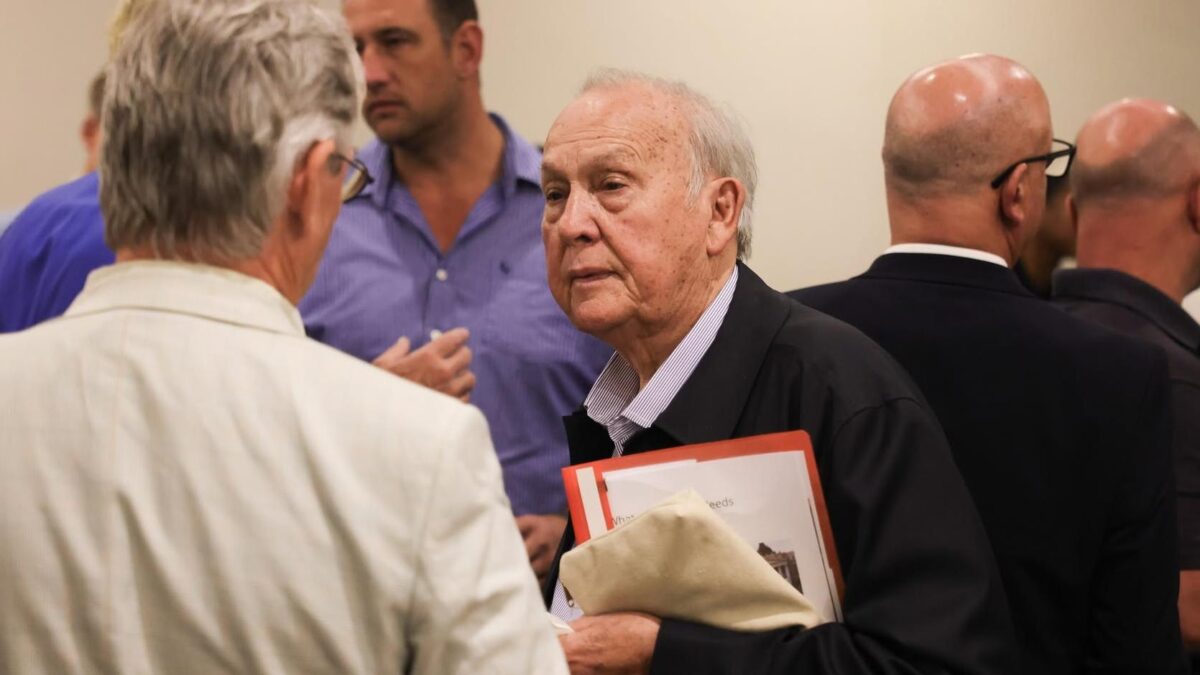
Billionaire Christo Wiese says South Africa will do much better if it forgets the past’s bad parts and focuses on the future.
He shared this view during a discussion with Rob Hersov at the Stellenbosch Tatler and Truth Report symposium.
Wiese is South African business royalty. He built Pepkor and Shoprite and created a business empire which few can match.
Although he studied law and worked at the Cape Bar as a lawyer, he left the legal profession to join a company his dad invested in, Pep.
After a few years, he acquired a controlling interest in Pep Stores and pioneered discount consumer retail in South Africa.
His biggest success was his role in transforming Shoprite Holdings, which Pep Stores acquired in 1979 for a small amount.
Wiese, with Whitey Basson as chief executive, turned the small retail chain into Africa’s largest supermarket operator.
He served as chairman of both Shoprite, which owns Checkers, OK Bazaars, and Usave, and Pepkor, the parent company of Pep Stores, for decades.
His business interests also include stakes in investment holding company Brait, which owns Virgin Active, Invicta Holdings, and the Lourensford Wine Estate.
Despite losing a large portion of his fortune due to the Steinhoff collapse, he rebuilt his business empire.
He is optimistic about the country and said that 95% of his wealth remains in South Africa. He has no plans to change that.
Christo Wiese’s view on South Africa
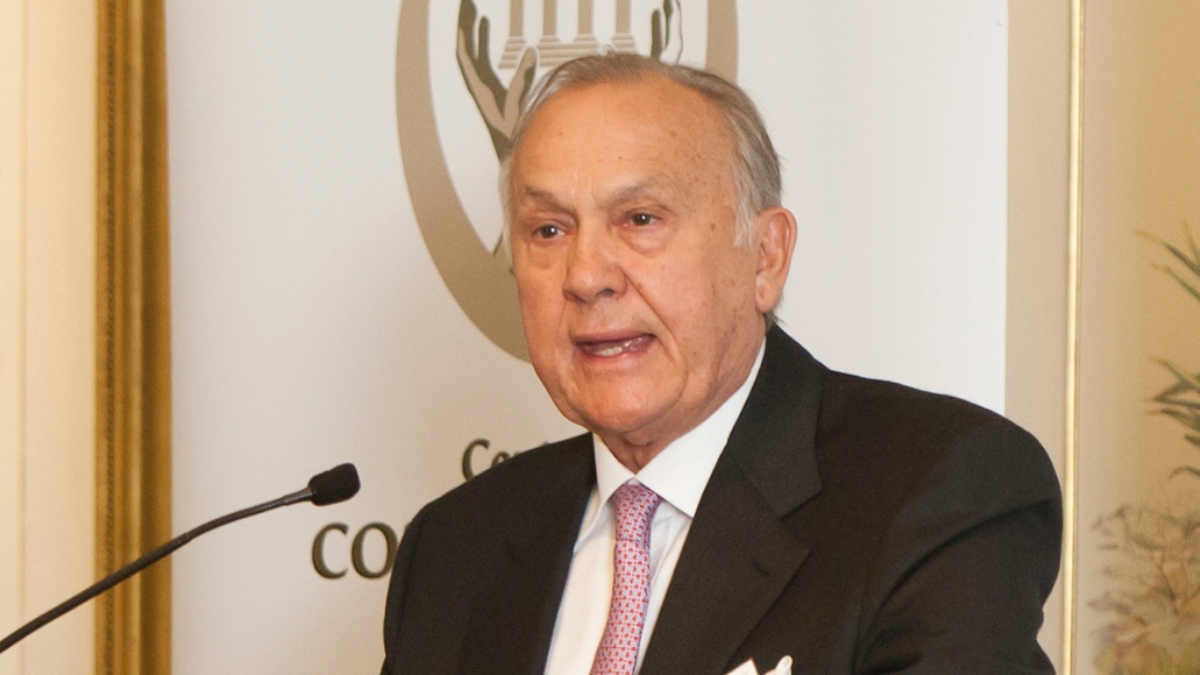
At the symposium, Hersov asked Wiese what he would do to fix South Africa. His answer was that one should forget the bad things in the past.
“Lesson number one is that we forget the past. This is not the whole past, but we forget the bad parts of the past and focus on the good parts,” he said.
“Paul Kruger had the motto, ‘Take from the past all that is good and build thereon the future’. He gave us that lesson 150 years ago.”
He said that ordinary South Africans and non-politicians are increasingly engaged and willing to talk to each other rather than at each other.
This, he said, was reminiscent of the productive discussion groups leading up to the 1990 political transition.
Wiese explained that he remains positive about South Africa, as all the problems can easily be solved by the private sector.
“Unlike many failed states, South Africa has a large, dynamic, and committed private sector,” he said.
“If the private sector is let loose, it can resolve infrastructure and state-owned enterprise failures within one to three years.”
He explained that South Africa has clear problems but also clear, achievable solutions, unlike many developed nations in Europe that are struggling with intractable issues.
He added that South Africa is uniquely resilient, has overcome many adversities, including two wars, and has undergone a peaceful democratic transition.
He said that doomsdayers have been proven wrong time and again in South Africa, and that this will likely continue.
From an investment perspective, he said that opportunities abound in South Africa. “I am continually astounded by how plentiful investment opportunities are,” he said.
You have read 2 out of 5 free articles. Log in or register for unlimited access.





 Loading ...