
The South African Police Service paid R116 million in salaries and bonuses to 767 members who were criminally charged


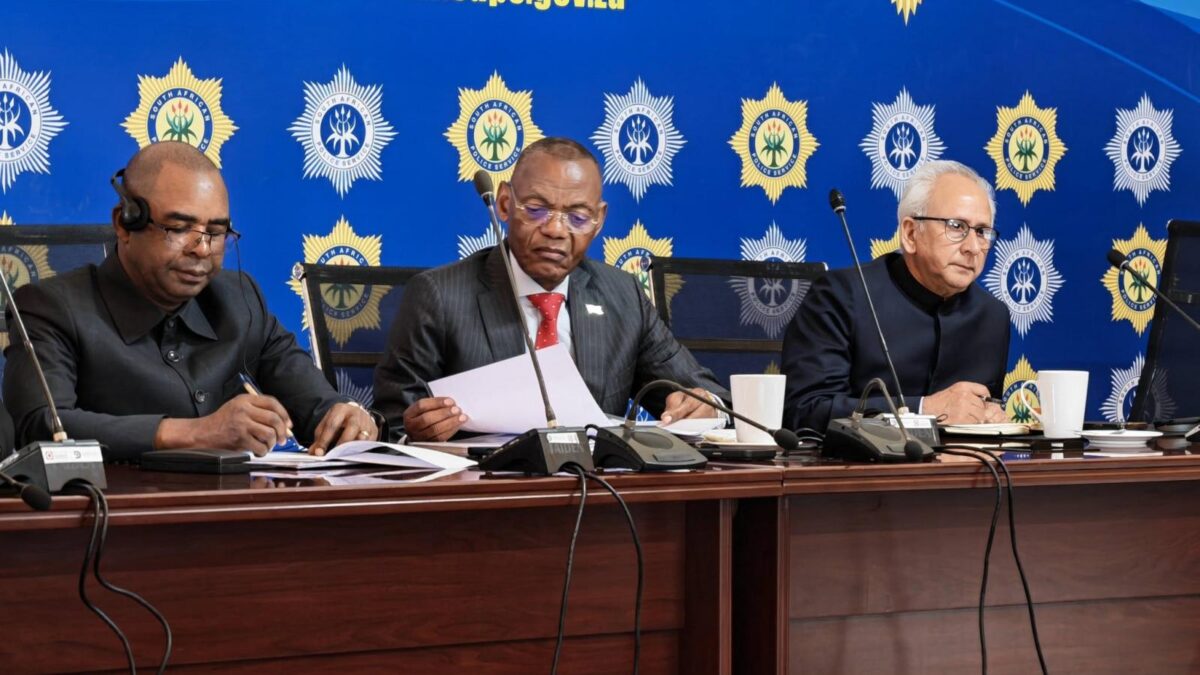
The Acting Minister of Police, Firoz Cachalia, revealed that the South African Police Service paid R115.57 million to 767 SAPS members who were criminally charged.
He shared this information in response to a Parliamentary question from National Assembly member Crossby Shongwe.
Shongwe asked the acting Police Minister for details about the number of SAPS members who have been criminally charged, suspended, and dismissed.
This question focused on police members who were involved in illegal activities such as corruption, organised crime, drug trafficking, extortion, and kidnapping.
He also asked for details about these implicated SAPS members who remained on active duty and continued receiving remuneration.
These details included the amount paid to the police members criminally charged over the last financial year.
Cachalia responded, saying 177 South African Police Service members were criminally charged in relation to offences falling within the scope of the question.
“Of these 177 members, 118 were charged with corruption and 59 with defeating the ends of justice,” he said.
“No SAPS members were charged in respect of organised crime, drug trafficking, extortion, kidnapping or the protection of criminal syndicates.”
He added that 629 SAPS members faced disciplinary proceedings in terms of the SAPS Discipline Regulations from 1 April 2025 to 31 August 2026.
“Of the 629 members, 60 were placed on precautionary suspension during the same period,” he said.
“36 SAPS members were dismissed following disciplinary proceedings. A further 19 members terminated their service before disciplinary proceedings were initiated.”
He added that during the 2026 financial year and the first quarter of the 2027 financial year, 43 SAPS members were criminally convicted.
Of these, 32 South African Police members were convicted of corruption and 11 of defeating the ends of justice.
No SAPS members were convicted of organised crime, drug trafficking, extortion, kidnapping or the protection of criminal syndicates.
In respect of disciplinary proceedings, 61 members were found guilty. Of these, 36 members were dismissed, and 25 members received sanctions.
Cachalia revealed that 427 police members remained on active duty and continued to receive remuneration while disciplinary proceedings were pending.
He said that R115.566 million was paid to the 767 SAPS members who were criminally charged between 1 April 2025 and 31 August 2026.
Fighting organised crime in the South African Police Service
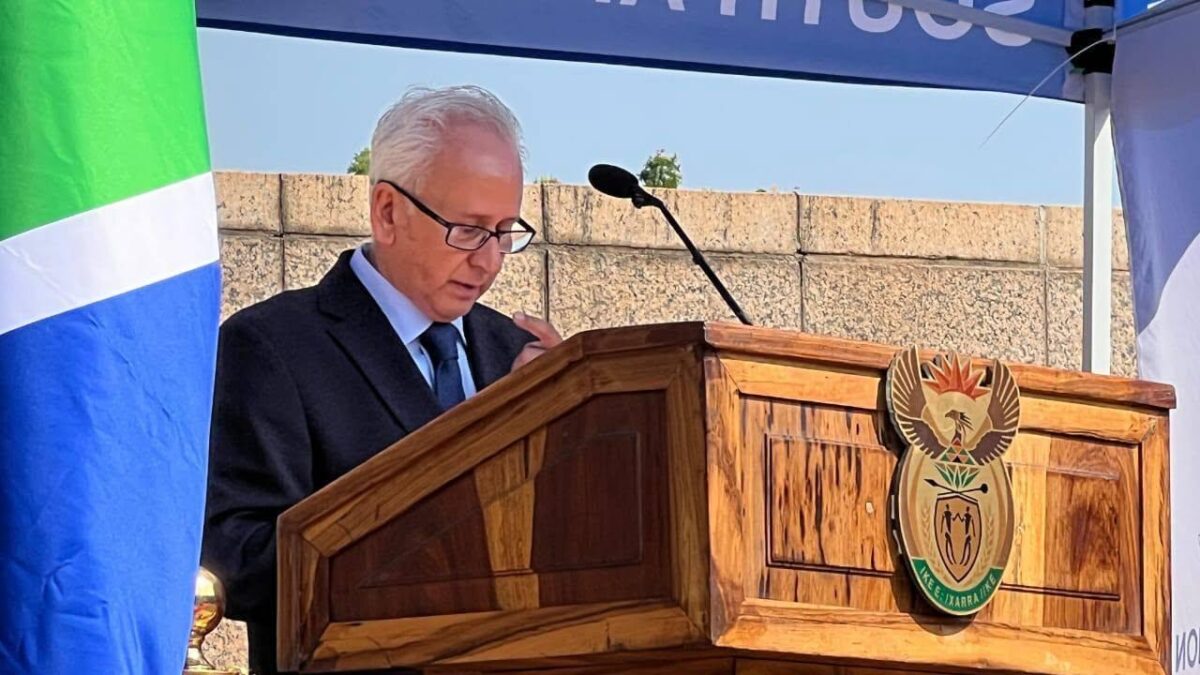
Cachalia said that the South African Police Service implements numerous measures to combat organised crime among its members.
“The SAPS implements lifestyle reviews, lifestyle investigations and lifestyle audits on its members,” he said.
This is done in accordance with the Department of Public Service and Administration Framework for Conducting Lifestyle Audits in the Public Sector.
The process comprises three interrelated phases: lifestyle reviews, lifestyle investigations, and lifestyle audits.
Its purpose is to determine whether an employee’s lifestyle is commensurate with his or her known and legitimate sources of income.
Information is verified through internal and external sources, including financial disclosure records and supervisory reports.
They also use the Companies and Intellectual Property Commission, the Central Supplier Database, the Deeds Registry and the National Traffic Information System.
“Where anomalies or unexplained discrepancies are identified, lifestyle investigations are conducted,” he said.
“This is to determine whether there are indications of unexplained wealth, undisclosed interests, conflicts of interest, fraud, corruption or other unethical conduct.”
“Where necessary, lifestyle audits are conducted to quantify financial losses or damages arising from confirmed misconduct.”
Another layer is security vetting, which is conducted on SAPS members, particularly middle management and designated officials on salary levels 9 to 12.
There is a focus on Ethics Officers and employees in the finance and supply chain management environments.
Crime Intelligence also conducts lifestyle investigations on identified members allegedly working with criminals.
Where actionable information indicating possible criminal conduct is identified, it is disseminated to the relevant investigative, disciplinary or other competent structures.
“Within the Directorate for Priority Crime Investigation, all members must obtain and maintain a security clearance,” he said.
Furthermore, the State Security Agency is conducting transparency and internal accountability measures, mandatory re-vetting, and lifestyle audits of senior managers.
“All Lieutenant Generals have undergone re-vetting, and the process is being extended to Major Generals and implemented across the remaining phases,” he said.
You have read 1 out of 5 free articles. Log in or register for unlimited access.










 Loading ...
Until anc and affiliates are out of the government.. this will hapen again and again.. looks like just another African country….