
DA can lose out on governing in Johannesburg, Tshwane, and Ekurhuleni due to Herman Mashaba’s feud with Helen Zille


The Democratic Alliance (DA) received the most votes in Johannesburg, Tshwane, and Ekurhuleni, but it is at risk of not governing in any of these metros.
This comes as ActionSA, which is the kingmaker in these three cities, is in discussions with the ANC, EFF, and MK Party to form a potential coalition.
In the 2026 local government elections, the Democratic Alliance won 91 seats in Johannesburg, 74 in Tshwane, and 66 in Ekurhuleni.
This is far short of the 136 seats in Johannesburg, 108 in Tshwane, and 113 in Ekurhuleni needed to form a majority government.
This means that the Democratic Alliance will need to partner with the ANC or ActionSA to form a coalition government.
ActionSA leader Herman Mashaba said he had offered a deal to DA leader Geordin Hill-Lewis to form a coalition government in Gauteng.
He said that the Democratic Alliance can run Johannesburg and Ekurhuleni, while ActionSA’s Nasiphi Moya will run Tshwane.
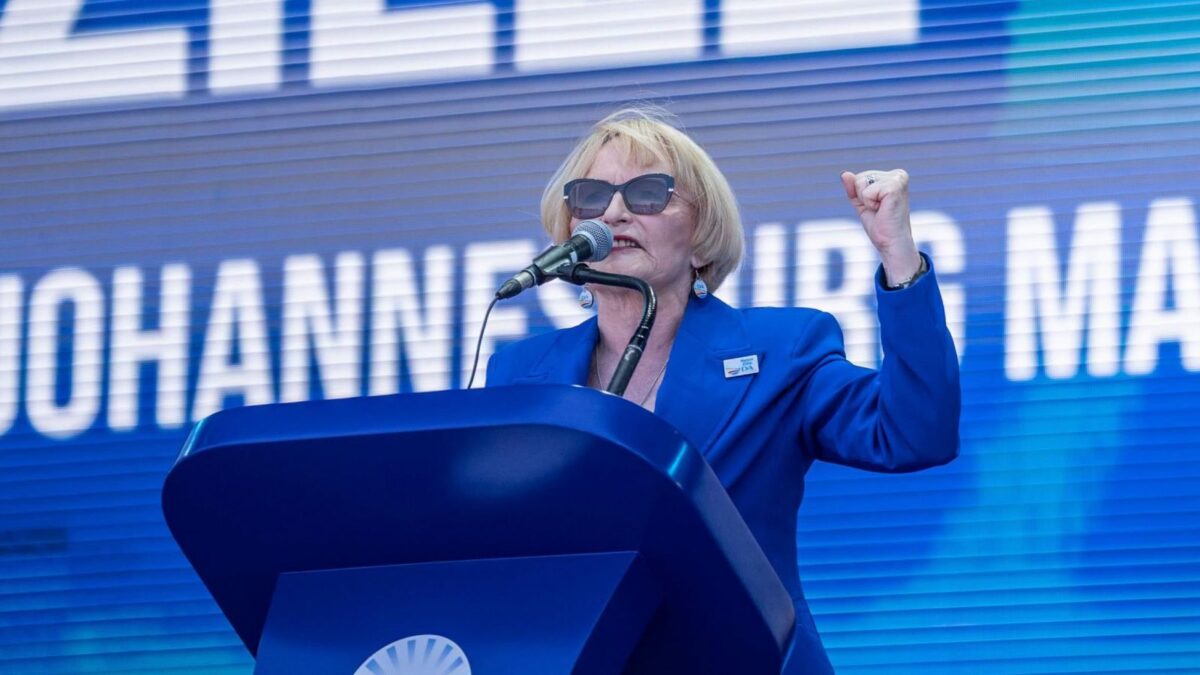
However, there is one caveat. He said that it was impossible for him to work with Helen Zille, and that the DA should select an alternative mayor for Johannesburg.
Zille responded to this request, saying it was a preposterous proposal, since she had received the most votes in Johannesburg.
“Imagine if the DA had received 16% and Herman Mashaba had led the party that got 35%,” she said in a Biznews interview.
“If the DA’s condition was that the person for whom 35% of Johannesburg voted may not be the mayor, it would be absurd. No one would even entertain it.”
“What Herman Mashaba is saying is that his rancour is more important than the voters of Johannesburg, and then he calls us arrogant.”
This shows that the Democratic Alliance is unlikely to entertain Mashaba’s request that Zille step aside, which he said was non-negotiable for a coalition.
Herman Mashaba said that they have enough support to form a coalition
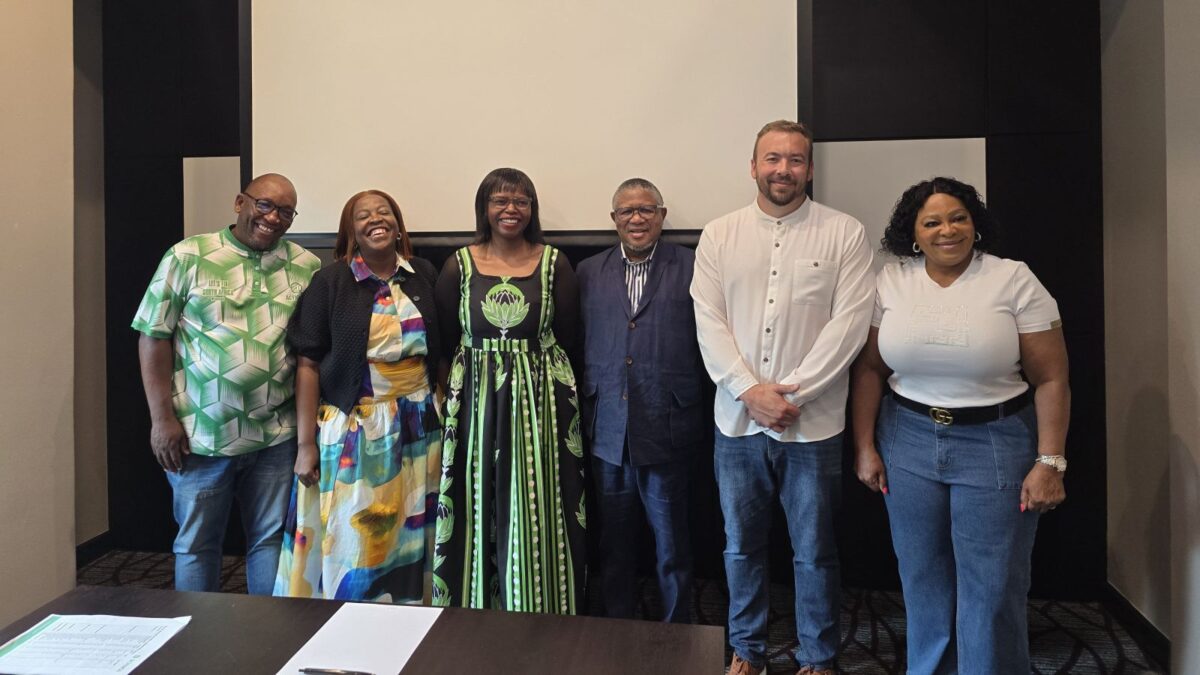
Mashaba told Biznews that he has enough support from other parties to form coalition governments in Johannesburg, Tshwane, and Ekurhuleni.
“I have the support of other parties. In all three of these metros, the other parties want ActionSA to take the lead,” he said.
“If I don’t reach a deal with the DA, the other parties are begging us, saying, ‘Please, if we are to support you, take the leadership.'”
Over the last few days, ActionSA’s National Chairperson, Michael Beaumont, posted details about their meetings with the ANC, EFF, and MK Party.
On Sunday, 8 November 2026, he announced that ActionSA has concluded a productive and mutually respectful first engagement with the ANC.
“We discussed principles around how stable and effective coalition governments could be formed,” he said.
On Monday, 9 November 2026, ActionSA met with the Economic Freedom Fighters (EFF) negotiating team.
“The meeting was positive and mutually respectful, focussing on stability and services,” he said following the meeting.
On Tuesday, 10 November 2026, ActionSA met with MK Party’s national negotiating team as part of its ongoing engagements.
“The meeting was constructive, focusing on shared service delivery plans, particularly in Gauteng, KZN and Mpumalanga, and stronger opposition to a failing GNU,” he said.
ActionSA governed Tshwane as part of a coalition government with the ANC and EFF, which means that a coalition which included the MK Party would not be strange.
A coalition among ActionSA, the ANC, EFF, and MK Party would give them a majority in all three Johannesburg metros, as shown in the table below (see the full analysis here).
| Party | Johannesburg [270 seats] | Ekurhuleni [224 seats] | Tshwane [214] |
| ANC | 63 | 59 | 44 |
| ActionSA | 43 | 40 | 48 |
| MKP | 15 | 15 | 4 |
| EFF | 17 | 14 | 13 |
| Total | 138 | 128 | 109 |
| Needed for 50%+1 majority | 136 | 113 | 108 |
Herman Mashaba laughs off a DA-ANC coalition in Johannesburg
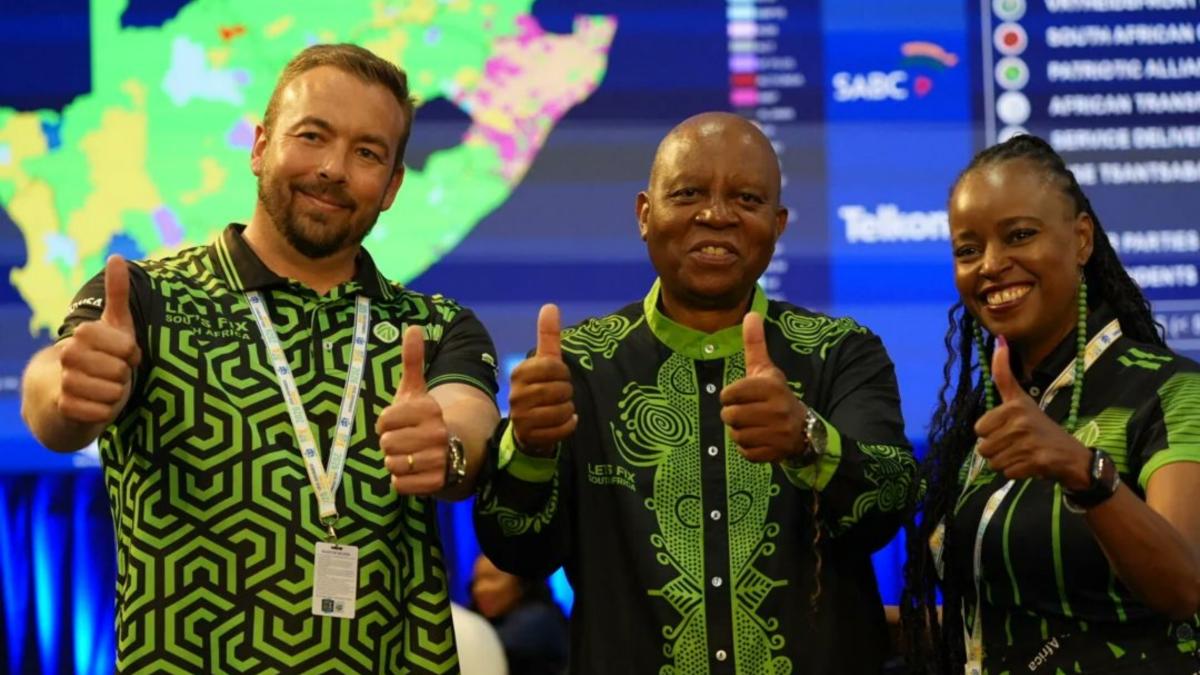
Many people have proposed that the DA partner with the ANC to form local governments across South Africa.
This would extend the relationship the two parties have in the government of national unity (GNU) to the municipal level.
An analysis by The Common Sense showed that, in the 2026 elections, the ANC achieved an outright majority in 53 councils, and the DA in 12 councils.
There are 93 hung councils where a DA-ANC partnership would give them a majority, allowing them to form a coalition government.
That means such a partnership would allow the two parties to govern 74% of South Africa’s municipalities.
It should also create a stable coalition, as one party reneging on the agreement can cause many of its own municipal coalitions to collapse.
Mashaba laughed off the idea of a DA-ANC coalition in Johannesburg, saying it would cause chaos and undermine the parties’ performance in the 2029 elections.
“If there is an ANC–DA government in Johannesburg, it will be an advantage for us heading into 2029 because it will lead to chaos,” he said.
“Let them form that coalition. The ANC and DA working together suits me. I won’t have to worry about managing that relationship.”
“I can simply watch them fight and collapse the government, which will help me focus on 2029, because a DA–ANC coalition would be the ultimate disaster of a government.”
The DA, in turn, has not commented on a potential partnership. It is playing its cards close to its chest and said it would not negotiate through the media.
You have read 1 out of 5 free articles. Log in or register for unlimited access.



 Loading ...
Helen could step aside and appoint another person in her position but of course it always boils down to power and control