
One in three South Africans can’t find work


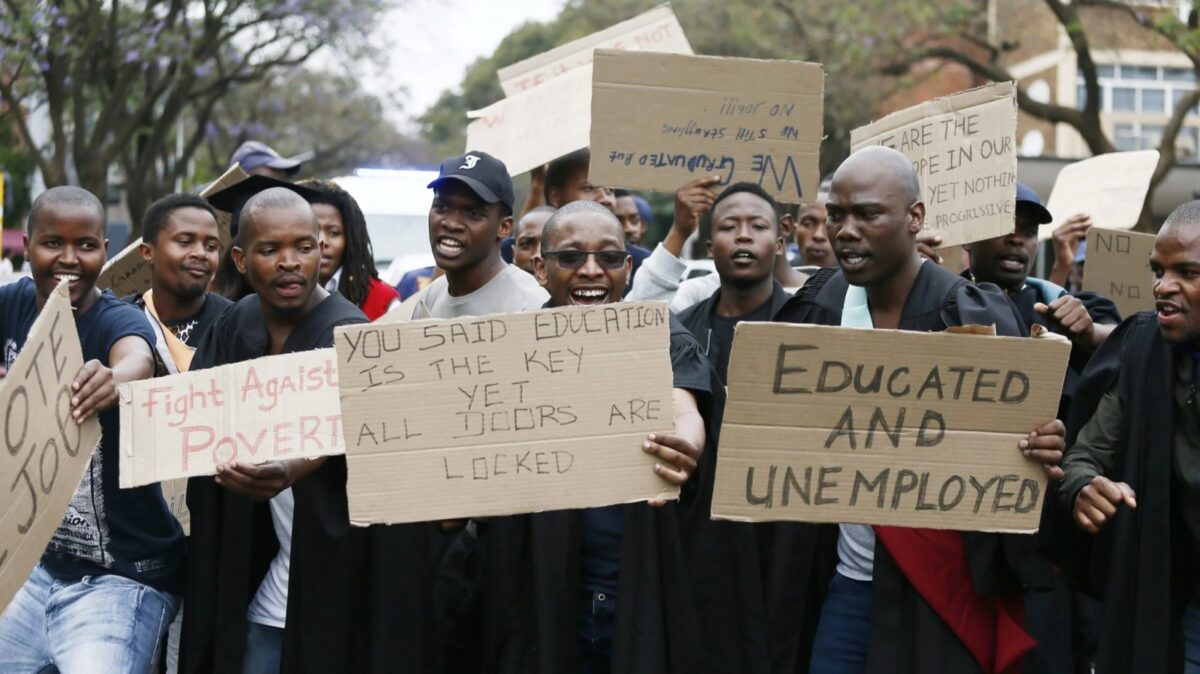
Approximately one in every three South African adults actively seeking work have found themselves unable to secure long-term employment.
The latest Quarterly Labour Force Survey from Stats SA showed that unemployment increased by 97,000 during the third quarter of 2026.
This brought the total number of unemployed people in South Africa to 8.6 million, raising the official unemployment rate to 33.7%, up from 33.6% in the second quarter.
This is South Africa’s highest unemployment rate in over four years, since it reached 33.9% during the second quarter of 2022.
It is the third time unemployment has risen in 2026, following an increase from 31.4% at the end of 2025 to 32.7% in the first quarter.
The largest contributor to rising unemployment was the private households sector, covering domestic and informal workers, which lost 68,000 jobs.
This was followed by the agricultural sector, which shed 34,000 jobs, and the construction sector, which lost 8,000 jobs.
Five of the country’s nine provinces recorded increases in unemployment, with the largest increase recorded in the Free State at 1.8%.
While the official unemployment rate rose by 0.1 percentage points over the third quarter, the expanded unemployment rate remained unchanged from the second quarter at 46.3%.
This includes those discouraged from seeking work, those who want to work but are unavailable, and those who do not work enough hours to be considered officially employed.
Discouraged job-seekers increased by 70,000 during the third quarter to 3.7 million, while other available job-seekers decreased by 1,000 people to 860,000.
Unavailable job-seekers remained unchanged at 44,000, resulting in a net increase of 69,000 in the potential labour force to 4.6 million.
The potential labour force includes people available for work but not actively seeking employment, as well as those seeking employment who are unavailable.
Calls for ministers to resign

Member of the National Assembly Alan Beesley has criticised the Government of National Unity (GNU) for its failure to address rising unemployment.
In a press statement, he expressed concern that more than one in every three people in South Africa’s labour force were unable to find long-term employment.
Beesley also raised concerns that more than 12 million South Africans are now either unemployed or have been discouraged from seeking employment.
He said this was a clear indication that the GNU had failed in its mandate to grow the South African economy and create jobs.
“Rather than blaming external factors, the GNU must look at the numerous own goals that they have continued to score,” Beesley said.
“If the GNU spent less time fighting each other in parliament and in court and spent more time implementing workable solutions, the economy and unemployed may have a chance.”
He called on President Cyril Ramaphosa to replace the Ministers and Deputies of national departments he believes are responsible for the growing job crisis.
This includes the Departments of: Employment and Labour; Trade, Industry and Competition; Public Works and Infrastructure; Transport; and Small Business Development.
Beesley said it was inconceivable that these Ministers and Deputies should remain unaffected in their positions while failing to address stagnant economic growth and job creation.
He said until there is accountability for non-performance, millions of South Africans will continue to suffer the consequences of unemployment.
“Whilst millions of South Africans suffer a loss of dignity, hope, agency and opportunities through unemployment, the bloated cabinet of 75 ministers and their deputies remain unaffected,” Beesley said.
“Ministers and Deputies continue to live the life of luxury while South Africans are being asked to endure an unemployment crisis that has persisted for years and shows no signs of abating.”
You have read 1 out of 5 free articles. Log in or register for unlimited access.










 Loading ...
“The largest contributor to rising unemployment was the private households sector, covering domestic and informal workers, which lost 68,000 jobs.”
There are so many factors making the domestic work sector unattractive. The biggest is that it’s unaffordable for many people. Government keeps raising the minimum wage to a level that people can’t afford.
Another factor is safety. South Africa is unsafe and with that goes trust in your fellow South African. A lot of people don’t feel safe with someone in their house which is understandable.
The third big problem is all this paperwork from government. If you want to hire someone you need to pay UIF then PAYE and then if you get rid of them you have to go to the CCMA and explain why.
Individuals are not equipped to become employers. They don’t have the money or the time for all the bureaucracy.