
Land grabs in a millionaire coastal town in South Africa fuelled by politicians and authorities failing to remove occupiers


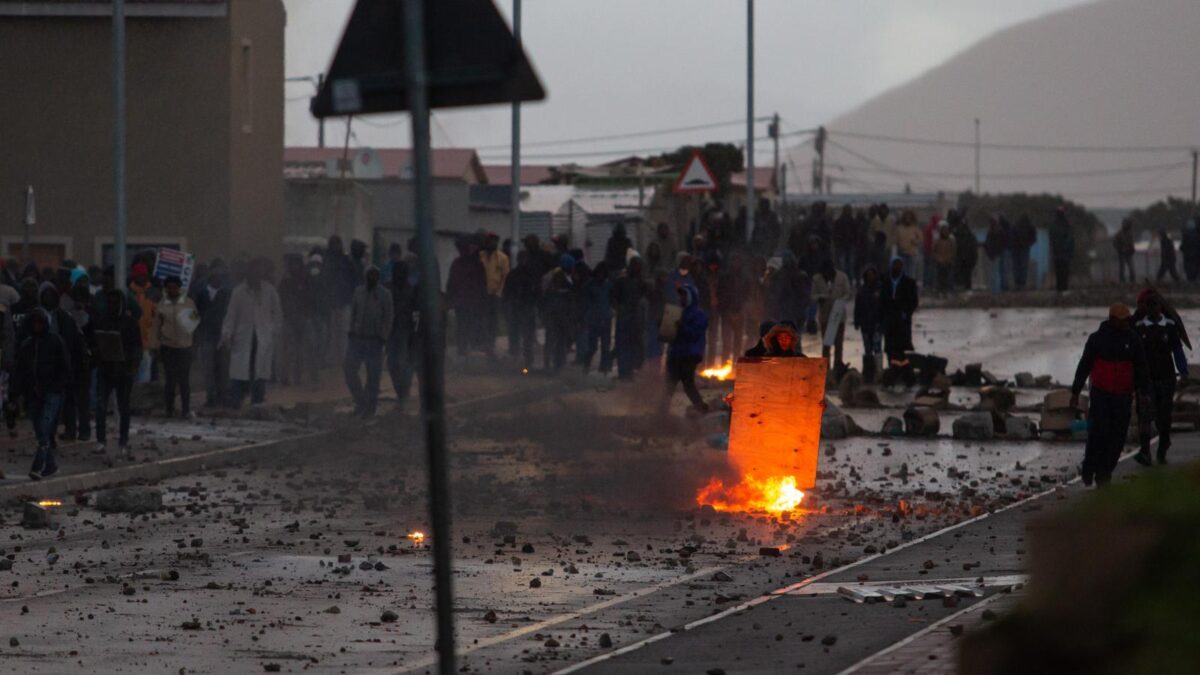
A new documentary sheds light on the takeover of a protected milkwood forest by land grabbers outside Hermanus.
The film, Stolen Ground: The Hermanus Story, was produced by Deep Focus Media in collaboration with AfriForumTV.
It recounts how, starting in 2018, the community movement Zwelihle Renewal led public protests around housing.
When negotiations broke down, hundreds of residents began tearing down fencing and marking off plots in Schulphoek.
The authorities’ failure to remove land occupiers in a timely manner and politicians’ encouragement of land grabs caused a problem for the popular town.
Soon after the land grabs, shack farming started, where syndicates construct and rent out structures on land they do not own.
These land grabs and the growth of informal settlements caused numerous problems for residents in Hermanus and Sandbaai.
Apart from the protests in Zwelihle over housing delivery and local governance, they faced increased crime and environmental problems.
Illegal clearance destroyed portions of protected coastal Milkwood trees and Milkwood forest ecosystems, resulting in vegetation loss.
The rapid population growth also outstripped municipal capacity, leading to issues with water, sanitation, and refuse removal.
Widespread illegal electricity connections led to recurring transformer trips, fire risks in high-density shacks, and friction with neighbouring formal developments.
There were also protests and highway shutdowns which impacted Hermanus’s tourism-driven economy, hospitality businesses, and local employment.
Stolen Ground: The Hermanus Story
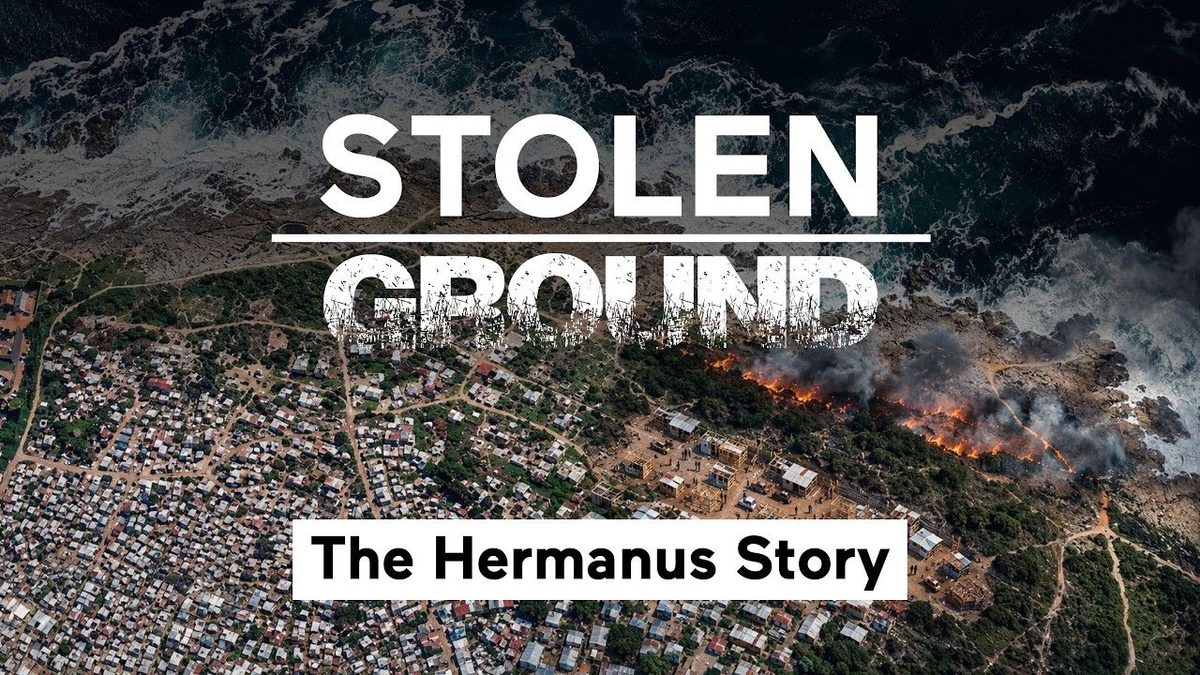
Joe Emilio, the man who created the film Stolen Ground: The Hermanus Story, shared his views on the debacle.
He said that producing this documentary has been one of the most challenging and eye-opening experiences of his career.
“What began as an investigation into a land invasion became a much bigger story about political accountability and the failure of authorities to act,” he said.
The film also uncovered the devastating consequences for the Hermanus community and surrounding areas.
“My hope is that this film raises difficult questions, sparks meaningful debate, and ultimately puts pressure on those in power to provide answers,” he said.
Leandra Enslin, a producer at AfriForumTV, said that they heard the full story directly from the residents of Hermanus.
“It is important to go and hear firsthand how land grabs affect people’s lives. You realise then just how destructive politically driven land grabs are,” she said.
She said that the Hermanus story showed that private property rights are not merely an abstract concept on paper.
“Stories like the one from Schulphoek need to be shared, so that people are prepared to prevent such occurrences elsewhere,” she said.
Louis Boshoff, spokesperson for AfriForum, said that the land grabs in Hermanus are important to remember in relation to the Expropriation Act and property rights.
“Legislation and political rhetoric have consequences. Without sound legislation and law enforcement, criminal groups will cause similar damage elsewhere,” he said.






 Loading ...
It’s a similar story everywhere. The occupation starts fairly late on a Friday afternoon because these skelms know the courts aren’t working over the weekend, and if they aren’t removed within 24 hours, they get to stay indefinitely. Our local ‘squatter camp’ – read ‘illegal mining colony’ – did exactly that back in 2017. Now they shoot each other nearly every night, steal everything their eyes see even if it’s broken and try and hijack nearby houses.