
South Africa’s new ‘highly uneven’ best friend


China has recently become South Africa’s largest trade partner, but the relationship between the two countries is not equal.
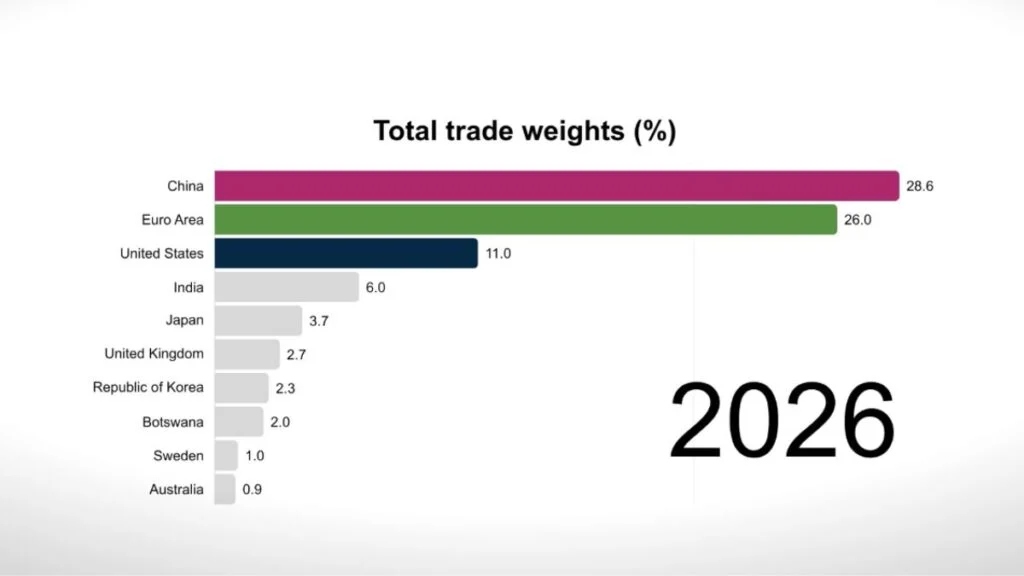
In a recent report, the South African Reserve Bank (SARB) noted that China had overtaken Europe as the country’s largest trading partner.
This is after years of Europe having the largest trade weight with South Africa, which has slowly contracted in the last few years.
“China has steadily climbed the rankings over the past two decades, moving from sixth place in 2003 to first in 2026,” the SARB said.
“Its trade weight increased sharply from only 3.1% in 1999 to 28.6% in 2026,” it added, showing a 25.5 percentage-point increase over 27 years.
“Over the same period, the euro area’s trade weight fell to 26.01% from 35.7%, moving it to second place,” it said.
While China is South Africa’s largest trading partner by volume, there is an imbalance between its imports and exports.
South Africa receives far more Chinese imports than it exports to China, according to the SARB’s statistics.
The Reserve Bank said the trade relationship with China is “highly uneven” due to the difference between imports and exports.
“South Africa imports a lot more manufactured products from China than it exports,” the Reserve Bank noted.
“In the 2026 revision, China supplied 35.7% of South Africa’s manufactured imports but received only about 5.9% of South Africa’s manufactured exports.”
This means that while Europe is no longer South Africa’s largest trading partner, it is still the region receiving the most of South Africa’s exports.
The large number of Chinese imports has raised concern among some South African industries, including the automotive industry.
In August 2026, vehicle parts manufacturer Metair said imports from countries such as China were a threat to South African businesses.
“Most of the increase in vehicle sales was attributable to imports from Chinese and Indian automotive brands, which continue to put pressure on the locally manufactured vehicle market,” the company said at the time.
Calls for a ban
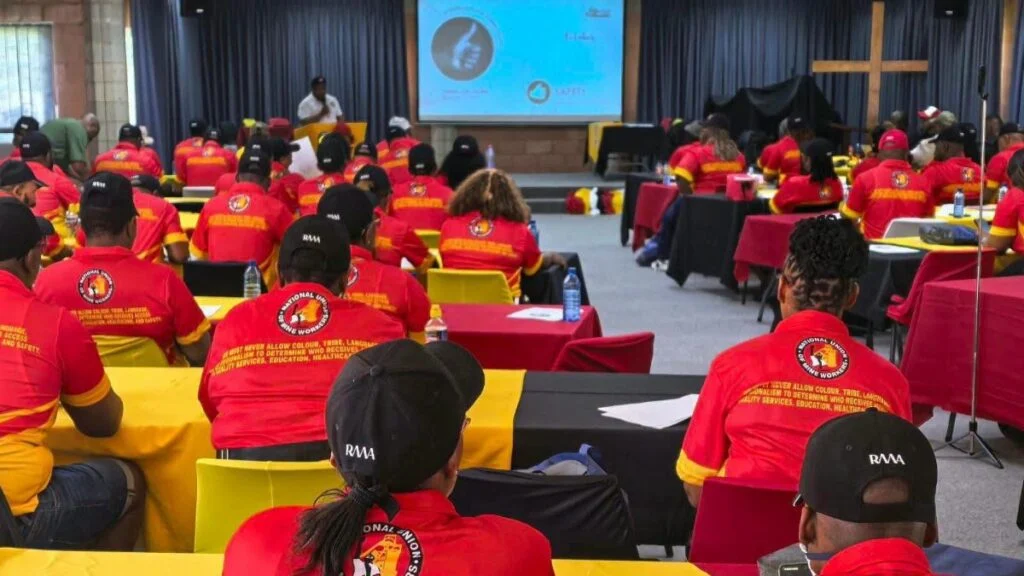
More recently, the Congress of South African Trade Unions (COSATU) called for bans on online e-commerce sites Shein and Temu.
While these sites have a global presence, they rely heavily on China for manufacturing the goods they sell worldwide.
COSATU said cheap imports from these groups threaten both local manufacturing and retail jobs.
“Delegates endorsed the resolution to campaign for the banning of offshore online shopping giants Shein and Temu to facilitate support for the local market and, in turn, stimulate job creation,” it said.
The two online retail giants have a large presence in South Africa and hold an estimated 3.6% of the country’s retail market share.
This is according to research from the Localisation Support Fund (LSF), which also found that the two companies accounted for R7.3 billion in sales in 2024.
With its large footprint in South Africa, LSF’s report said that between 2020 and 2024, millions in local manufacturing sales had been lost, along with thousands of jobs.
“R960 million in lost local manufacturing sales, 2,818 associated manufacturing jobs, and 5,282 displaced retail jobs from 2020 to 2024,” the report said.
Although China accounts for a large amount of imports entering South Africa, the SARB noted several other trade partners.
Behind China, Europe and the US are the two largest exporters to South Africa, with Japan, India, and the UK also listed.
The majority of goods leaving South Africa go to Europe, with the US receiving the second-most and China placing third.
Much like South Africa’s imports, Japan, India, and the UK account for large parts of the country’s exports.
South Africa’s largest trade partners by volume






 Loading ...
China are exploiters of the highest order.
Look at how they have destroyed the rest of Africa in their gluttonous pillaging of its resources.
They are far far worse than Europe or USA… no one is innocent… just more fair.