
R200 million museum in South Africa’s capital locked to the public since 2018


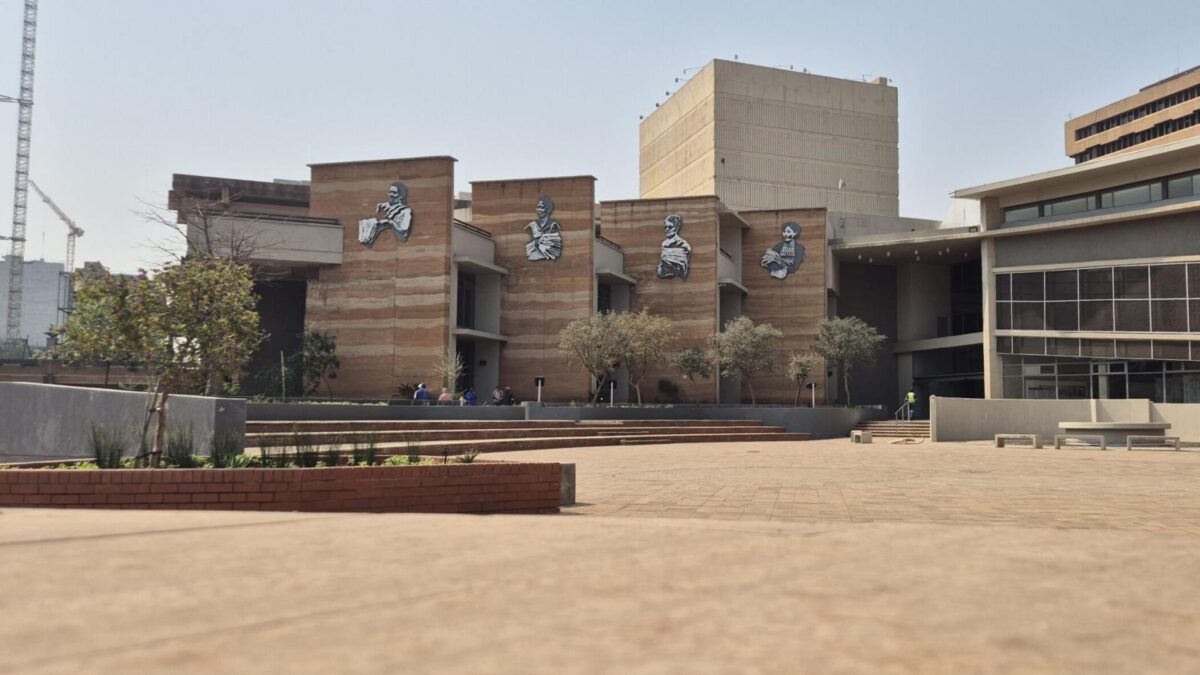
The Women’s Living Heritage Museum at Sammy Marks Square, which cost R200 million, has remained locked to the public since 2018.
The museum is a landmark in the Pretoria Central Business District at Lillian Ngoyi Square, adjacent to Sammy Marks Square.
The project was initiated in 2012 by the Gauteng Provincial Government, and the monument was unveiled on Women’s Day on 9 August 2016.
The monument was commissioned to honour the contributions of women in the South African liberation struggle.
It also commemorates the historic 1956 Women’s March, when 20,000 women marched to the Union Buildings to protest apartheid pass laws.
Central to the facility are four life-sized statues representing the leaders of the 1956 march: Lilian Ngoyi, Sophia Williams-de Bruyn, Helen Joseph, and Rahima Moosa.
The exterior features a 20-plaque Memory Walk that traces the evolution of the square from Market Square to Strijdom Square, and its renaming as Lillian Ngoyi Square.
Beyond exhibits, the site was designed as a living heritage facility featuring a leadership development and training centre, exhibition spaces, and performing arts platforms.
Despite its cultural value, the Women’s Living Heritage Museum has been fraught with construction delays and administrative hurdles.
The construction was only completed in 2018 at a cost exceeding R200 million, but the facility has remained closed to the public due to outstanding compliance issues.
The City of Tshwane previously cited safety concerns, such as non-compliant lift infrastructure and a lack of a fire compliance certificate.
Leanne De Jager, a member of the Gauteng Provincial Legislature, said the problems at the museum are a slap in the face to women.
“The monument has remained locked to the public since 2018, despite being built to celebrate and honour women’s contributions,” she said.
“This venue could have hosted exhibitions of women’s art, recitals celebrating women, and platforms for women in the creative industry.”
“Instead, artists, performers and creative practitioners were shut out of a space built specifically to honour them.”
She said that every month this museum remains shuttered is a month of lost jobs for caterers, technicians, curators, security staff, and performers.
“It is lost income for women artists denied a stage and a direct contradiction of the very commitments Gauteng’s leadership claims to champion,” she said.
She called on the Gauteng Department of Sport, Arts, Culture and Recreation to give a timeline for obtaining the outstanding fire compliance certificate and opening the museum.







 Loading ...
another waste of money who needs a empty museum when there are no jobs around