
South Africa’s plan to bring back corporal punishment for youth offenders



South Africa’s Minister of Correctional Services, Pieter Groenewald, has discussed the reintroduction of corporal punishment into the country’s justice system.
Groenewald discussed these plans on the State of the Nation Podcast with Mike Sham and said it would be useful for youth offenders.
“We must start the discussion on corporal punishment, but not like it was in the past,” he said, “It must become part of a sentencing.”
The use of corporal punishment was abolished in South African education systems in 1996 with the introduction of the South African Schools Act.
This was strengthened through the introduction of the Abolition of Corporal Punishment Act in 1997.
This act repealed any existing power for a court to authorise corporal punishment, including in traditional courts.
The act repealed all laws which allowed for whipping or the death penalty and impacted sentencing for several crimes.
Groenewald said the practice could be useful in cases of petty theft and similar crimes committed by juvenile offenders.
He highlighted that many young people arrested for petty crimes cannot afford bail, forcing them to spend time in prison while awaiting trial.
“About 3,000 juveniles couldn’t pay a bail of R1,000 or less, he said, showing the problem with young people ending up waiting for court proceedings in prison.”
His proposal for corporal punishment would be an alternative to prison sentences, which he argued could be seen as worse for the country’s youth.
“It’s more inhumane to put that juvenile in an overcrowded cell, and everything that happens there. That’s inhumane,” he said.
Overcrowding is a major problem in South Africa’s prisons, with some facilities, such as the Knysna correctional centre, exceeding 300% occupancy.
In a parliamentary address in June, Groenewald said that overcrowding was not a short-term issue and would require comprehensive policy reform.
Corporal punishment in South Africa
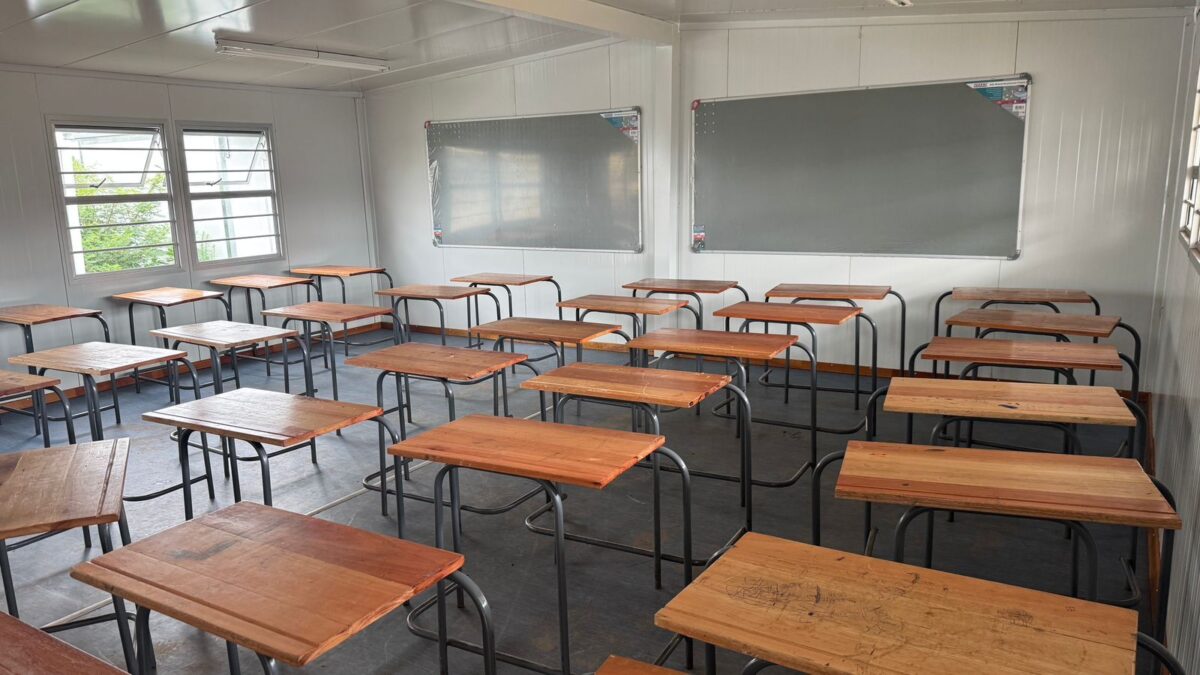
Many groups oppose the use of corporal punishment in South Africa, particularly in schools, where, despite being abolished, it is still a common practice.
In 2019, Stats SA found that approximately 1 million children of the 13 million attending school had experienced some form of violence.
Of the one million children, roughly 84% reported being subjected to corporal punishment from teachers.
In the same study, it was revealed that many households support the use of corporal punishment in schools.
Over 38% of South African households supported the use of physical punishment if a child is caught drinking or smoking at school.
The data also found that 32% of households supported its use if a child disrupts a lesson or argues with an educator.
Despite this, South Africa’s government has recently made efforts to support its existing laws prohibiting corporal punishment in schools.
The Bela Act reinforces the country’s existing laws regarding physical discipline and highlights that no physically or emotionally damaging punishments are allowed.
Groenewald acknowledged the opposition to corporal punishment, but said that the ethics of it should be weighed against placing children in prison.
Even if children are not ultimately given prison sentences for petty crimes, they may be forced to spend time in a correctional facility if they cannot afford bail.
While many young people arrested in South Africa cannot afford bail, Groenewald said there are efforts to help them.
He highlighted the private bail fund established by retired Constitutional Court Justice Edwin Cameron, which helps detainees imprisoned for bail amounts of less than R1,000.
This fund provides some relief to young offenders awaiting trial for petty crimes, such as minor shoplifting.
Groenewald said this is also a relief to taxpayers, who do not have to pay for unnecessary incarcerations while non-violent offenders await trial.






 Loading ...
Criminals must be punished according to the crime committed. If engaged in serious Contact Crimes, they must lose all rights to a grant or pension, and the right to vote. Hurt the pocket, and you will see a more disciplined cadre on the streets.