
Billionaire Johann Rupert gave 18,000 South Africans land and houses


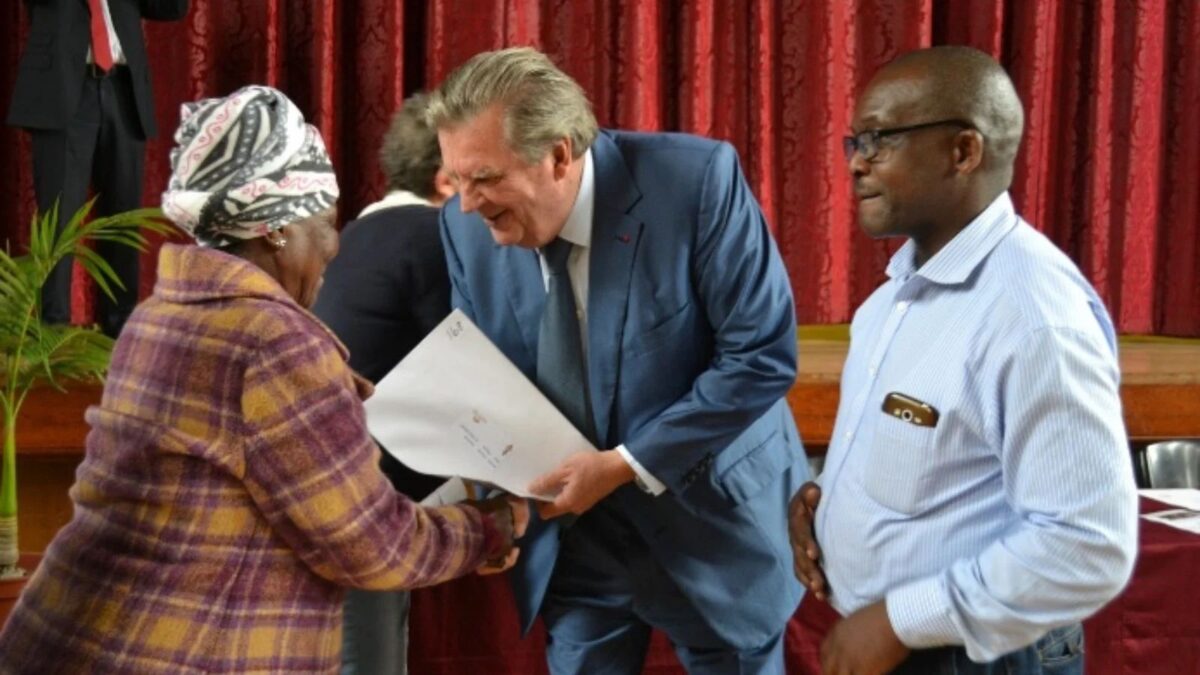
Johann Rupert, through the Reinet Foundation and Remgro, has recapitalised the Khaya Lam land reform project launched by the Free Market Foundation (FMF) in 2010.
The Khaya Lam project transfers properties from municipalities to legal tenants, converting dead capital to dynamic capital.
The project partners with funders, municipalities, and conveyancers to convert township tenants into homeowners at no cost to residents.
This process provides families with title deeds for their rental properties, allowing them to build generational wealth.
The FMF’s first title deed handover event took place in 2013. By January 2023, Khaya Lam hit the 10,000 transfers milestone.
By June 2026, Khaya Lam had completed over 24,000 transfers. This work has benefited thousands of disadvantaged South Africans.
FMF CEO David Ansara said that the Khaya Lam project seeks to ensure that all South Africans understand the value of property rights.
“All South Africans, regardless of race or income level, should be invested in a policy environment where private property rights are secure from state interference,” he said.
“Insecure tenure has historically been one of the main causes and drivers of the immense poverty our society suffers from.”
Ansara added that dignity is out of the question when the place in which you live is not securely yours.
FMF President Temba Nolutshungu hailed Rupert’s support for the Khaya Lam project, saying it was improving the lives of ordinary South Africans.
“Between 2018 and 2024, the Reinet Foundation and Remgro donated R25 million each to Khaya Lam, funding over 18,000 transfers,” he said.
The problem the Khaya Lam project solves
StatsSA data shows that 11.8 million South African households own the homes they stay in. It translates into an ownership rate of approximately 64%.
In 2019, the Centre for Housing Finance in Africa reported that, of these households, only 6.6 million had registered title deeds.
It leaves more than five million households without title deeds. Most of these occupy properties built by municipalities before and after 1994.
Many of these properties were built by the apartheid government in dormitory townships across the country.
Some families built their own small houses but did not acquire title deeds. This reduces residents of these homes to mere tenants.
These families have no secure way to sell their properties or leave them to their families upon passing.
A major factor in the backlog of title deed transfers is the cost and administrative overhead of the process.
The Free Market Foundation said the cost of titling a modest house with an average value of R100,000 is advertised at about R6,500.
The cumbersome process and cost are too much for most legitimate inhabitants, especially the elderly, pensioners, single-parent families, and the unemployed.
Without proper title deeds, the owners cannot move to another area to work without risking losing their property or borrowing money against their house to start a business.
The Khaya Lam initiative covers the costs and administration and, through it, helps underprivileged people own the homes they live in.









 Loading ...
Free Market Foundation – the title says it all, remember – CSI means big corporations are citizens too, who should adopt a corporate culture of apportionment of their wealth to those they interact with commercially, as a community of customers (CSR). Technically, it has got nothing to do with having a good heart – but more with being a responsible corporate citizen.