
Only 31% of young black children in South Africa grow up with both parents at home


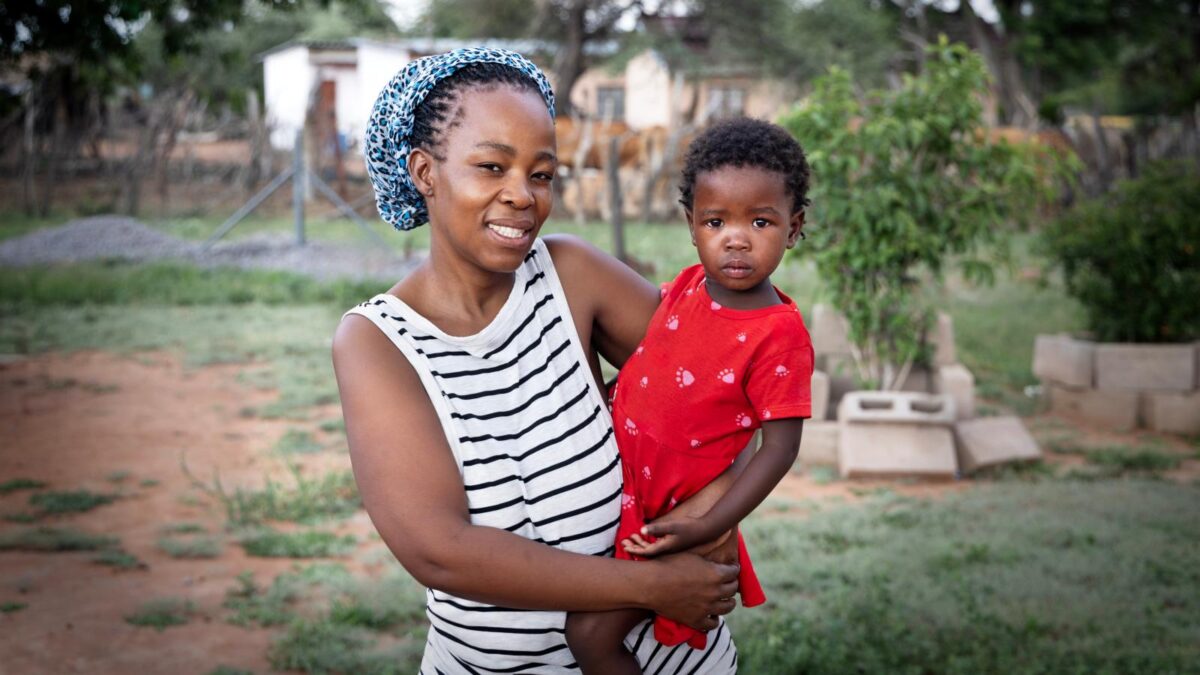
Dr Azar Jammine, chief economist at Econometrix, said that the low percentage of black children growing up with both parents at home is a serious problem.
Jammine is one of South Africa’s most respected economists and has become an important source of analysis and forecasting for corporate and institutional clients.
He has served as a director of numerous companies, including JSE-listed entities such as Netcare, York Timbers, and Federated Employers Mutual.
Jammine has a deep personal interest in South Africa’s educational development, viewing it as crucial to economic upliftment.
He serves on the executive committee and as an executive director of the General Council of the Independent Schools Association of South Africa (ISASA):
He has been a long-serving board member of institutions such as St Mary’s School, the Saheti Trust, and the Wits University Foundation Board.
In an interview on Palatable Politics, he said that South Africa faces a nuclear family problem, which affects childhood development and education.
“The family unit doesn’t exist in so many areas where it ought to. Only 31% of young black African children grow up with both parents at home,” he said.
“This means that, from a very early age, they don’t get the kind of upbringing they need. I am talking about even preschool and pre-primary school.”
He explained that so much of the brain’s formative development in literacy and numeracy occurs before going to school.
“Your father and your mother teach you how to count and spend time with you. That simply doesn’t happen with so many of these young children,” he said.
South Africa is facing a nuclear family challenge

South Africa is experiencing a dramatic decline in the nuclear family setup, which has significant societal and economic ramifications.
In 2002, 39% of children lived with both parents. This number declined to 31.4% in 2024, which is of concern.
As the percentage of households with both parents declined, those with the mother only showed the most growth.
The percentage of children living with only their fathers has remained remarkably flat, hovering between 3% and 4% for nearly three decades.
South Africa has much worse statistics than developed countries when it comes to children living with both parents.
In 2024, two-parent households made up approximately 63.5% of all households with children in the European Union.
71% of children in the United States live in a two-parent household. This represents a slight resurgence or stabilisation of the traditional family structure.
In Japan, between 85% and 88% of children live with married couples. Japan also has very low rates of children born out of wedlock.
It is clear that South Africa has a much lower rate of children living with both parents, signalling a decline in the nuclear family.
There are many reasons for the low rate of two-parent households in South Africa, including historical, economic, and cultural factors.
The primary historical driver is the oscillating migration system established during the colonial and apartheid eras. Men migrate to urban mining and industrial hubs to work, while their families remain in rural areas.
South Africa also has a high rate of births among single mothers. Over 70% of births in South Africa occur to never-married mothers.
| Year | Children living with both parents |
| 2002 | 39.0% |
| 2006 | 36.2% |
| 2010 | 34.0% |
| 2015 | 34.2% |
| 2020 | 33.8% |
| 2022 | 32.7% |
| 2024 | 31.4% |
The impact of single-parent households

The impact of single-parent households on a country is significant. Lower nuclear family percentages are associated with many social ills.
Two-parent households generally benefit from the dual-earner model. This means they have more money to invest in their children.
In the United States, for example, the poverty rate for single-mother families is significantly higher than for married-couple families.
Economic strain often leads to frequent moves, resulting in children attending lower-funded schools and losing the social capital in stable, long-term neighbourhoods.
Economic hardship is a strong predictor of lower educational completion. Children in single-parent homes are statistically more likely to drop out of high school.
Studies show that boys may struggle when a father is absent. They have higher rates of incarceration and lower employment rates in adulthood.
The economic impact of single-parent households on children is significant, and they face a significant disadvantage compared to those with both parents present.
Between 50% and 90% of children in the United States who grow up in two-parent households exceed their parents’ income.
Only 26% to 42% of children in single-mother households who start in the bottom income tier move to the middle or top as adults.
The same trends are seen in South Africa, where children in single-parent homes are twice as likely to live in poverty compared to those in two-parent homes.
Children in single-parent households typically don’t have access to paid benefits such as private schooling, high-speed internet, and specialised healthcare.
The presence of both biological parents is also positively associated with higher test scores in matric and a higher likelihood of entering tertiary education.
Children from single-mother homes face a statistically higher risk of dropping out before completing Grade 12.
There is a strong correlation in South Africa between father absence and youth delinquency.
Children in single-mother households report higher levels of stress and anxiety, often linked to the financial instability of the home.
This stress can affect cognitive development as early as the preschool years, which can impact success later in life.
Some reports indicate that a vast majority of male youth in correctional facilities come from father-absent homes.










 Loading ...
Because either the wife or the husband is in jail!