
GNU party pushes to get major South African province renamed


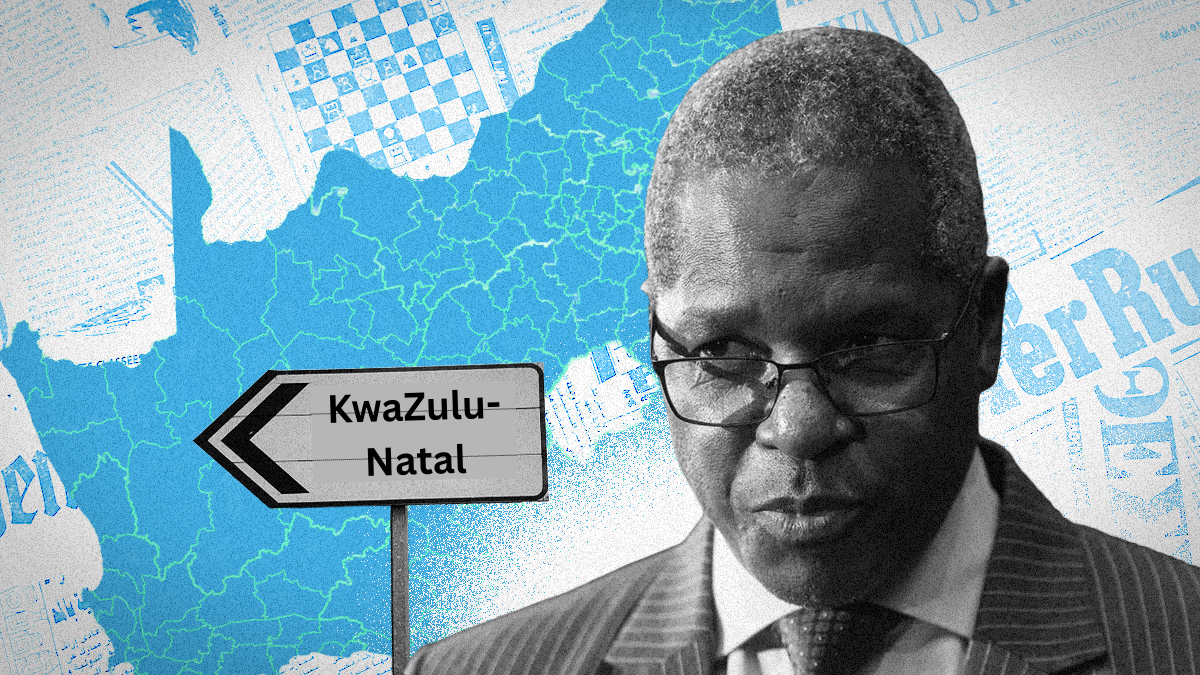
The Inkatha Freedom Party (IFP) has thrown its weight behind King Misuzulu kaZwelithini’s call to rename KwaZulu-Natal.
The party announced that it “fully supports” and “applauds” the idea of removing the ‘Natal’ from KwaZulu-Natal, renaming the province KwaZulu.
The King made this proposal during a speech at the 147th commemoration of the Battle of Isandlwana in Nquthu.
“We need to remove this Natal. This is KwaZulu, so I don’t understand why we have this Natal,” he said.
He argued that the ‘Natal’ part of the name was imposed by colonisers.
The IFP, a member of the Government of National Unity (GNU) and the KZN provincial government, has supported his statements.
“This call is both timely and historically justified,” the party said. “The proposal comes as no surprise and is neither unreasonable nor uncalled for.”
According to the party, whose member Thami Ntuili serves as premier, said during the reign of King Shaka, who ruled over many tribes, the boundaries of KwaZulu extended as far as the uMtamvuna River in the Eastern Cape, Balfour in Gauteng, and Ermelo in Mpumalanga.
“This demarcation resulted in the loss of many parts of KwaZulu, which were placed under other provinces,” the party said.
KwaZulu means “place of the Zulu” in isiZulu and refers to the ancestral heartland of the Zulu people.
The name Natal comes from the Portuguese explorer, Vasco de Gama.
While sailing along South Africa’s southeastern coast on Christmas Day in 1497, de Gama named the area Terra do Natal, or “land of the Nativity” after the holiday.
During the Convention for a Democratic South Africa (CODESA), IFP says that negotiations in the early 1990s regarding the renaming of provinces were intense, particularly regarding KwaZulu-Natal.
The party said that during this time and consistently since then, it has advocated for the recognition of KwaZulu in acknowledgement of the Zulu Kingdom and its historical and political significance.
The name Natal, which had been in use for centuries at that point, was changed to “KwaZulu-Natal” in 1994.
A compromise that fails to reflect reality – IFP

“The current name remains a compromise that failed to fully reflect reality,” the IFP said. The party is advocating not only for this name change, but also for further renaming to reflect historical importance.
The IFP said that the uMgungundlovu District Municipality, where Pietermaritzburg is located, should be changed as well.
“It is a well-known fact that uMgungundlovu was King Dingane’s royal palace near uLundi, which was destroyed, after which the voortrekkers names Pietermaritzburg a ‘fake’ uMgungundlovu with the deliberate intention of mocking and ridiculing Zulu People,” the IFP said.
“Continuing to refer to Pietermaritzburg as uMgungundlovu is deeply painful and misleading, as it distorts history and trivialises the destruction of the original royal palace.”
The party said that accepting this name gives the impression that the country accepts or celebrates the injustices imposed on the Zulu Nation.
The King’s call to change the name of KwaZulu-Natal should further inspire the provincial government and the Department of Sports, Arts and Culrue to urgently correct place names that have been incorrectly written or distorted over time, according to the IFP.
“Examples include uMbogintwini and Ixopo, among others, whose current spellings strip them of meaning and cultural context.”
The party argues that this is not only administrative, but a matter of dignity, identity and justice.
“Place names carry history, meaning and collective memory. When written correctly, they restore linguistic integrity, affirm cultural heritage and honour the lived experiences of local communities,” the IFP said.
Name changes in South Africa have been a contentious issue in democratic history. Since 2019, the South African Geographical Names Council has cost taxpayers R14 million to run.
Most of the name changes since 1994 have consisted of spelling changes, but some name changes, especially in the last six years, have come under scrutiny.
One such name change was the decision to rename Port Elizabeth, Gqeberha. Some were concerned this would negatively affect tourism, with over 30,000 people signing a petition to stop the change.
Other significant name changes in the last six years included changing King William’s Town to Qonce, Uitenhage to Kariega, Cradock to Nxuba, Somerset East to KwaNojoli, and Ladysmith to uMnambithi.

 Loading ...
To avoid a show of complete incompetene, let’s just rename something and hark back to racism and apartheid and the Struggle to disguise exactly how incompetent we are. anc solution.