
No white South Africans welcome: Land Reform Minister wants to discuss racial exclusion in leasing state-owned agricultural land



Land Reform and Rural Development Minister, Mzwanele Nyhontso, has accepted an invitation to discuss racial exclusion in leasing state-owned agricultural land.
Lex Libertas has requested a meeting with Nyhontso regarding the exclusion of white people from the allocation and leasing of state-owned agricultural land.
Lex Libertas is a South Africa-based think tank and advocacy group, led by Ernst Roets, focusing on freedom, decentralisation, and self-governance.
The engagement request followed advertisements from the Department of Land Reform and Rural Development which explicitly exclude white South Africans.
The department has published numerous ‘Applications to Lease State Land’, along with the eligibility criteria.
It cites the department’s Beneficiary Selection and Land Allocation Policy and State Land Lease and Disposal Policy as criteria.
The first criterion eliminates all white citizens of South Africa, independent of their farming experience.
Applicants must be Africans, Indians, and Coloureds who are South African citizens. The African in this context includes persons from the first nations of South Africa.
In response, Lex Libertas is set to release a report documenting the exclusion of white citizens from opportunities to lease state-owned agricultural land.
The report also examines the broader pattern of racial legislation and the failure of existing land reform policies.
It also addresses false narratives regarding land ownership in South Africa, and a series of possible solutions to the crisis.
“The report will be published ahead of the meeting with Minister Mzwanele Nyhontso,” Roets said in a press statement.
Meeting between Lex Libertas and Land Reform and Rural Development Minister
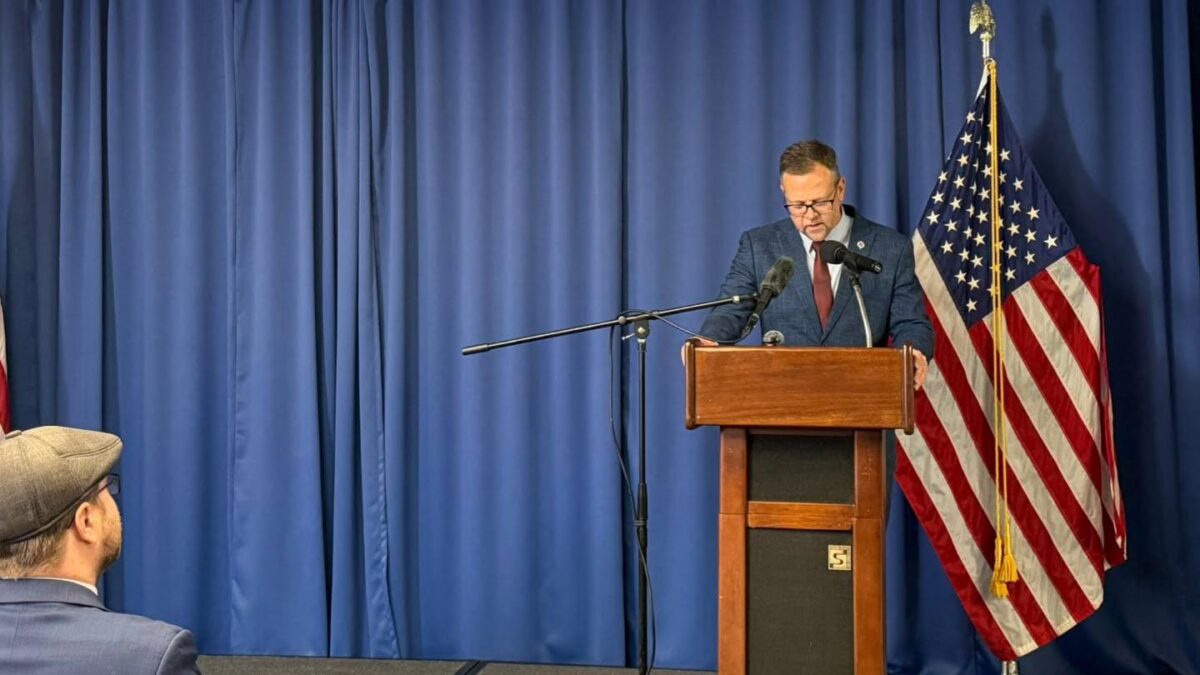
Roets said that Lex Libertas welcomed the minister’s willingness to engage, despite the political differences.
“While we have fundamental disagreements about land reform, we believe there should be room for constructive discussion,” he said.
“These discussions can focus on developing successful farmers, increasing agricultural production, and creating employment opportunities.”
He argued that land reform should be measured by how many successful farmers have been established.
“We believe cooperation between established and emerging farmers could play an important role in achieving this,” he said.
He added that Lex Libertas’s central focus is promoting a viable political dispensation for the peoples of South Africa.
“The report will make it clear that political decentralisation is the biggest step that could be taken to address the land reform crisis in South Africa,” he said.
Most land reform projects in South Africa fail
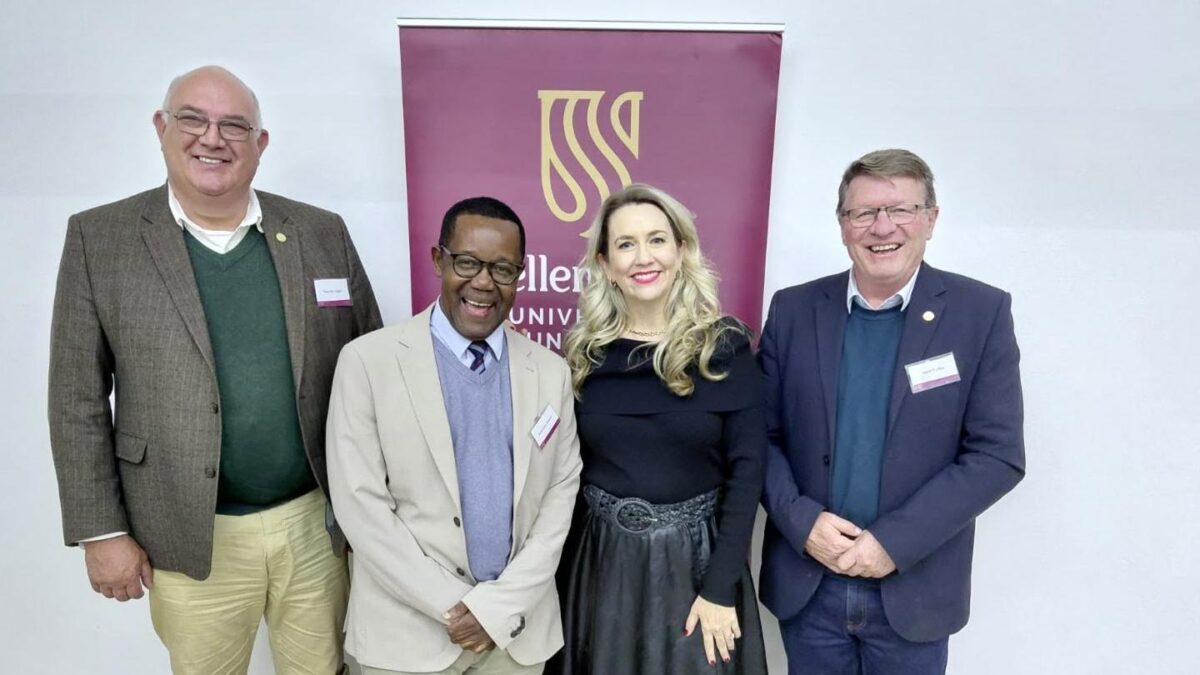
Theo de Jager, executive director at Southern African Agri Initiative (SAAI), explained that most land reform projects fail.
He said politicians confuse unused land with operational farms, which require complex business models, continuous capital, and market access to survive.
“Not all land is a farm. A farm is a piece of land, but it is much more than that. It requires a business plan, capital investment, and active management,” he said.
This is the issue which Zimbabwe is grappling with. They took the land and now want to compensate the former farm owners for the improvements.
However, those improvements are long gone. “That infrastructure is what turned raw land into a farm,” he said.
A similar situation is playing out in South Africa through land reform projects, where productive farms are given to black beneficiaries.
De Jager highlighted that 90% of land reform projects have failed on a business level. However, this is a best-case scenario.
“I still want to see the remaining 10%. While there are successful farms out there, they are few and far between,” he said.
He said the main reason for the failure isn’t that beneficiaries don’t know how to farm, as the majority do.
“The issue is that they cannot do so profitably. The business model simply doesn’t add up,” De Jager said.
“They lose connection to mainstream commercial markets and end up producing solely for their own subsistence.”
He said the situation means commercial agriculture is being reduced to smallholder operations and subsistence farming.
“Unfortunately, this dismantles our greatest economic asset in rural areas: the commercial businesses, the job creators, and the exporters,” he said.
He said that the land reform projects destroy successful commercial farms, which generate foreign currency in the country’s poorest regions.








 Loading ...
Before we go any further – let’s look at the deffinition of Racism through the lens of exclusion based on race:
“Racism through exclusion (often called racial exclusion) is the practice of systematically denying a specific racial or ethnic group access to resources, opportunities, rights, or social spaces.”