
It has become normal for Golden Arrow to lose 12 buses a year to arson


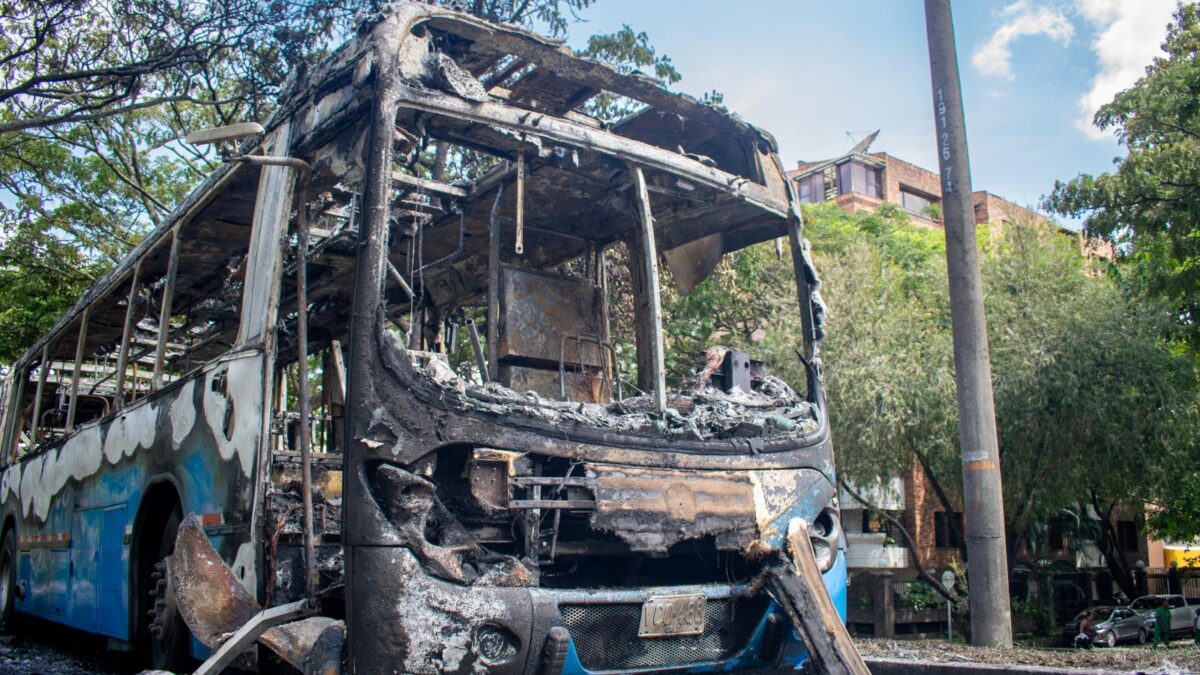
Johnny Copelyn, a businessman and former trade unionist, said that in South Africa, it has become normal for buses to be burned when people are unhappy.
He cited Golden Arrow Bus Services, which loses an average of 12 buses a year to arson, which is now part of their operating expenses.
Copelyn’s union career began at the National Union of Textile Workers, which later merged into the Southern African Clothing and Textile Workers Union (SACTWU).
While running SACTWU’s investment wing in the 1990s, he represented the African National Congress (ANC) in the National Assembly.
He resigned from his parliamentary seat in 1997 to take over Hosken Consolidated Investments Limited (HCI) and run it as a private-equity holding company.
In July 2004, HCI bought Golden Arrow Bus Services for R250 million. It serves the metropolitan Cape Peninsula and Cape Flats.
The company operates a fleet of 1,171 buses across 1,300 routes, carrying 230,000 daily commuters and employing 2,534 people.
Copelyn told delegates at the 2026 Biznews Conference that when they took over Golden Arrow, they were attacked mercilessly by the taxi industry.
He explained that while their bus service was subsidised, the taxi industry was not subsidised, and they felt aggrieved.
This was not their only problem. He explained that when their workers went on strike, they always approached his union first to ask why they were not treated better.
“These are all great difficulties in being a union investment company with a real union behind you while trying to operate within a capitalist system,” he said.
Another problem is that buses have become targets for anything that goes wrong in the country, whether related to the company or not.
“We regard it as normal if we lose 12 buses a year to arson. That is what normal is in South Africa now,” he said.
“You are insured and have political risk cover. However, the terrible part is that the person who pays for those 12 buses is the passenger.”
“That is how the system works. You need to buy extra buses that are burnt like that, and the passengers have to pay for it.”
He explained that it is challenging to work within these movements that creep up on them at any moment.
“You can have an issue, like people who want new toilets, garbage problems, or potholes. These are issues that have nothing to do with our business,” he said.
“The first thing they do is burn a bus. Then it is on the front page of the newspaper with a picture of the protest and the bus. You are in that world. This is a frontier economy.”
Despite these challenges, Golden Arrow Bus Services has survived for 20 years under Copelyn’s leadership.
This, he said, was partly because their union members, who are clothing workers, were the primary users of the buses.
“Therefore, we have an interest in public transport that is a little deeper than other businesses might be. It’s not just about money. It’s the act of service,” he said.









 Loading ...
Complete and utter lack of a double digit IQ and no discipline. Those are the factors we are working against in Africa. The shufflers toitoing for ‘services’ then head off to burn the very services they are protesting not having. I cannot understand how such a mind functions. Am I missing something?