
Andre de Ruyter under siege



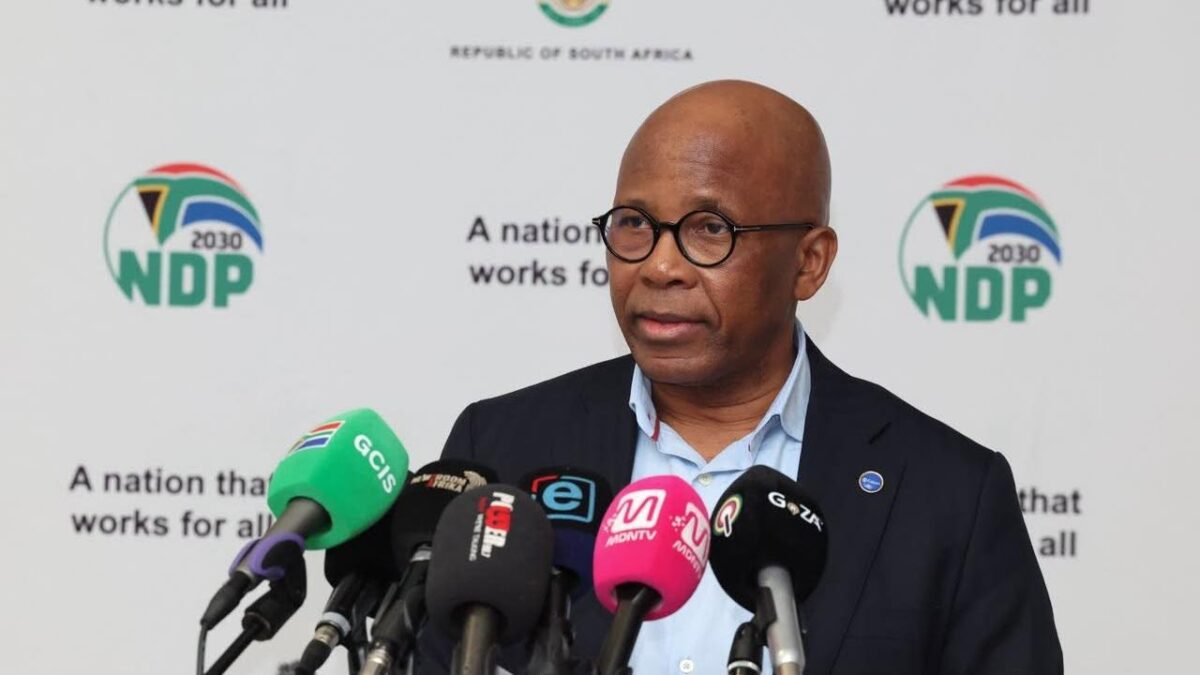
Eskom chairman Mteto Nyati said that Eskom’s management team, led by former CEO Andre de Ruyter, was disconnected from the rest of the business.
He shared this information during a discussion about Eskom at the Unisa Graduate School of Business Leadership.
When Eskom’s latest board was appointed, the power utility was in a crisis. There was daily load shedding, and the company was bleeding money.
It decided to tackle the problems by first identifying them and then developing a plan to address them.
“This was a national crisis. None of us on the Eskom board wanted to be where we were. But because we were in those positions, we wanted to give it our best shot,” he said.
“We decided to engage at all levels of the organisation to understand why we were in this crisis and what the solutions could be.”
“We did not just sit back and ask Andre de Ruyter to give us a report and be satisfied with that.”
“We said, ‘We hear you, Andre, but we still need to travel across the country to the power stations to listen and understand what is happening on the ground’.”
He explained that after those sessions, it became clear that Eskom’s top management, led by De Ruyter, was disconnected from the rest of the business.
“That was a critical insight we never would have gained had we not engaged the organisation so deeply,” he said.
“We also realised there was a clear perspective from the ground regarding what needed to be done to solve the problem.”
Nyati said that none of the voices of the Eskom employees on the ground had ever been heard until they arrived.
Simply put, during Andre de Ruyter’s tenure as chief executive, Eskom’s management was disengaged from its employees.
Finding a new leader after Andre de Ruyter stepped down as CEO
Nyati said that one of their first responsibilities as the Eskom board was to address the situation when Andre de Ruyter indicated that he was leaving.
“We accepted his departure and said, ‘You can go.’ From there, we acknowledged that we needed to find a leader who could steer this organisation,” he said.
“Because we had spent a significant amount of time going deep into the organisation, we understood the challenges this business was facing.”
He said that finding a leader capable of managing in that specific environment would be difficult.
“We determined that three essential qualities were required: a leader with a heart, a head, and someone willing to roll up their sleeves when required,” he said.
“Many of the previous leaders we had possessed only one of those traits, or none at all. So, we went out to search and secured Dan Marokane.”
Nyati said that bringing Marokane on board was one of the most critical steps taken for Eskom’s recovery plan.
“Dan was not only relevant for addressing the past, specifically fixing load-shedding, but he was also essential for the future,” he said.
He explained that Eskom was entering a more competitive environment and that Marokane is the best person to navigate this change.
“You have to shift a culture that became relaxed under a monopoly into one that puts customers first, acts with agility, and makes swift decisions,” he said.
“Dan Marokane is precisely that kind of leader, and we found those capabilities in him.”




 Loading ...
What they fail to say is that they “turn around” power stations within 6 months after De Ruyter left, however, all these processes was for the turn around was put in place by de Ruyter 12-18 months before he left. These processes the expert said will take 18-24 months to complete.
Take following senario: a machine run non-stop 24/7/365 and need to a maintanace service every 6 months. No service is done for 3 year. Now someone new take over and realise the situation. Take it out of production for the service, but realise that so much damage is done that the machine is out of service for weeks instead of one day. Can you now blame the current person for lost of production. Worst could be that the macine fails before the new person identify the pervoius lack of maintanance.
Blame de Ruyter for the worst period of loadshedding because the power plants was at the worst state ever at the time he took over.