
The ANC government caused the protests and vigilantism against illegal foreigners in South Africa


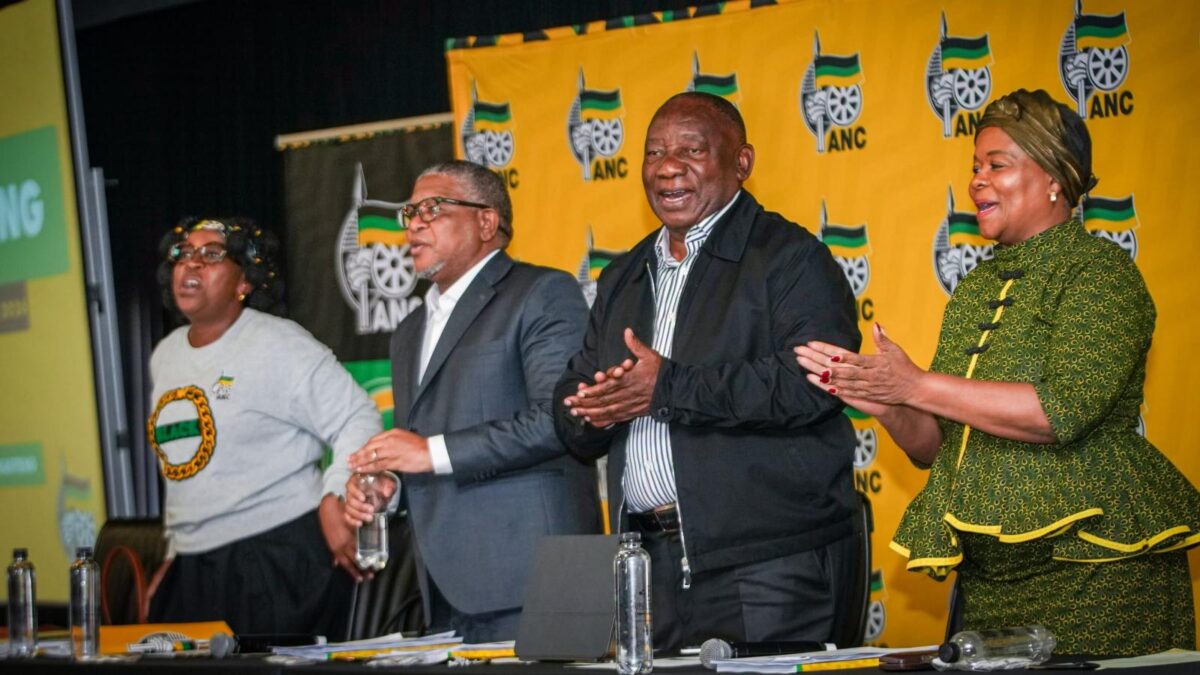
The ANC government’s failure to secure South Africa’s borders undermined its territorial sovereignty, leading to domestic protests, vigilantism, or populist mobilisation.
Over the last few months, there have been widespread protests against illegal foreigners in South Africa.
Jacinta Ngobese-Zuma, the leader of the anti-illegal immigration movement March and March, is often blamed for the protest action.
Although she is behind many of the marches and protests, she is not alone in the condemnation of illegal immigrants in South Africa.
ActionSA leader Herman Mashaba said the government is to blame for failing to serve the needs of South Africans.
“The government is incapable of enforcing its own laws. In this sea of problems and chronic neglect, there is a failure to manage illegal immigration,” he said.
“If you are in South Africa illegally, you cannot expect the country simply to accept your unlawful presence indefinitely. Illegal immigrants must leave South Africa.”
He said that this is not hatred of foreigners, a rejection of legitimate refugees, or a rejection of legal immigration.
Instead, Mashaba said, it is a demand for sovereignty, lawful migration and accountability.
He said that it was time for the government to stop talking and start listening to people regarding illegal immigration.
“The frustrations of citizens can no longer be dismissed as political noise, xenophobia, misinformation, or populism,” he said.
He said that South Africa cannot shoulder the world’s burdens while neglecting its own people. “It is about sovereignty and putting South Africans first,” he said.
ANC government’s failure to secure the borders caused the problem

Many people are now focusing on the symptoms of the ANC government’s failure to secure South Africa’s borders for decades.
The results of this failure are well known. Any state’s failure to secure its borders undermines its territorial sovereignty.
This, in turn, creates an authority deficit that triggers domestic protests, vigilantism, or populist mobilisation.
Stephen Krasner, an American political scientist and former diplomat who served as a professor of international relations at Stanford University, described the situation.
His research showed that when a state cannot regulate flows of people, goods, or capital across its frontiers, it loses interdependence sovereignty.
This loss of physical control signals state weakness, destroying the public contract between citizens and the state.
The loss of trust in the state’s ability to protect its citizens’ interests, in turn, breeds domestic political backlash and public unrest.
Modern scholars building on the theories of Max Weber, a German sociologist, historian, and political economist, reached a similar conclusion.
Their research found that border control is the foundational physical perimeter of the state’s monopoly on the legitimate use of violence within a country.
When a government loses control of its territorial boundaries, it creates a power vacuum within the country.
Citizens perceive that the state is failing its core duty, leading to civic mobilisation, anti-immigrant demonstrations, or local vigilante groups enforcing order themselves.
These theories are well established and widely known, which means the anti-immigrant protests across South Africa should have been anticipated.
Jacinta Ngobese-Zuma’s March and March is, therefore, exactly what Stephen Krasner and other experts warned about.
Laying the blame for the protests at the feet of Ngobese-Zuma or Mashaba will not solve the problem.
Instead, the solution lies in the government securing the border and stopping the flood of illegal immigrants into South Africa.





 Loading ...
No arguments, SA’s failures stems from its failed Head of State, none other than Mbeki, Zuma and the worse of all Ramaphosa!!