
Teacher salaries must be cut in half


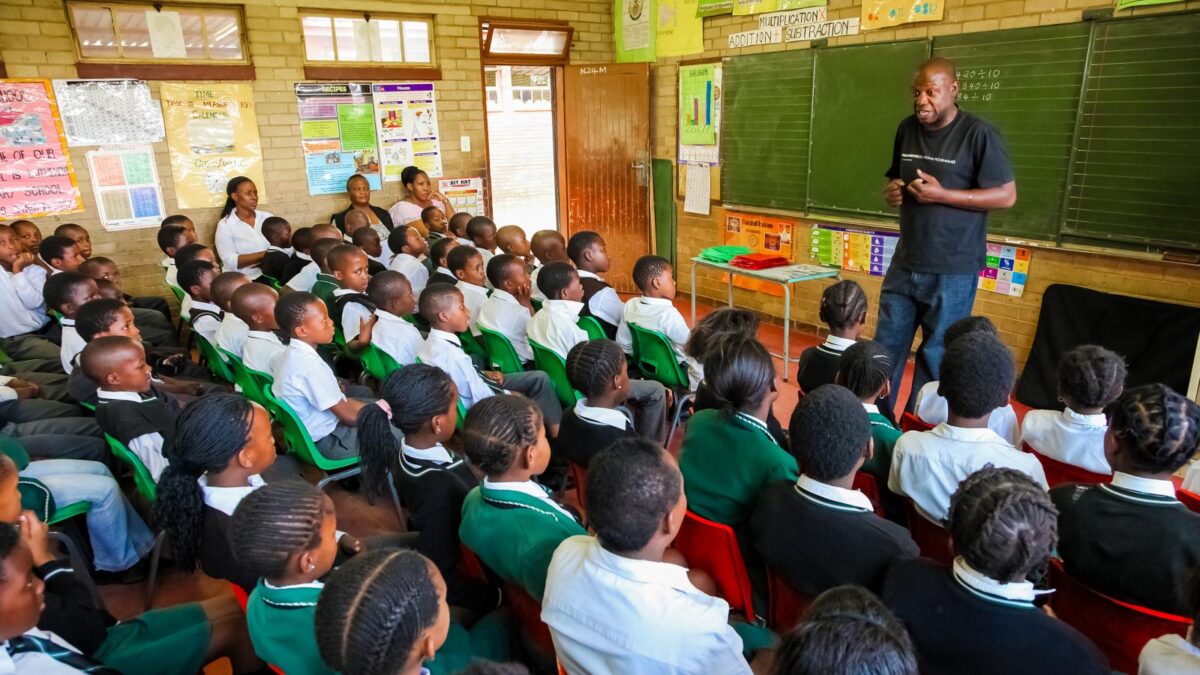
Economist Dawie Roodt said that teacher salaries in South Africa should be halved to double the number of teachers and demand higher performance standards.
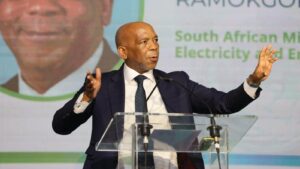
Roodt shared his view on South Africa’s government efficiency and the public service during an interview with Ernst Roets at the Kragdag Conference.
He argued that South Africa’s public servants are overpaid, underworked, and ineffective, and are putting pressure on the economy.
“State employees represent 3% of the South African population but account for 17% of the economy in salaries,” he said.
“The core issue with the civil service is that while we actually need more police officers and teachers,” he said.
“However, they ought to be paid significantly less and required to deliver far better results than they currently do.”
“So essentially, you ought to halve the salaries of all teachers, double the total number of teachers, and expect more from them.”
Roodt emphasised that many teachers are hopelessly underpaid and overworked, but that is the exception rather than the rule.
“Overall, teachers in South Africa are overpaid and underworked, and there are too few of them,” he said.
“So, more money isn’t the issue. The real problem lies in the quality of output and, of course, better management.”
He explained that South Africa spends a large amount on education, but the quality of education is among the worst in the world.
“If you plot this on a scatter graph, you see that our spending is very high, but our quality is very low. We aren’t near the 45-degree line where most countries sit,” he said.
“We spend a lot on education and other items, but the quality is poor. That is the real problem, not money.”






 Loading ...
It is a dilemma of Theory vs Practice
Theory is different from practice. Theoretically, cutting teachers’ salaries by 50% could allow the government to employ more teachers. However, this proposal does not align with South Africa’s economic realities.
South Africa faces significant increases in the cost of essential goods and services, and teachers are directly affected by these economic pressures. Cutting their salaries substantially could make the profession financially unattractive and potentially undermine the recruitment and retention of qualified teachers.
In my view, the problem with South Africa’s education system is not simply teacher salaries. We need to look more critically at problematic policies, curriculum technicalities, teacher education and training, inadequate resources, and how education funding is managed and distributed.
For example, some education policies create challenges around discipline and classroom management. Teachers are expected to operate within laws and policies that do not always adequately reflect the realities of South African schools. We cannot demand consistently better academic results while simultaneously maintaining systems that may contribute to poor discipline, disengagement and weak learner accountability.
We could therefore spend significantly more money on education, but if the policies and structures governing that education remain superficial, unresponsive and disconnected from the realities of South African schools, additional funding alone will not solve the problem.
The solution should be to make teaching a financially attractive and professionally respected career while simultaneously strengthening accountability and improving the conditions under which teachers work. If education finances are properly monitored and corruption, waste and mismanagement are addressed, there should be no need to solve teacher shortages by halving teachers’ salaries.
South Africa does not need to make teachers poorer in order to improve education. It needs to make the education system better.
A 50% salary cut is not a realistic solution to a complex systemic problem.
kind regards
Lukhanyo Peter (Wits education 3rd year student).