
VAT could be cut from 15% to 12% in South Africa with one change



Donald MacKay, a director at XA Global Trade Advisors, said the government is using vehicle subsidies and tariffs as an unsustainable alternative to fixing the country’s manufacturing fundamentals.
MacKay shared his views on the Chinese car manufacturer, Chery, taking over Nissan’s plant in Rosslyn, Pretoria.
The company will spend millions of dollars upgrading and adding machinery ahead of starting vehicle production in South Africa in mid-2027.
This was widely hailed as a positive development. However, MacKay told Biznews that there is more to this than meets the eye.
He explained that the South African government gives the automotive industry preferential tax treatment and subsidies to encourage local production.
Data from Codera Analytics showed that the preferential treatment equates to over R40 billion in lost tax revenue.
The data further showed that the government’s support for the automotive industry means that each job in the sector effectively costs the industry R250,000 to R300,000.
He added that the R40 billion is effectively being split among just seven automotive companies, including Toyota, Ford, BMW, Mercedes-Benz, and Volkswagen.
Biznews founder Alec Hogg suggested that if the government stopped these subsidies, South Africa’s value-added tax (VAT) rate could be cut from 15% to 12%.
“Imagine the stimulus that could give to the economy if you were to get rid of the subsidy program,” Hogg said.
MacKay further argued that these subsidies are used as a shortcut instead of fixing underlying structural and infrastructural issues, like failing ports.
“The government is using these subsidies and tariffs as an unsustainable alternative to fixing the country’s manufacturing basics,” he said.
The government gets away with it because the import tariffs are hidden in the final purchase price of cars rather than listed explicitly on a receipt like VAT.
“Ordinary South African consumers effectively foot the bill through significantly higher vehicle prices without even realising it,” he said.
Cars in South Africa are very expensive
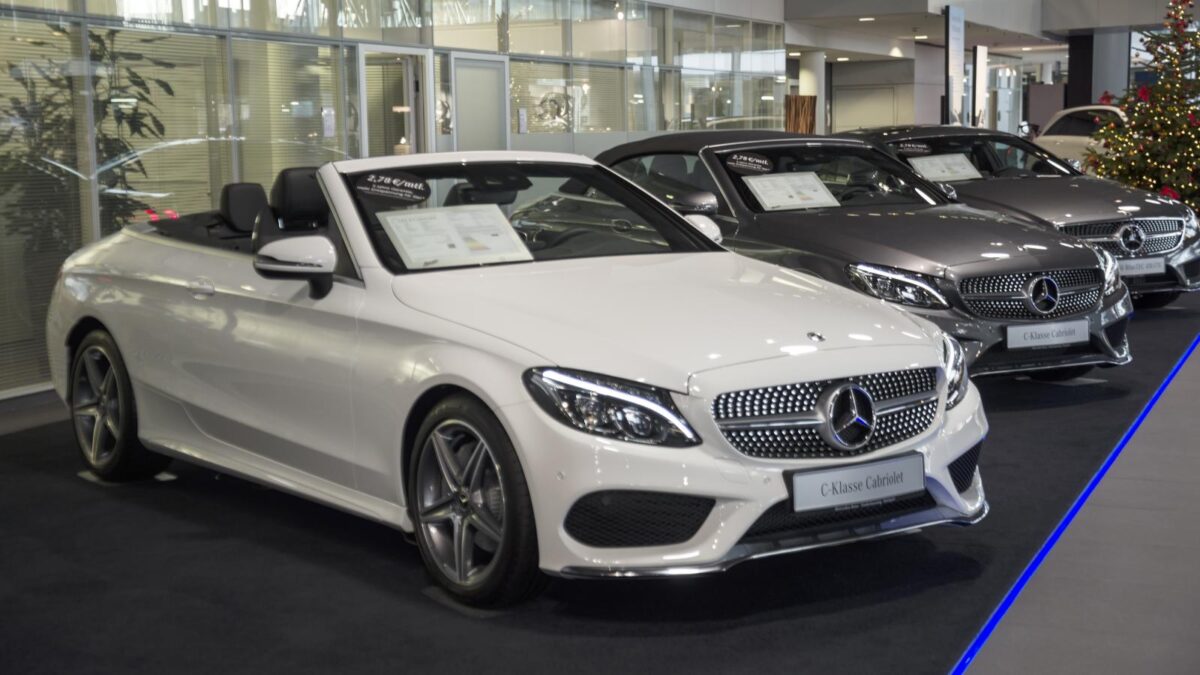
South African consumers don’t benefit from these subsidies. Locally produced vehicles remain more expensive than overseas.
MacKay said that a benchmark study his firm conducted a few years ago illustrated the problems South Africans face.
They tracked the retail price of a Mercedes-Benz C-Class car manufactured in East London, South Africa.
They compared the price of this vehicle in South Africa, the United Kingdom, and Manhattan, New York.
They found that the identical vehicle sold inside South Africa was 30% more expensive than the United States version.
It showed that high local taxes, including ad valorem luxury taxes, effectively wipe out the benefits of local production for domestic buyers.
This means that South African taxpayers are subsidising an industry which exports most of its cars while it remains unaffordable locally.
The reason that there is no backlash from South African consumers is that they are not aware of the duties and protective tariffs baked into the price of a car.
“Unlike VAT, which is listed line-by-line on a till slip, import duties and protective tariffs are quietly put into the purchase price before a consumer sees it,” he said.
“Most citizens have no idea how much duty is contained in the goods they buy. This is also the case with cars.”










 Loading ...
Dear customers, the automotive prices are ridiculously high to the ordinary people as well as VAT, which should be based on the actual cost of living increases.The market being flooded with chinese brands, which is not SABS approved. We need to have contingency regulations to prevent our high than average road deaths as well.