
Cyril Ramaphosa and FW de Klerk the worst presidents for economic growth since South Africa was formed in 1910


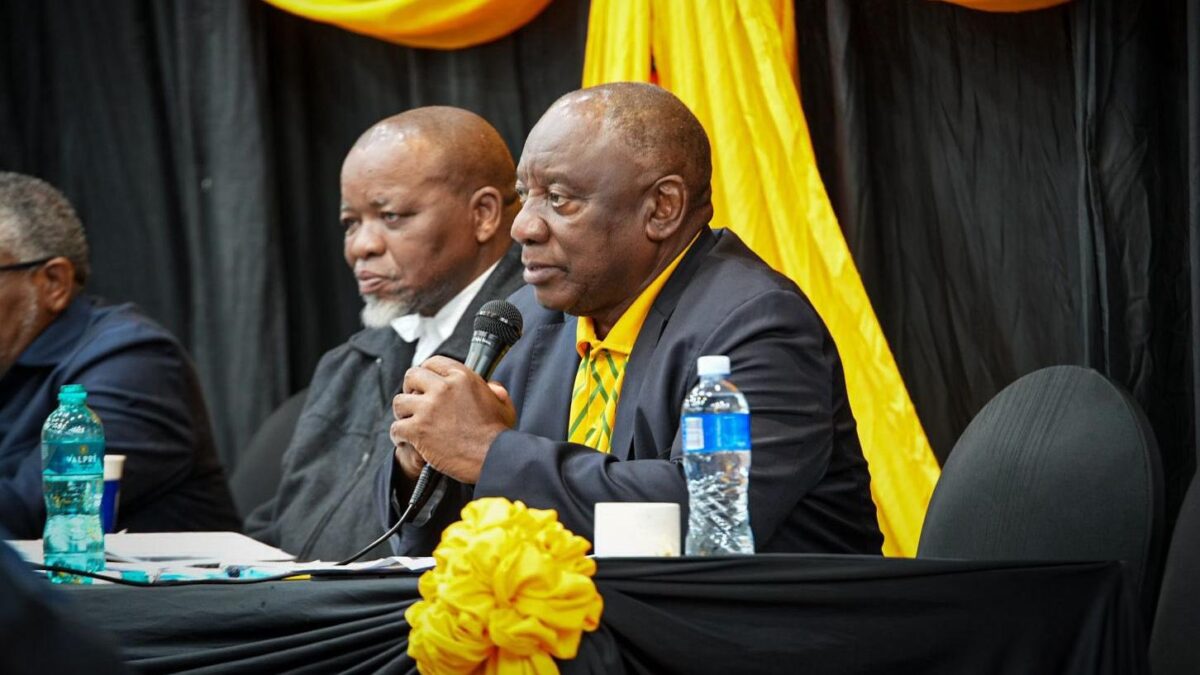
Under President Cyril Ramaphosa, South Africa’s economic growth plummeted to below 1%. He was only the second president in history to perform so poorly.
To track the country’s economic performance, one has to go back to 1910, when the Union of South Africa was established.
Before 1910, the region consisted of British colonies, independent Boer republics, and sovereign African kingdoms.
The discovery of diamonds and gold completely transformed the region, turning it from a quiet, agrarian society into a booming industrial hub.
The newfound wealth created colonial ambitions and sparked intense conflict, culminating in the Anglo-Boer War.
To consolidate power and economic control, the British government and local white leaders negotiated the South Africa Act of 1909.
This act merged the Cape, Natal, Transvaal, and Orange River colonies into a single dominion under the British Crown called the Union of South Africa in 1910.
Before 1910, South Africa lacked a cohesive national economy, and its economic reporting reflected that fragmentation. News was hyper-local and slow.
The formation of the Union of South Africa in 1910 created a single, unified legal and macroeconomic framework.
Following unification, the newly formed state created centralised data to manage national taxation and monitor its primary economic drivers.
Economic growth was tracked using industrial censuses, agricultural production yields, customs and excise data from ports, and the gold and diamond outputs.
While data collection in the formal sector, such as corporate mining, was precise, the broader methodology was highly volatile.
The accuracy of South Africa’s gross domestic product and economic growth estimates improved over time. Over the last few decades, it has been very accurate.
South Africa’s growth under different South African leaders
Between 1910 and 1924, under Prime Ministers Louis Botha and Jan Smuts, South Africa’s economic growth was highly volatile.
Growth was directly tied to the prices of gold and diamonds, which were affected by the outbreak of World War I.
The 1924 to 1939 era started badly and was aggravated by the Great Depression, which collapsed trade and hit South African agricultural and mineral exports.
However, the economy rebounded sharply after the gold price increased, sparking a boom that funded state manufacturing expansion.
During World War II, South Africa’s domestic manufacturing expanded to supply Allied forces with steel, textiles, food, and weaponry.
In the Apartheid era, between 1948 and 1994, Gross Domestic Product (GDP) growth averaged from 4% to over 6%.
South Africa benefited from strong global demand for the country’s resources, including gold, uranium, and base metals.
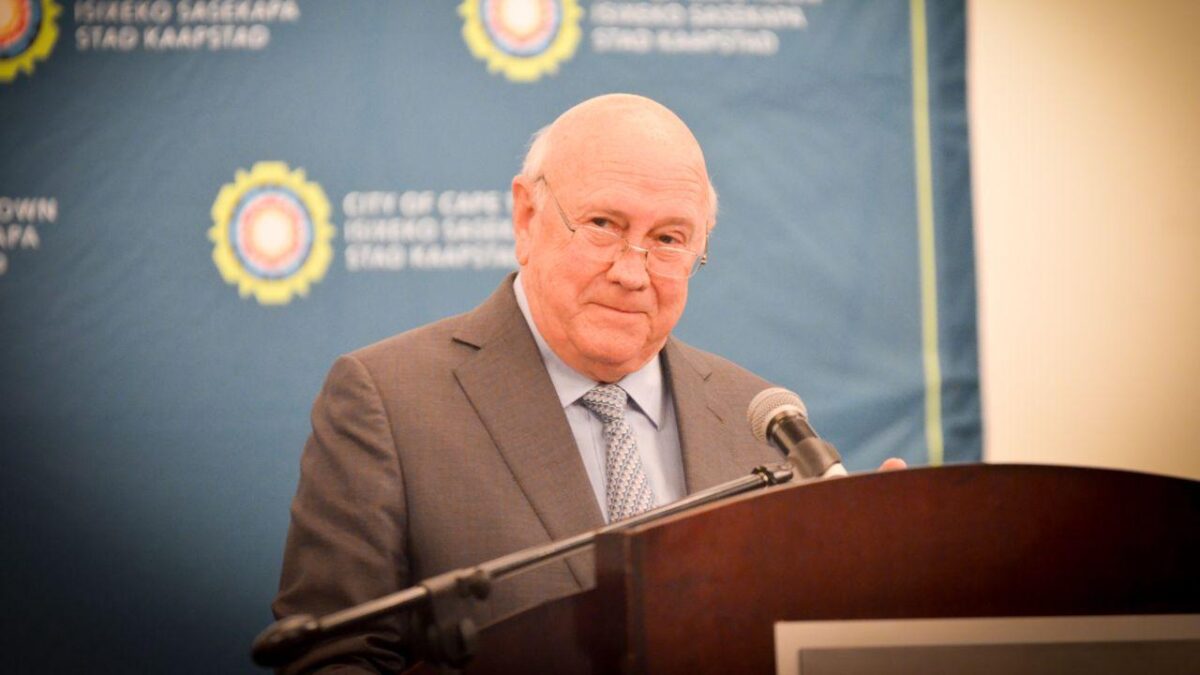
However, under former President FW de Klerk, the country’s economic growth hit an all-time low of approximately 0.6%.
This was partly caused by international sanctions, violent political protests, and a devastating agricultural drought in the early 1990s.
After the 1994 democratic elections and the new government, sanctions were lifted, foreign direct investment (FDI) returned, and tourism boomed.
Under former President Nelson Mandela, growth increased to approximately 2.7%, and under Thabo Mbeki, it further increased to 4.1%.
However, under Jacob Zuma, the growth rapidly declined amidst widespread corruption and financial mismanagement at key state-owned enterprises.
The country experienced systemic load shedding, regular logistics failures at Transnet, and multi-notch sovereign credit downgrades to junk status.
The situation continued under President Cyril Ramaphosa, with economic growth slowing to under 1%.
Economic growth under South African leaders from 1910 to 2026
The table below shows South Africa’s economic growth under each leader from 1910, when the Union of South Africa was established, to 2026.
| Leader | Tenure | Average Annual Real GDP Growth Rate |
| Louis Botha | 1910–1919 | 2.8% |
| Jan Smuts (1st Term) | 1919–1924 | 1.8% |
| J.B.M. Hertzog | 1924–1939 | 4.2% |
| Jan Smuts (2nd Term) | 1939–1948 | 4.5% |
| D.F. Malan | 1948–1954 | 4.6% |
| J.G. Strijdom | 1954–1958 | 4.7% |
| Hendrik Verwoerd | 1958–1966 | 5.1% |
| John Vorster | 1966–1978 | 3.4% |
| P.W. Botha | 1978–1989 | 1.8% |
| F.W. de Klerk | 1989–1994 | 0.6% |
| Nelson Mandela | 1994–1999 | 2.7% |
| Thabo Mbeki | 1999–2008 | 4.1% |
| Jacob Zuma | 2009–2018 | 1.7% |
| Cyril Ramaphosa | 2018–Present | 0.9% |



 Loading ...
When you as President obey your WEF masters then the impact on the economy of the country is always going to be devastating.l