
The white Afrikaner who was the mastermind behind BEE in South Africa


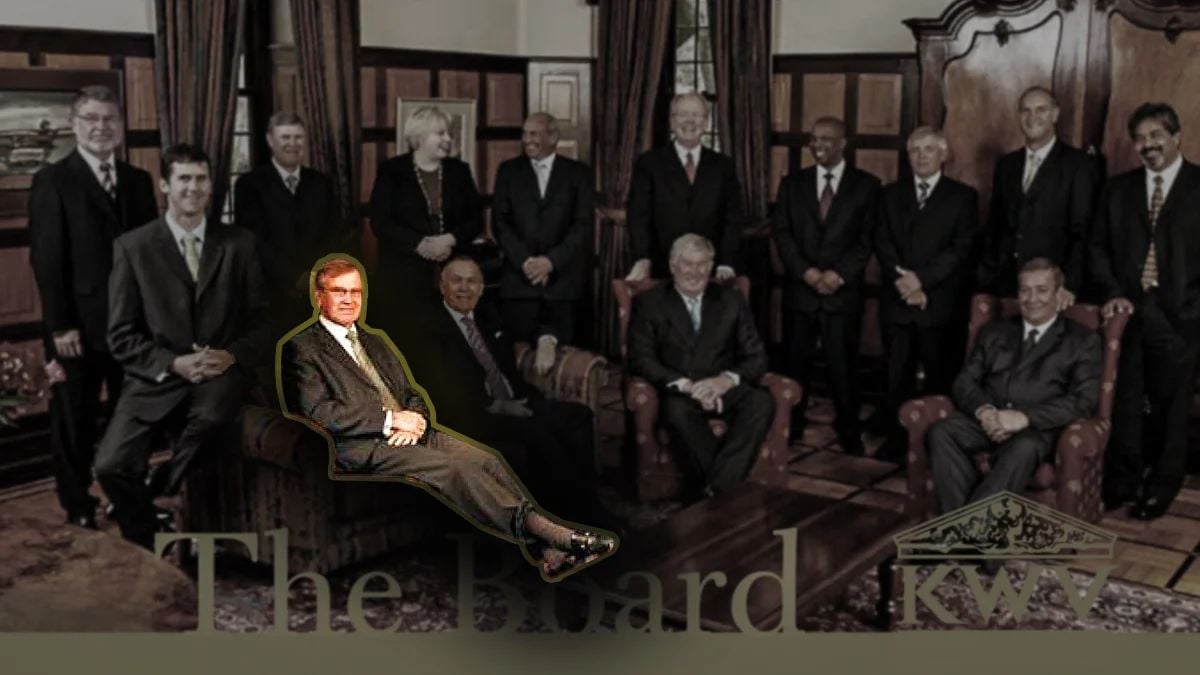
Attie du Plessis, a former executive director at Sanlam, was the mastermind behind Black Economic Empowerment (BEE) in South Africa.
Many people believe that BEE was the brainchild of the African National Congress (ANC) after it took power in 1994. However, this is not the case.
Renowned political economist Moeletsi Mbeki, brother of former President Thabo Mbeki, said Du Plessis was the true creator.
Attie du Plessis was the brother of Barend du Plessis, a former National Party member who served as Minister of Finance from 1984 to 1992.
During the tumultuous 1980s, Du Plessis was one of the Sanlam leaders directly involved in talks with black leaders in exile in the eighties.
The first meeting was in Dakar, Senegal, in 1987. It soon became apparent that the ANC leadership wanted to talk specifically to Afrikaner business leaders.
Marinus Daling and Du Plessis were the two executives from the Sanlam and Sankorp stable who assisted in the talks.
These talks facilitated communication between leaders inside and outside South Africa, leading to peaceful negotiations and democratic elections.
However, there was a challenge to companies like Sanlam, which had close ties to the South African government.
They would lose their government ties after the ANC took power, and they were also concerned about the country’s political and economic stability.
Sanlam executives felt that helping black people share in the ownership of the mainstream economy would serve their and the country’s aspirations.
The company tasked with testing this black ownership strategy, Sankorp, was a management powerhouse established by Sanlam in 1985.
Du Plessis, an executive director at Sanlam’s Sankorp, structured a deal to create black ownership in one of its subsidiaries, Metropolitan Life.
In May 1993, Sanlam announced that Sankorp would sell a block of its Metropolitan Life interest to the black-led consortium, Corporate Africa.
A holding company of Metropolitan Life, Methold, was jointly formed with Sankorp and issued shares. The shares were only available to black buyers.
The transaction was concluded in August 1994, and the holding company, Methold, was renamed New Africa Investments Limited (NAIL).
New Africa Investments Limited (NAIL) and Cyril Ramaphosa
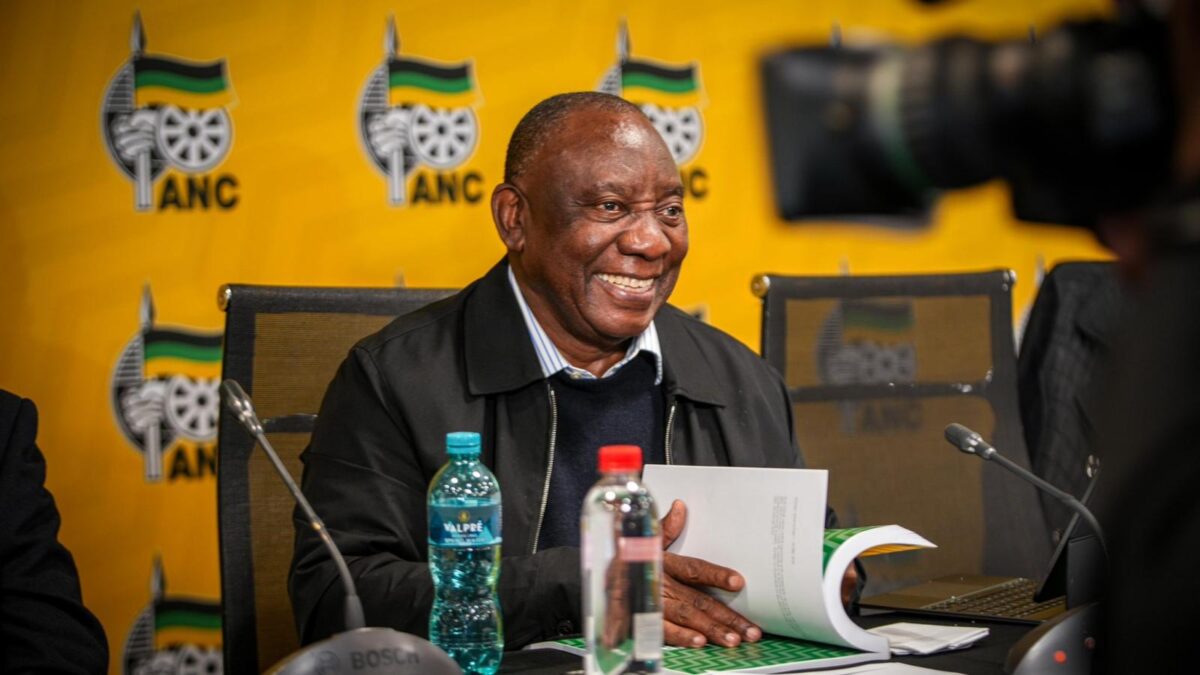
New Africa Investments (NAIL) was founded in the early nineties by Nthato Motlana as a vehicle to own the 16% stake in Metropolitan Life.
It was listed on the Johannesburg Stock Exchange (JSE) in August 1994, making history as South Africa’s first large, black-controlled company on the exchange.
NAIL’s strategy relied on rapid diversification and using its political capital to acquire large parts of the post-apartheid economy.
At the time, Cyril Ramaphosa was a rising political star who had successfully served as the ANC’s chief negotiator during the talks to end apartheid.
He also grew the National Union of Mineworkers (NUM) into a powerhouse and chaired the Constitutional Assembly that drafted South Africa’s 1996 Constitution.
However, after losing out to Thabo Mbeki in the race for the ANC’s deputy presidency, he pivoted into the business world.
In 1996, Motlana recruited Ramaphosa to serve as Deputy Executive Chairman of New Africa Investments.
This gave Ramaphosa a powerful platform to participate in lucrative black economic empowerment (BEE) deals.
In 1999, New Africa Investments Limited decided to unbundle following boardroom drama over the concentration of power within a small elite group.
However, despite the fragmentation of the powerful BEE company, it set Ramaphosa on a path of becoming an empowerment billionaire.
He founded Shanduka Group, a black-owned investment holding entity, in 2001, acting as an aggressive, multi-sector investment vehicle.
It held stakes in large companies, including Glencore, Anglo American, Lonmin, MTN, Standard Bank, and Alexander Forbes.
In 2011, Ramaphosa diversified away from purely corporate investments by acquiring a 20-year master franchise agreement to operate McDonald’s in South Africa.
At the height of his business career, Ramaphosa sat on numerous corporate boards simultaneously, including chairman of MTN Group and Mondi.
When he re-entered politics as Deputy President in 2012, he entered a multi-year divestment process managed by the Tshivhase Trust.
In 2015, Shanduka Group merged with another black-owned investment firm, Phembani Group, removing Ramaphosa from direct management and ownership.


 Loading ...
Who was the first to fight the colonialism,…Africans….and where did the “afrikaners” come from and created that evil ,apartheid..Can’t we live together and live together with HUMANITY as criteria. Who build South Africa..as it is today,…..