
Big lie about black ownership on South Africa’s stock exchange


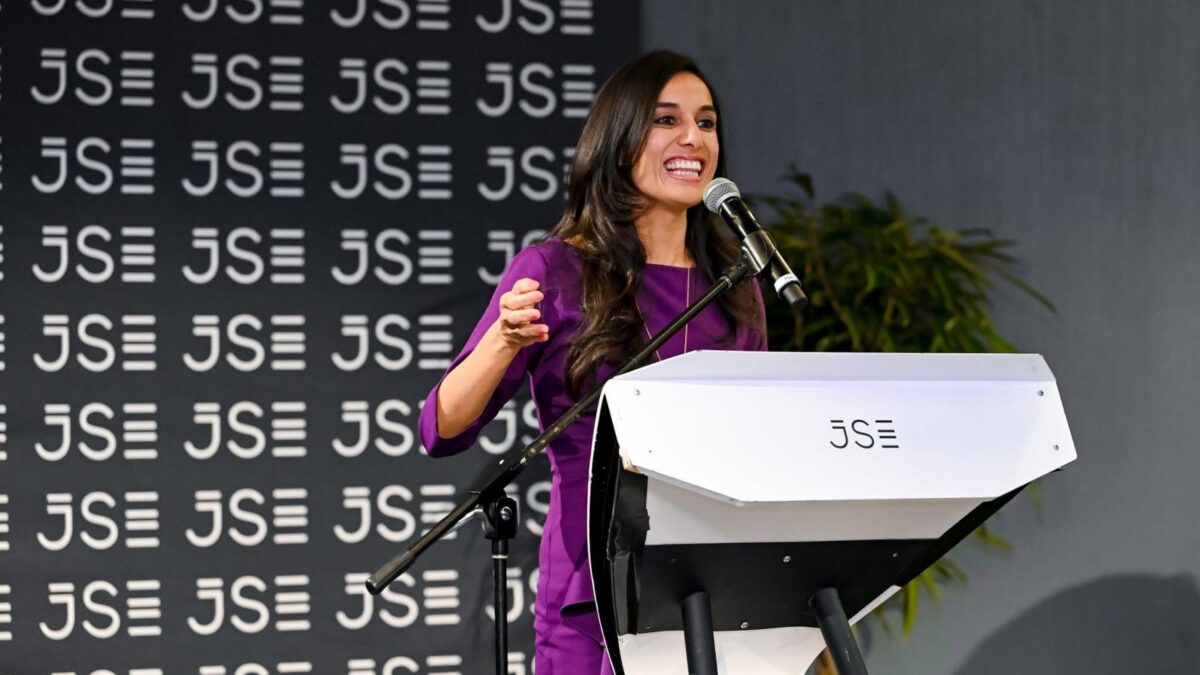
The lie that black people only own a small fraction of the Johannesburg Stock Exchange has been repeated so often that many politicians and business leaders quote it as fact.
On 29 June 2026, Nkosazana Dlamini-Zuma delivered a speech at the National Democratic Revolution Seminar in Johannesburg.
Dlamini-Zuma is a seasoned politician who served as Minister in numerous departments, including the Presidency, Foreign Affairs, and Home Affairs.
She was also Chairperson of the African Union Commission and ran for the ANC presidency in 2017.
As one of the most decorated politicians and public officials in South Africa, what she says on the public stage carries weight.
In her speech at the Democratic Revolution Seminar, she cited black ownership on the Johannesburg Stock Exchange (JSE).
“Maybe let’s also look at the JSE. The net black ownership of the JSE economy is only 6.9% after 30 years,” she said.
“That is a very serious indictment: 6.9%. So, it is still almost like it was during the apartheid era,” Dlamini-Zuma added.
She referred to the study by economist Duma Gqubule, in partnership with the Black Management Forum and the Transformation Lens.
This study found that black ownership accounted for R255 billion, equivalent to 6.7% of the top 60 companies and 6.9% of South African assets.
The narrow criteria for black ownership used in this study distort the view, as they are much higher than the reported 6.9%.
The Public Investment Corporation (PIC), for example, owned an equivalent to 31% of the value of South African assets, valued at R3.7 trillion.
The PIC invests money on behalf of the Government Employees Pension Fund (GEPF), which has a majority of black members. The same goes for other funds.
The real black ownership on the JSE
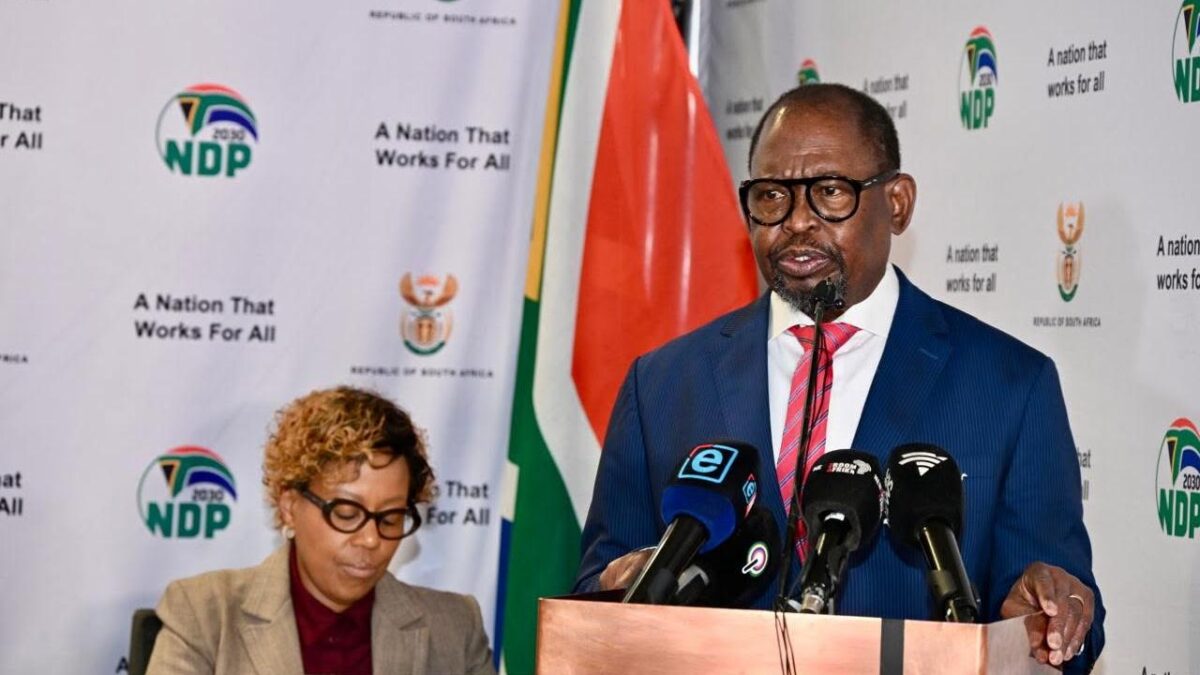
Finance Minister Enoch Godongwana recently said that a breakdown of the JSE’s R25 trillion in investments based on white and black ownership is not available.
He explained that data on the racial composition of ownership of shares listed on the JSE is not readily available.
This is due to the structure of shareholding, where investments are often held through multiple layers of intermediaries.
These intermediaries include custodians, pension funds, unit trusts, and nominee accounts. The PIC is a good example of such an intermediary.
“As a result, it is difficult to accurately determine the race of the underlying beneficial investors,” he said.
“Where such analysis has previously been undertaken, it has relied on specialised research and estimation methodologies rather than directly observable data.”
One of the recent studies comes from The Common Sense, which estimates that black South Africans hold 66.55% of the locally owned capital on the JSE.
This is significantly higher than the 33.45% held by white South Africans, which contradicts the data widely shared on numerous platforms.
It added that, per capita, white people still have more wealth in equities on the JSE than black people.
This, it said, could partly be explained by the high unemployment and the much younger population of black South Africans.




 Loading ...
The ANC is disingenuous by not informing the people of the progress made over30 years whilst they provided misinformation based on Title Deeds only, excluding State Land, former Homelands of Traditional Leaders and the land of the Zulu King in KZN and Land acquired and placed in Trusts. The Land of the Traditional Leaders, no Tittle Deeds are issued. This leaves a perception by the black community that the minority white people own all or most off the land and are anti transformation. 30 years after apartheid under majority rule and oppression of the minority in apartheid 2 with over 140 race laws. Transformation and redress was achieved with Land Claims and Restitution, Inequality achieved with the black middle class who have overtaken.