
Mayoral candidate wants crackdown on informal businesses in his city


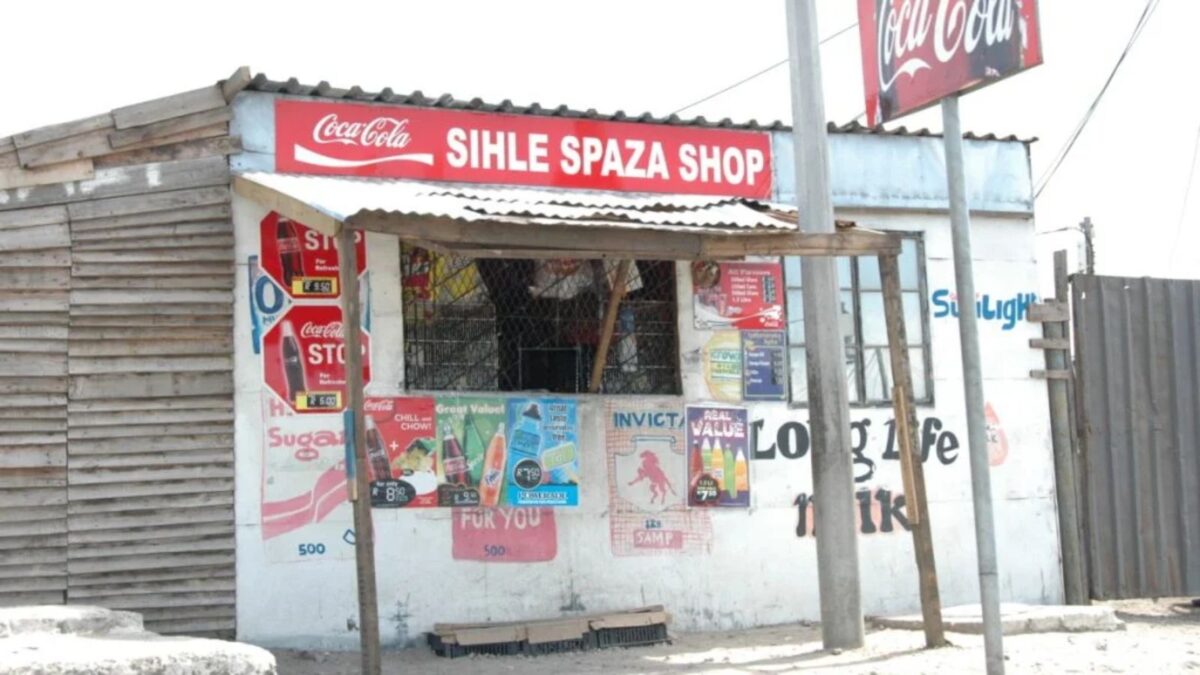
ActionSA has taken aim at the informal economy in Ekurhuleni, calling for a full audit of all businesses in this sector.
In his book, KasiNomics Unleashed, informal-economy expert GG Alcock said this sector in South Africa is conservatively worth R1 trillion annually.
Alcock said these entrepreneurs, which range from bakers to backroom rental barons and coffee innovators, are often discounted from official data.
However, contrary to the widely held belief that they are mostly subsistence business owners, they are skilled entrepreneurs offering advanced services.
They include spaza innovators, mattress makers, backroom builders, vetkoek fryers, chicken dust queens, kota franchises, and backyard auto mechanics.
These entrepreneurs sustain their communities and drive considerable economic growth and social improvement.
They show ingenuity, resilience, and drive to create their own opportunities, build livelihoods, and contribute to the economy.
Despite the value it brings to South Africa, it poses an issue for the government, which has tried to formalise the sector on numerous occasions.
In 2024, the Department of Cooperative Governance (CoGTA) introduced the Draft By-law for Township Economies, intended to increase the regulation of the informal sector.
This by-law has been adopted by municipalities across the country, such as Tshwane, to make it easier for township and at-home businesses to comply with legal regulations.
This is done through creating accessible means for businesses to apply for permits, tailored to the informal sector.
These efforts have mainly aimed to encourage legal compliance among businesses to ensure they operate to an acceptable standard.
Without legal compliance, businesses do not undergo health inspections or adhere to trading hours, which can affect surrounding communities.
Another problem with the informal economy is that, without proper registration, many businesses can avoid paying taxes.
This cuts out a massive amount of revenue for the country, since it is unable to track businesses in township economies.
This hidden economy also raises questions about South Africa’s high unemployment rates, which reached 32.7% in the first quarter of 2026.
Many believe that employment in the informal sector means that South Africa’s true unemployment rate is between 10% and 15%.
ActionSA targets the informal economy

ActionSA mayoral candidate for Ekurhuleni, Xolani Khumalo, said the informal economy in the area is not properly controlled by the current municipality.
He said unregistered businesses are taking a toll on legal establishments, pushing them out of the community. “While local entrepreneurs are being displaced, non-compliant trading multiplies,” he said.
He said the rise in illegitimate businesses puts pressure on service delivery for the municipality, which is not able to effectively collect revenue from the informal economy.
He said the municipality needs to take action against informal businesses in the area and called for large-scale audits of Ekurhuleni’s economy.
“A time-bound audit of all trading premises in township economic nodes was necessary, followed by immediate enforcement of by-laws,” he said.
This would be an expensive undertaking for the municipality, which is well-known for its already poor financial situation.
Khumalo also said the municipality should create a new policy designed to protect legally compliant businesses.
He said this policy should reserve trading spaces and designate economic zones for compliant businesses.
He also called for a 30-day implementation period for the by-law, with quarterly reviews to show its effectiveness.
These requests come off the back of recent protests around South Africa about illegal immigration, which ActionSA believes is part of the non-compliance issues in Ekurhuleni.
Khumalo voiced this belief, saying illegal immigrants were responsible for “the hijacking of the township economy”.
He said the current municipal government was not doing enough to combat illegal immigration in the area and was not enforcing local laws or regulations.
This belief is echoed by the growing anti-immigration sentiment, which has recently grown in South Africa, largely built on the idea that illegal immigrants are taking jobs from South Africans.




 Loading ...
Has the unregulated nature of our informal trading not opened a way for a flood of illegal immigrants to freely participate in this sector with impunity? Just asking, don’t murder me.