
DA funding from major gambling tycoon under the spotlight



Gambling tycoon Martin Moshal’s funding of political parties in South Africa has raised suspicions about whether his millions have strings attached.
Critics have questioned whether Moshal would exert any influence over their stance on policy issues, notably the over R1-trillion gambling industry that made him rich.
However, the Democratic Alliance (DA), which has received R45 million from Moshal since 2021, argues that this is not the case and that its stance on gambling has remained the same for over a decade.
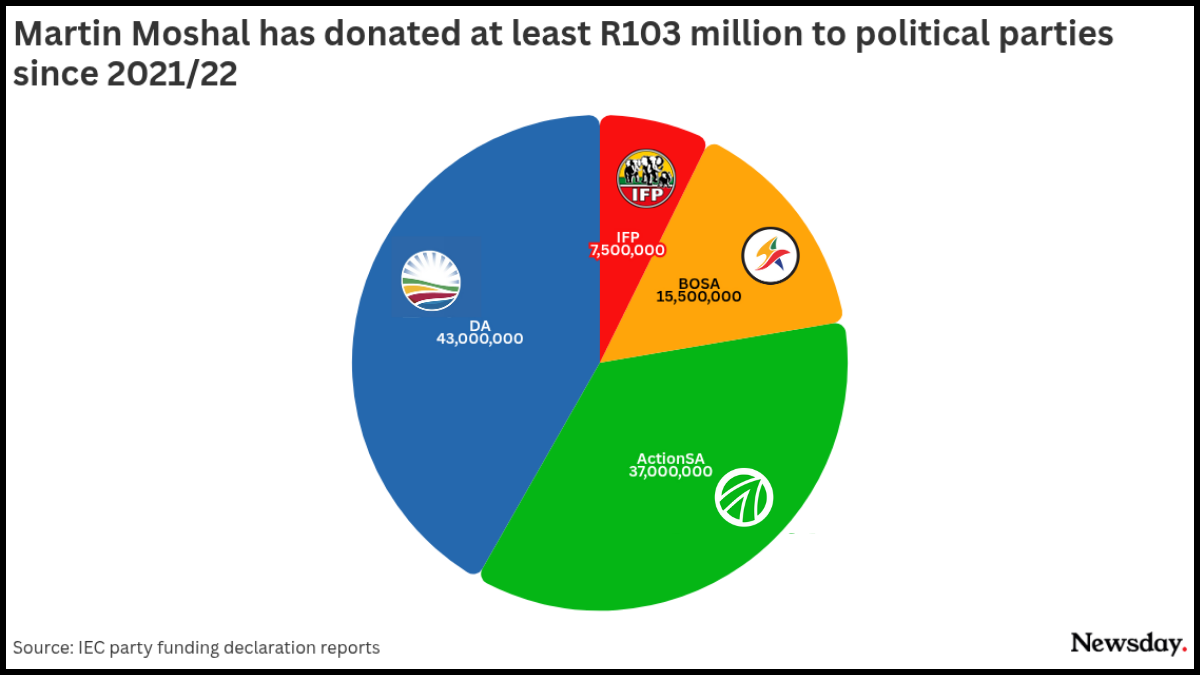
Moshal, who owns Microgaming, which operates Betway, has donated at least R103 million to political parties since 2021.
Along with the DA, ActionSA received R37 million, Build One South Africa received R15 million, and the Inkatha Freedom Party received R7.5 million.
RISE Mzansi MP Makashule Gana recently told Newsday that “it is a concern when gambling operators become the key funders of political parties.”
“It does not inspire confidence that political leaders or parties will spearhead gambling reforms in South Africa.”
However, it is worth noting that the only reason this information is public is due to the parties’ open declaration of the funds.
Ever since the Political Party Funding Act came into effect in 2021, following a 2018 Constitutional Court ruling, parties have been mandated to declare donations above R100,000. This figure was later raised to R200,000.
The legislation also introduced donation limits, IEC oversight, and public access to funding data.
Despite this, many parties fail to abide by this legislation. For instance, it is unknown where 80% of the African National Congress’s private funding comes from, and the MK Party has only declared a few hundred thousand rand.
When asked why he decided to donate to these parties, Moshal said that he believes the money will help the country fulfil its potential.
“As individuals, there’s only so much we can achieve. A government can have an impact on the entire country, for better or worse,” he said.
“That’s why investment in competent parties with integrity can have such an impact on the country as a whole.”
The DA’s response
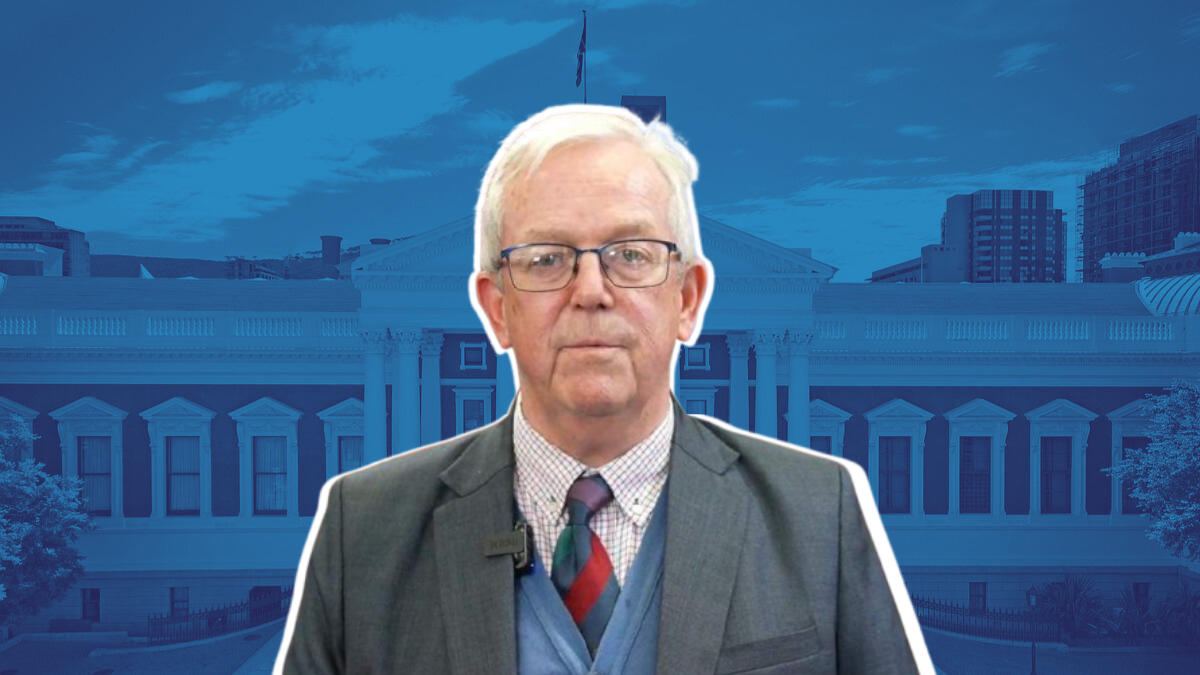
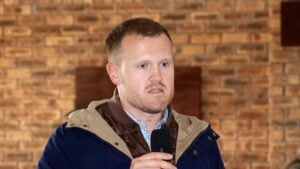
When asked whether donors have any influence over the party’s policy decisions, such as those related to gambling, the DA spokesperson for Trade, Industry, and Competition told Newsday that this could not be further from the truth.
“Absolutely not,” he said. “And that is an old chestnut that everybody brings up. I mean, most of us don’t even know who our donors are.”
“This policy has been in place since 2014, and I don’t think Moshal was a donor in those days.”
Chance is referring to the Remote Gambling Bill first tabled in Parliament by then spokesperson on Trade, Industry, and Competition, Geordin Hill-Lewis.
This aimed to provide a legal basis for the regulation and control of all remote gambling, which is gambling conducted via any technology that facilitates communication over a distance, such as the Internet.
Currently, while online sports betting is legal, interactive gambling, which refers to playing casino games remotely, is not.
An attempt was made to amend the National Gambling Act of 2004 through the Gambling Amendment Act of 2008, which was passed in Parliament and assented to by the President. However, it was never brought into operation.
Following Hill-Lewis’s attempt to introduce the Bill in 2014, Dean Macpherson attempted to do so again in 2024, but without success.
Chance says that he is in the process of tabling the Bill to legalise interactive gambling so that it can be regulated.
Once this has been done, he says the country can better assess the harmful effects that gambling is having on South African society and implement controls to enforce responsible gambling practices.
Cause for confusion

Because South Africa’s gambling legislation has not been amended since 2004 to account for a rapidly modernising sector, confusion continues to plague the industry.
For instance, a recent judgment by the Supreme Court of Appeal relating to roulette was misinterpreted by the National Gambling Board.
The ruling involved a complaint made by the Casino Association of South Africa (CASA) regarding the Gauteng Gambling Board’s decision to permit Supabets to offer bets on live-streamed roulette games from Lithuania.
Sports betting is legal. However, remote gambling is not.
The courts ultimately ruled that this was illegal because each province has autonomy over its own gambling regulations, and the Gauteng Gambling Act limits bookmakers to offering bets on sporting events, which excludes roulette.
However, the judgment was misinterpreted by the National Gambling Board, which stated that the ruling applies to the entire country.
This caused uncertainty until it was clarified that the ruling only applied to a clause within the Gauteng Gambling Act, which does not affect the legislation of any other province.
Gambling in South Africa
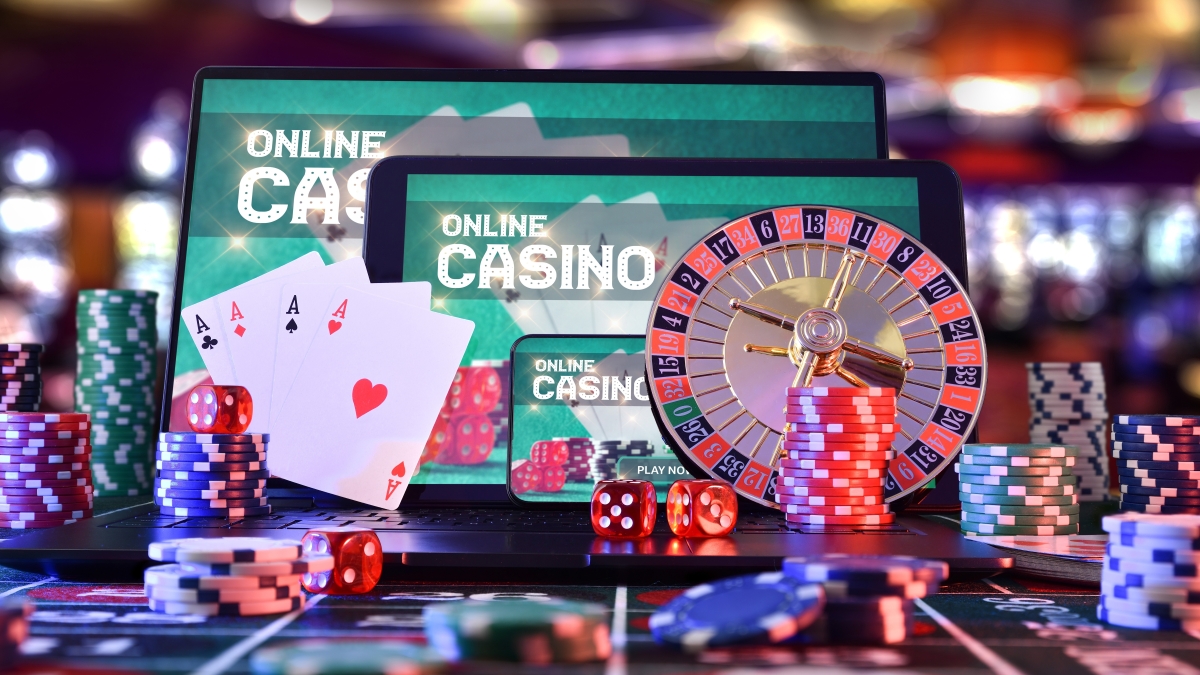
South Africans spent R1.5 trillion on gambling activities during the 2024/25 financial year, which is a R400 billion increase from the year before.
The overwhelming majority of this spending came from the betting industry, with South Africans wagering R1.1 trillion in bets throughout the year.
This is according to the National Gambling Board’s annual report for the financial year, which was presented to Parliament on Wednesday, 15 October.
The report also revealed that the gambling sector generated R75 billion in revenue during the period, representing a roughly R16 billion increase from the year before.
Similar to the turnover figures, the majority of this was generated through betting activities (R52 billion), followed by casinos (R17 billion), slot machines (R4.1 billion), and bingo (R1.7 billion).
However, what is most concerning is that gambling companies paid just over R5 billion in tax in the 2024/25 financial year. This accounts for approximately 7% of the revenue generated.





 Loading ...
The simple question is whether the DA will support a bill banning online gaming. It is clearly detrimental to society without significant benefits.