
South Africa’s R4.5 billion border shortfall a national security threat



Home Affairs Minister Dr Leon Schreiber has said that the Border Management Authority’s R4.5 billion funding shortfall poses a significant national security threat, primarily due to its obsolete ICT infrastructure.
This was said in response to a written question from ActionSA Member of Parliament (MP) Lerato Ngobeni, who asked what impact the funding shortfall has on the BMA’s ability to function.
“Failure to invest in critical areas, namely human resources, tools of trade, and ICT infrastructure, undermines the entity’s ability to effectively contribute to national security,” Schreiber said.
“The obsolete ICT infrastructure and unreliable network connections at the ports of entry pose a serious risk to national security,” said Schreiber.
“They compromise the efficiency, reliability, and resilience of systems that support border management, surveillance, data protection, and communication.”
The Home Affairs minister noted that the current outdated technology is vulnerable to cyber threats, lacks compatibility with modern security protocols, and hinders the sharing of real-time information across border stakeholders.
It is coupled with a lack of essential trade tools, including scanners, inspection devices, and ICT systems.
He said this hinders efficient and secure processing, making it challenging for officials to verify and clear shipments at points of entry accurately.
“The lack of proper tools diminishes the effectiveness of border control efforts, hampers operational efficiency, and undermines international trade protocols, ultimately affecting national security and economic stability,” Schreiber added.
As a result of the funding shortfall, the agency’s failure to invest in human resources limits its capacity, hampering its ability to identify and prevent illegal entries into the country effectively.
Schreiber said the BMA’s technological shortcomings compound this challenge, as technology could help reduce the strain on human resources.
Technology to boost the fight
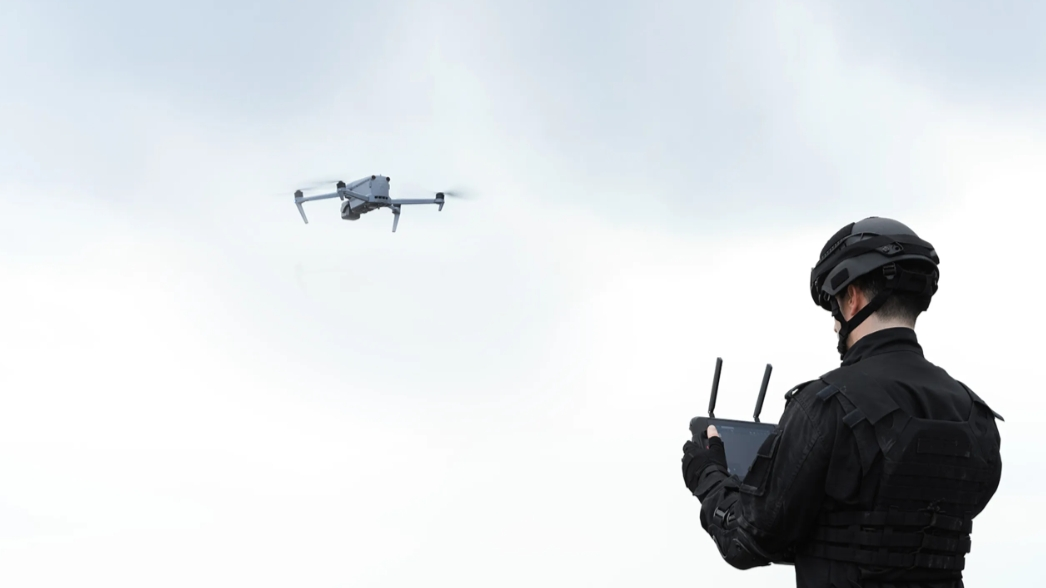
However, the BMA has managed to acquire some technology to help increase its capacity and effectiveness when patrolling the country’s borders.
In April this year, Schreiber unveiled several new drones and body cameras that were piloted over the Easter weekend.
The drones, which he called the Evo Max 4N and the Evo Max 4T, were deployed at four different border posts.
He added that the country was training eight drone pilots, two per drone, who would work in shifts to ensure the devices were operated around the clock.
The minister stated that both models will feature thermal detection, which will detect individuals taking cover behind objects.
They also have long-range zoom, enabling their cameras to see two kilometres into the distance.
He explained that the 4N was deliberately designed for night operations, equipped with a starlight camera capable of functioning in lighting conditions as low as 0.0001 lux.
This made the device particularly suited for night surveys and surveillance.
He added that the drone also featured autonomous pathfinding, enabling it to navigate its environment and avoid obstacles independently.
In addition, its object identification and tracking capabilities allowed the use of artificial intelligence to program the drone to detect specific objects.





 Loading ...