
South Africa kisses R86 billion goodbye


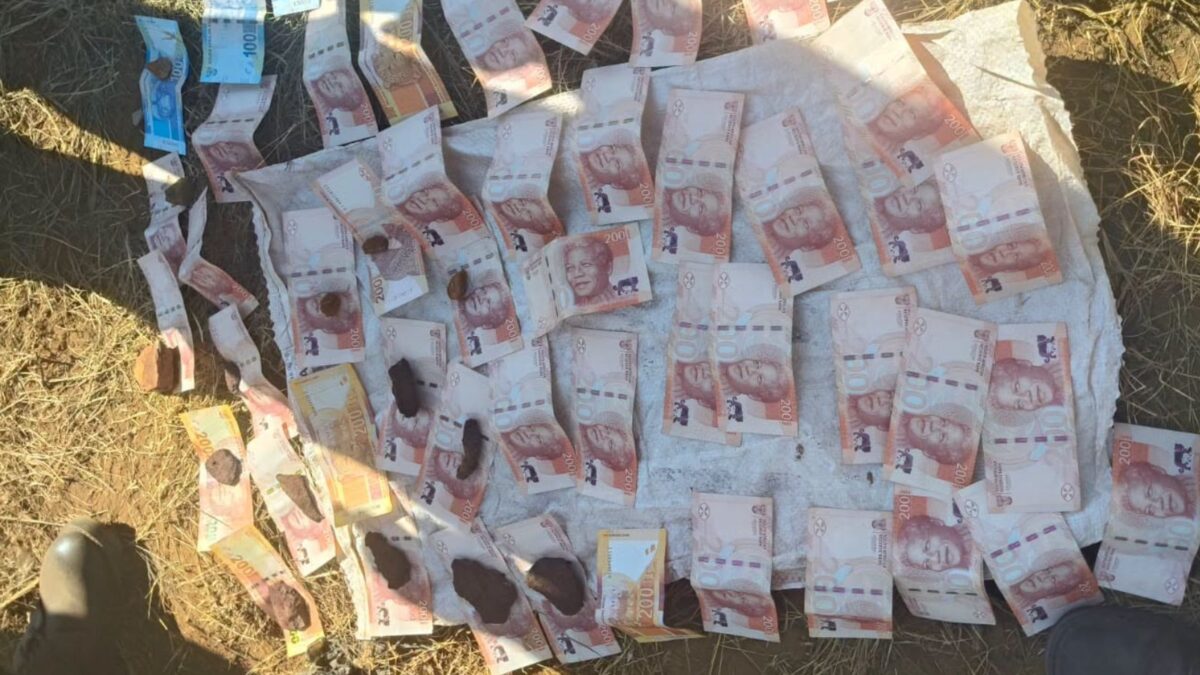
South Africa loses roughly R86 billion to the illicit economy, but there are ways to recover this money.
The illicit economy refers to illegal businesses and operations which operate outside of regulatory frameworks.
These businesses include smuggling, money-laundering, illegal mining, and a host of other operations that bypass South African laws.
In a recent report titled The Shadow State Rising, political economist Frans Cronje analysed the impact of the illicit economy on South Africa.
Cronje said the illicit economy costs South Africa approximately R84.6 billion every year, amounting to 1% of the country’s GDP.
Three sectors made up the majority of the country’s illegal operations, namely tobacco, alcohol, and illegal mining.
It is estimated that the trade of illicit tobacco products has cost South Africa’s economy over R33 billion, with illegal mining causing losses of roughly R23.5 billion.
These illegal operations have had a devastating impact on the country, such as the infiltration of criminal networks into law enforcement.
The operations also lead to increased violence, shown in South Africa’s high rates of murder and assault.
The size of the illicit economy also shrinks South Africa’s tax base, placing pressure on the government to provide services with decreased revenue.
In the private sector, smuggling and illegal products undercut formal companies, which cannot compete against untaxed, illicit businesses.
This leads to a lack of investment in formal businesses, further stagnating South Africa’s GDP.
The country’s GDP has struggled in recent years, growing by 1.4% in 2025, below the 4.1% average for emerging markets.
This slow GDP growth has led to an unemployment crisis in South Africa, with approximately 32.7% of the workforce currently jobless.
Boosting the GDP would improve investor confidence and help companies grow, leading to better job creation.
Shifting money out of the illicit economy would improve South Africa’s outlook and restore investor confidence in the formal market.
How to fight the illicit economy

Cronje said there were several ways to address the illicit economy and make up the R84.6 billion lost every year.
He said permanent, dedicated task forces were necessary for ensuring that South Africa’s laws are enforced.
This includes work from the South African Police Service (SAPS), the South African Revenue Service (SARS) and the National Prosecuting Authority (NPA).
These bodies would work with experts from the private sector, including analysts and advisers, to combat illegal operations at all stages.
These forces would work to identify smuggling and mis-invoicing cases using real-time risk-flagging systems at South Africa’s land and ocean ports.
This would be supported by dedicated NPA prosecutors to ensure that complex cases receive appropriate attention.
Cronje said harsher sanctions should be introduced for large-scale counterfeiting and smuggling operations, to make criminal activities less profitable.
For illicit operations, penalties are often seen as “the cost of doing business” and do not severely damage their profits.
Technology could also help authorities identify cases of misinvoicing and smuggling by tracking and verifying logistics chains.
This would stop people from claiming their products belong to another company when, in reality, they are counterfeit or smuggled goods.
Tracking quantities along the logistics chain would also help authorities find if products had been diverted at any point.
Cronje said introducing these measures would help South Africa recover some of the money lost to the illicit economy.
“Recovering even a portion of R84.6 billion could trim the deficit without raising taxes or cutting core services,” he said.
This would help South Africa’s GDP growth, leading to increased investor confidence in the formal sector.
It would also improve South Africa’s unemployment crisis by encouraging business growth and creating job opportunities.





 Loading ...
It’s simple to fix the illegal cigarette business.
In the past all cigarettes sold had a brown tax label over the packet. The labels could only be purchased from SARS and covered the tax on the cigarettes. Any cigarettes sold without that label would be confiscated and the business could be criminally prosecuted.
The ANC government abolished this system.
I wonder why?