
Regime change in South Africa: ANC plummets to an all-time low as citizens are tired of corruption, incompetence, and bad policies



Political analysts Frans Cronje and Prince Mashele said that South Africa is experiencing regime change as the ANC has lost its majority support.
South Africans will vote in the local government election on Wednesday, 4 November 2026, and most polls predict a bloodbath for the ANC.
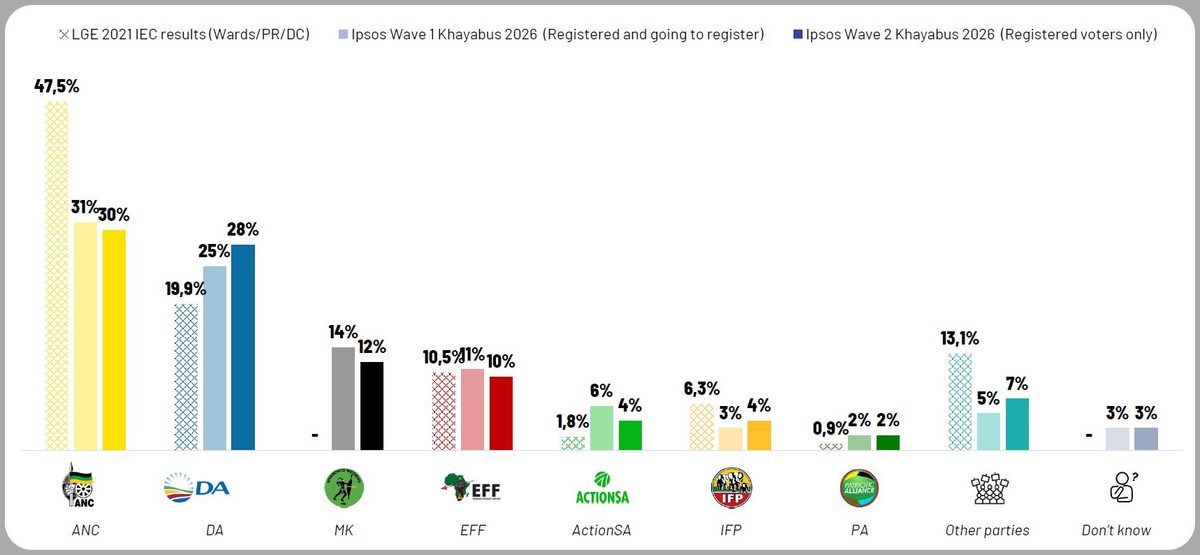
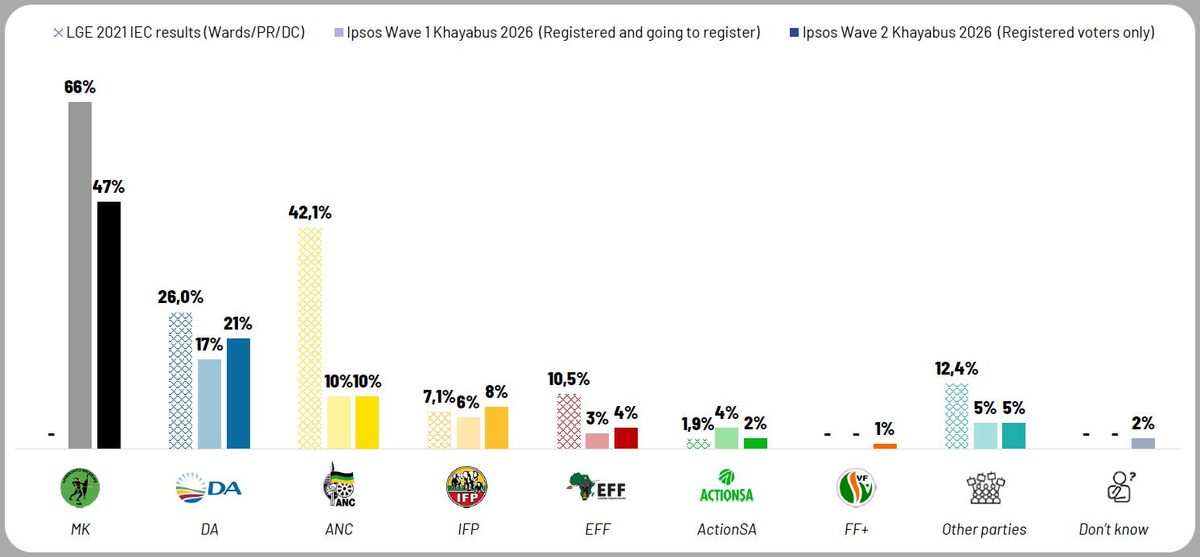
The latest Ipsos Pulse of the People Wave 2 poll showed that the ANC’s support is expected to drop from 48% in the 2021 elections to 30% in the 2026 elections.
“The results suggest that support for the ANC has declined significantly since the 2021 Local Government Elections,” Ipsos said.
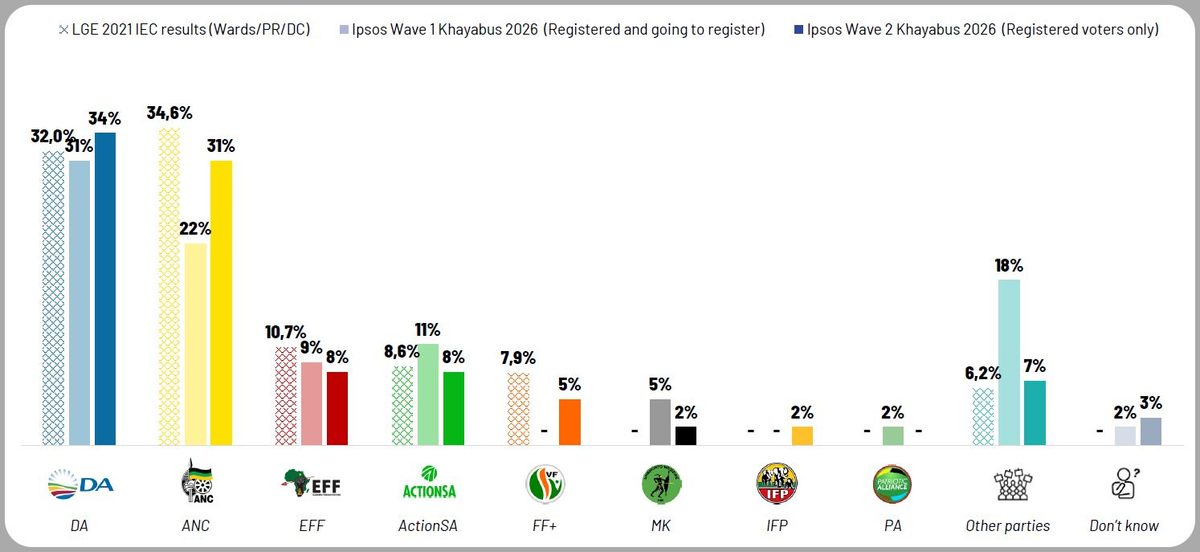
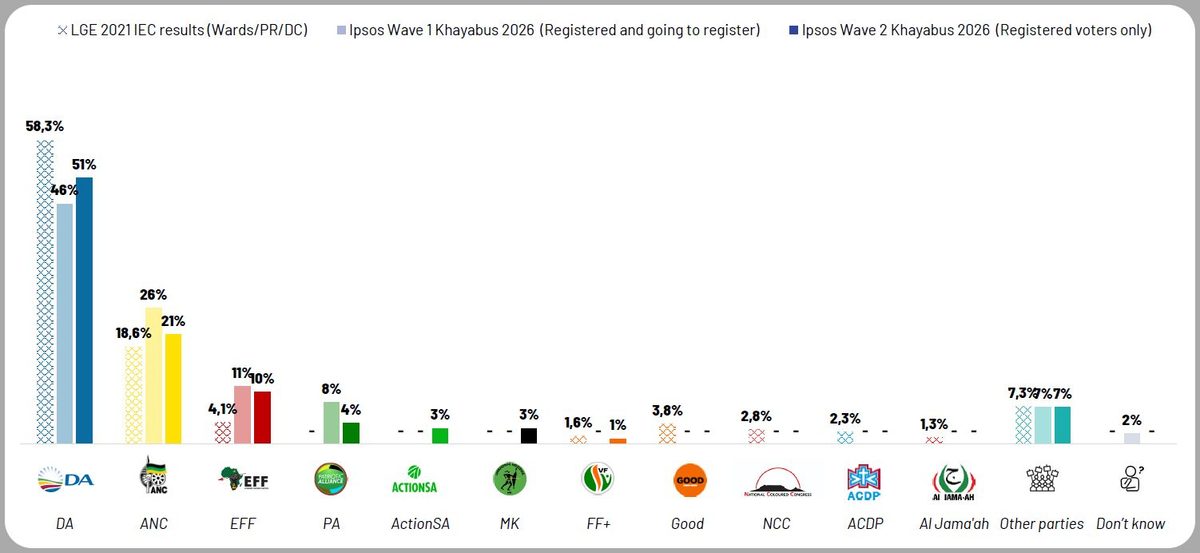
The Ipsos study further showed that the ANC will likely enjoy less support than the Democratic Alliance (DA) in Johannesburg, Tshwane, eThekwini, and Cape Town.
“The support recorded for the DA and ANC in Johannesburg broadly reflects the national view, but this time the DA registers slightly higher support than the ANC,” it said.
“The DA continues to register strong support in Cape Town and currently attracts just over half of voter support in the metro.”
“Consistent with trends observed in recent surveys, the party appears to remain firmly ahead of its nearest competitors in the city.”
Awongiwe Booi, a fixed-income analyst at Investec Wealth & Investment International, also said the ANC can expect to lose significant support.
“South Africa is moving into a multiparty era. The ANC remains the largest party, but its support has weakened to 40.2% in the 2024 national election,” she said.
She said that the local elections will also feed into the ANC’s December 2027 succession contest.
“Further losses in Gauteng could weaken leaders whose political bases are tied to the province and affect internal unity,” she said.
“An ANC setback in the metros may initially be interpreted as reform-positive, but the longer-term consequence depends on how the party responds.”
Regime change in South Africa
Political analysts Frans Cronje and Prince Mashele said that South Africa is currently experiencing regime change.
Over the last eight decades, South Africa has been ruled by two dominant parties, the National Party and the African National Congress.
Since 2024, there has been no dominant political force in South Africa, and the country is now governed through coalitions.
Frans Cronje told Alec Hogg from Biznews that South Africa is undergoing a two-step regime-change process.
The first is that the electorate loses belief that the existing ruling regime, the ANC, can protect its interests.
This step is largely complete, as 90% of South Africans feel the country is heading in the wrong direction and voter support for the ANC continues to drop.
The second step is for people to gain confidence that a new regime will defend its interests and should be supported.
Cronje said this step is not yet complete because no single political party has built enough trust among the broader population to gain total control.
Prince Mashele shares this view. He told Wayne Duvenage in an interview that South Africa is undergoing a gradual democratic transition.
This transition is marked by the steady decline of the ruling party, with the ANC’s support declining in local and national polls.
The ANC’s support plummeted from a peak of 69% to 40% nationally in 2024. Mashele predicts it will drop further in upcoming elections.
This decline, he said, means that South African politics have shifted to multi-party coalition governments.
He said that people should expect this to be a permanent feature of South African politics for at least the next 15 years.
This, in turn, requires the country to adapt its administrative structures and political culture accordingly.
Johannesburg Ipsos Poll
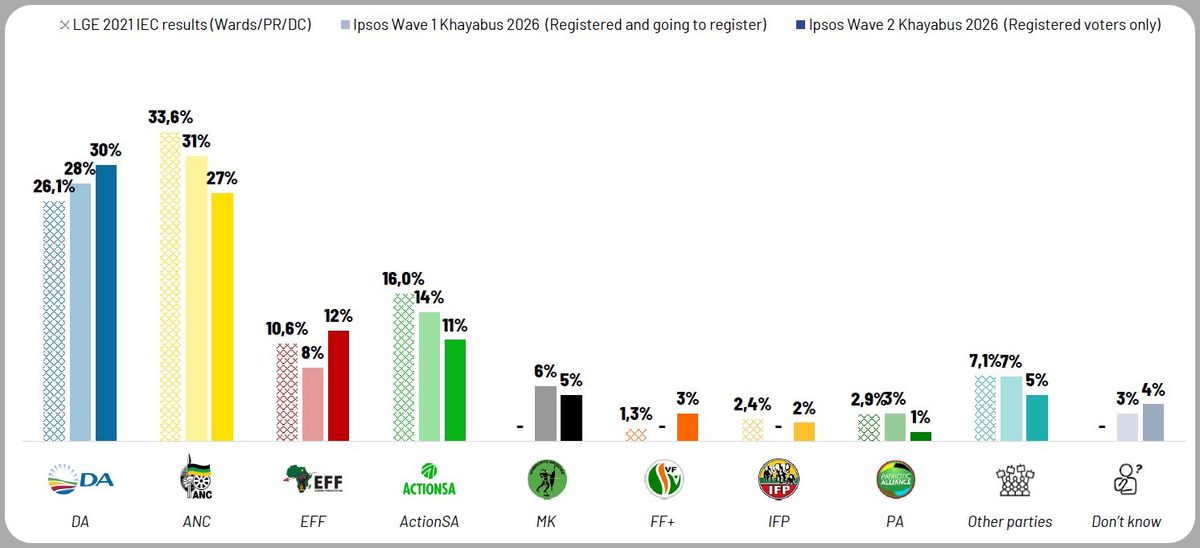
Tshwane Ipsos Poll
Cape Town Ipsos Poll
eThekwini Ipsos Poll









 Loading ...
• “The election results demonstrate a clear moment of reckoning where long-standing governance failures and unfulfilled pledges have finally caught up with the leadership.”
• “Voters have spoken, proving that political choices carry long-term consequences as the chickens come home to roost.”