
R41.6 million given to spaza shop owners in South Africa


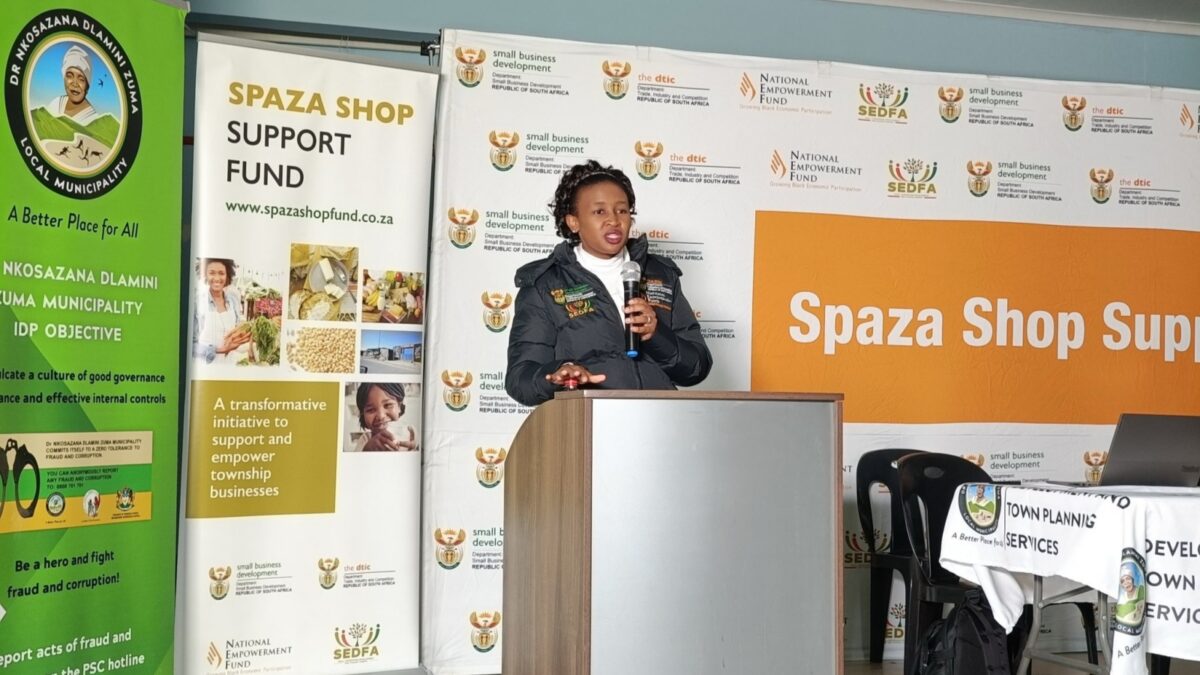
41.6% of a fund designed to assist spaza shop owners across South Africa’s townships and rural areas has been paid out so far, despite the full R100 million amount being approved.
This was revealed by the Minister of Trade, Industry and Competition, Parks Tau, in response to a parliamentary question from National Assembly member Mokgaetji Mafagane.
Mafagane had asked the Minister to disclose the total amount budgeted for the Spaza Shop Support Fund (SSSF), how much had been disbursed to date, and how much remained unspent.
In a separate question, Mafagane requested a breakdown of the disbursed funds, the reasons for any underspending, and the measures being taken to address it.
The SSSF was launched last year by the Department of Small Business Development and the Department of Trade, Industry and Competition.
It is being implemented through the Small Enterprise Development and Finance Agency (SEDFA) and the National Empowerment Fund (NEF).
The initiative seeks to help spaza shop owners formalise their businesses to access government support and participate in the formal economy.
Tau said the total budget allocated to the NEF to date for the SSSF was R100 million, of which he said the entire amount had been approved.
He also said that, as this is an ongoing project, further budget requests and approvals were likely to be made during the course of the financial year.
“Disbursements are made on an ongoing basis, based on the fulfilment of the disbursement conditions,” Tau said. “Disbursements amounting to 42% of the funds have been made.”
“Many spaza shop owners are being verified to undergo training and receive assistance with the refurbishment of their businesses in order for them to obtain the required business licences.”
According to Tau, the NEF had so far trained 831 beneficiaries, with 453 receiving infrastructure support and another 463 receiving inventory funding.
This equated to R8.31 million for training, R14.98 million for infrastructure, and R18.35 million for inventory, totalling approximately R41.64 million disbursed so far.
The reasons for the underspending
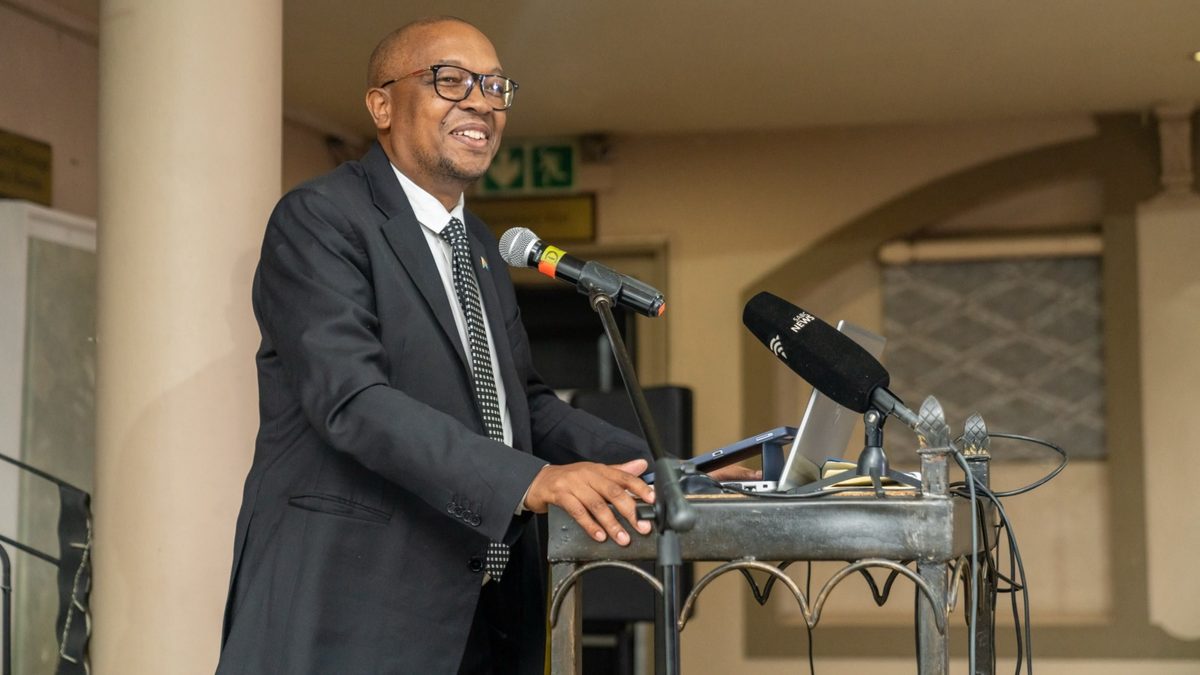
Tau said that the timing of the remaining disbursements was subject to the SSSF’s phased implementation and disbursement model.
He said remaining funds had been committed to approved beneficiaries and would be paid out as milestones were reached and the right conditions were met.
“The remaining disbursements will be made before the end of the current calendar year as the owners meet the required conditions,” Tau explained.
“Some beneficiaries do not draw on the full fund in one instalment due to the size of their spaza shops, and hence some disbursements will be made over a period of time.”
According to Tau, infrastructure improvements are currently being implemented at beneficiary stores nationwide.
However, he said this would take time, as it requires physical work across multiple provinces, including site assessments, completion of the necessary improvements, and verification of the work.
“Beneficiary stores must be structurally sound and meet the required infrastructure and operational standards before inventory support can be provided,” Tau said.
“This sequencing ensures that funded inventory can be stored safely and that the businesses are adequately equipped to trade.”
Qualifying beneficiaries may access inventory support of up to R40,000, placing orders based on their operational requirements, storage capacity, and stock replenishment cycles.
They are also discouraged from drawing down their full inventory allocations all at once, particularly in instances where perishable goods are involved.
This phased ordering approach, Tau said, reduced the risk of spoilage, expiry, and avoidable stock losses before the goods can be sold.
“There are many spaza shop applications that were declined as a result of the discovery of fronting practices, especially involving foreign nationals,” Tau said.
“Measures are in place to ensure due diligence in the disbursement process and to avoid disbursing funds to non-qualifying businesses.”
As part of these measures, Tau said the NEF had ensured sufficient staff were in place to undertake verifications and make disbursements within the expected timeframes.
By June 2026, 4,522 applications had been received and 4,240 assessed, with 2,369 businesses approved for support through the SSSF.
1,053 of these businesses were approved through the NEF, with the remaining 1,316 approved through SEDFA, totalling R79.6 million.





 Loading ...
This is a campaign by the ANC to buy votes … look at the timing . The 60 % still to be paid to be used as a carrot and stick for voters disguised as spaza
what/what …. this does not create jobs, do not pay tax, do not pay UIF……Is there a check to control on how this is to be used by a spaza shop by who , …what happens next year .
100 million could be used to employ more doctors or inmprove the poor health services. Priorities are crazy
Thus is just buying votes with tax paying funds . A government gone crazy