
Real reason for Cape Town’s high house prices


Efficient Group chief economist Dawie Roodt said that Cape Town’s housing crisis is caused by the local authorities, which prevent rapid property developments.
Roodt shared his views on Cape Town’s rising property prices and lack of affordable housing in a discussion on Truth Report.
Cape Town mayor Geordin Hill-Lewis said that the city’s housing stress is not foreign-made, investor-made, or Airbnb-made. It is supply-made.
“When a city grows, its housing stock must grow with it, in volume, in typology, in density, and in spatial spread,” he said.
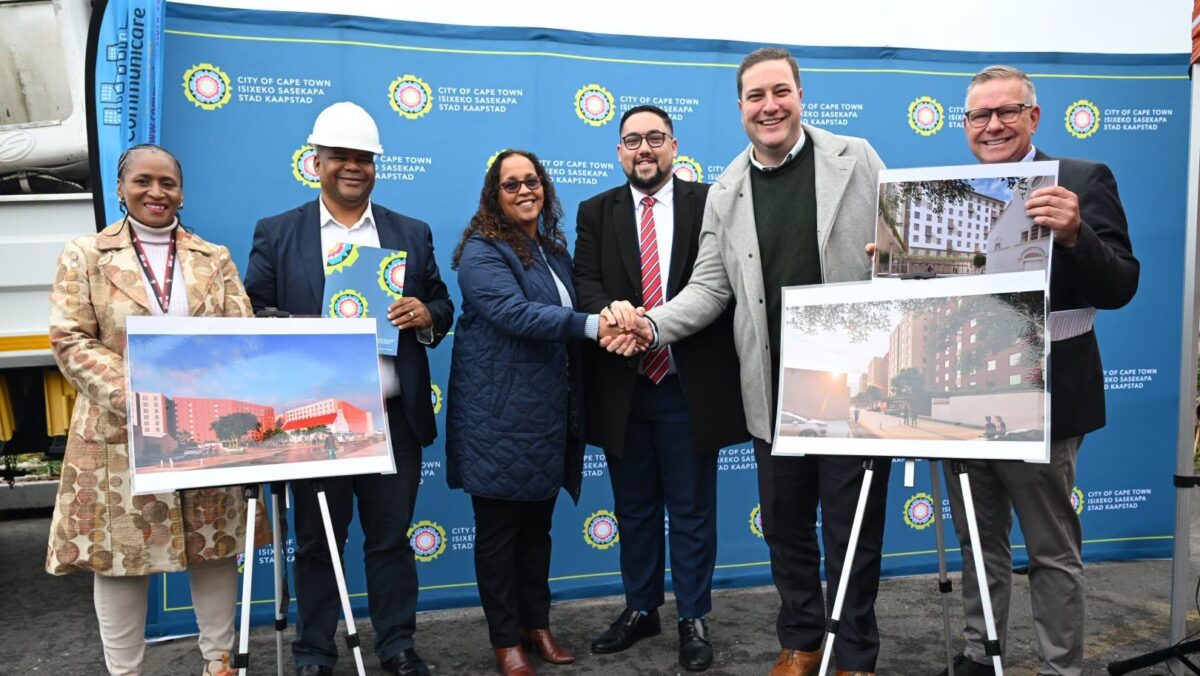
To address this problem, Cape Town has released significantly more land for affordable housing development than before.
“There is a pipeline of 12,000 well-located affordable housing units close to the central business district and other economic nodes of the metro,” he said.
He said that Cape Town has introduced Land Discount Guidelines that allow City-owned land to be discounted to maximise social-housing yield.
“The city is offering substantial utility and rates discounts for accredited social-housing projects, a national first,” Hill-Lewis said.
“Amendments to our municipal planning by-law make it easier for micro-developers to build affordable units in townships, informal settlements, and lower-income suburbs.”
He said they further support this emerging sector by rolling out pre-approved building typologies and discounted development charges.
“The political temptation is that, if prices are high, force them down. Cap rents. Restrict increases. Regulate the market until it bends,” he said.
“However, economics is not impressed by wishful thinking, and the world’s experiments with rent control are an archive of failure.”
Dawie Roodt’s opinion

Roodt said that one of the primary reasons for the housing shortage in Cape Town is that authorities drag their feet.
“There is excessive red tape, making it very difficult to obtain the necessary permissions to develop and create more housing,” he said.
Roodt argued that if the City of Cape Town addressed the regulatory problems that prevent the construction of more houses, the shortage would disappear.
“The Mayor of Cape Town has suggested that part of the problem is Airbnb and that these rentals should be taxed like hotels,” he said.
Roodt referred to Hill-Lewis’s comments that Airbnb and other digital platforms are stifling hotel investment and job creation in Cape Town.
He said they intend to level the playing field through a new bylaw, which will clamp down on commercial businesses using Airbnb.
“We are not going after that income-supplementing activity by homeowners. We are going after large commercial businesses,” he said.
He argued that it was attractive for investors to buy a large number of apartments and rent them out as hotels through Airbnb.
This strategy sidesteps many tariffs and charges associated with building and operating a large hotel in Cape Town.
Roodt criticised Hill-Lewis’s Airbnb clampdown plans, saying that he and the City of Cape Town should be doing the opposite.
“They should be taxing hotels less. Businesses are meant to create wealth, and we should encourage small business establishment,” he said.
“If you begin interfering with the prices of any product, you negatively affect its supply and demand.”
“Instead, we should leave these matters to the market and reduce the tax burden on all economic activities.”









 Loading ...
In a market that is corrupt, owned by a few, impacted by foreigners, you cannot leave things to the market. It’s a naive notion, always proposed to protect the financially powerful. South Africa is in need of a developmental agenda. South African market is so small, it remains full of oligopolies and monopolies.