
Offshore assets? Consider an offshore trust


By Magnus Heystek*
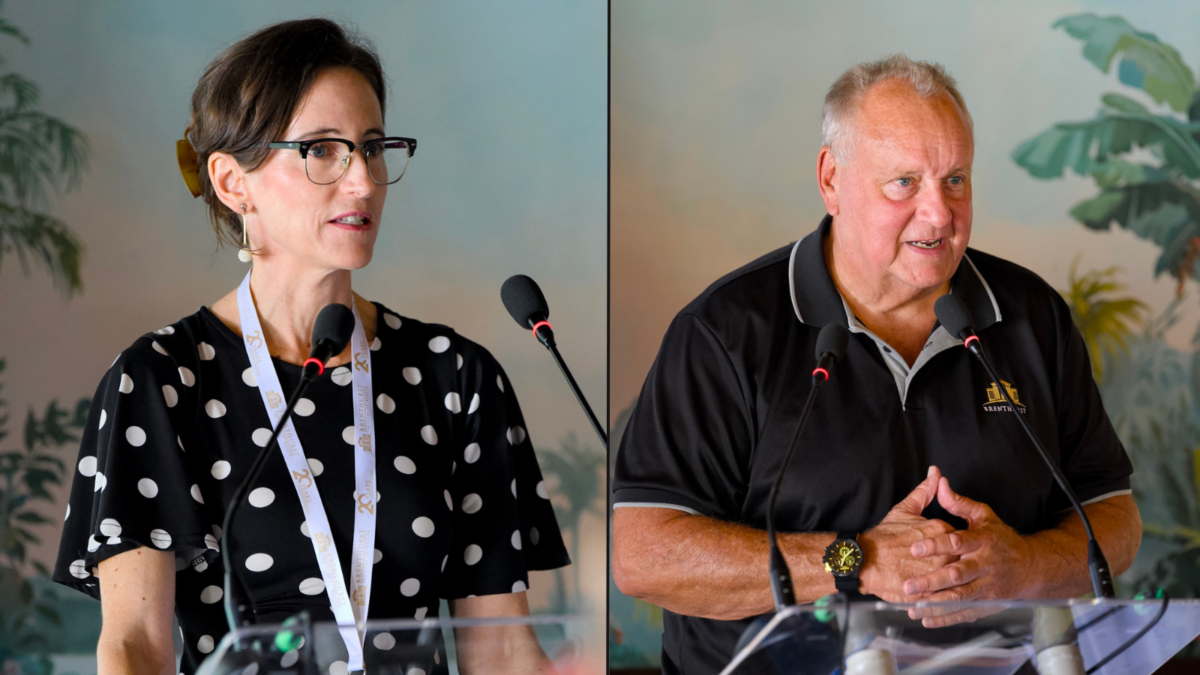
This was the advice from Caoilfhionn van der Walt, founder and managing partner of global tax planning firm Regan van Roy, at a tax and trust seminar hosted by Brent Wealth and Brent Consulta in Mauritius.
The seminar was the first hosted by the two Mauritian-based companies in the Brenthurst Wealth Group and also included Sean Peche from Ranmore Fund Management.
The event was well-attended by mostly South African expats who have settled on the west coast of Mauritius, an area very popular amongst expats from all over the world. The increase in the offshore investment allowance to R10m per year since 1st April 2015 has played a major role in attracting wealthy people to the island.
In the decade from 2005 to 2015 merely 180 South Africans moved to Mauritius, either full time or part time. However, since the increase in the investment allowance from 2015 to 2025, this number jumped to almost 1 800.
Many wealthy South Africans have used the increased allowances (R10m plus R1m single discretionary allowance, recently increased to R2m per year) to finance a move to either Grand Baie or Black River on the west coast. These allowances were used to purchase property and or make offshore investments in global equity portfolios.
But the mistake that is often made is that these assets remain in their global estates and will be taxed on death at a rate of 25% plus an additional 4% executor’s fees. The winding up of estates too is problematic in SA, due to inefficiencies at the Master’s Office, and could take as much as 2 years or longer.
Owning property in Mauritius in one’s personal name is also problematic as the Mauritian civil code overrides any testamentary wishes, instead following guidelines as laid down by family bloodlines.
The solution is that offshore assets – both portfolios or property, must go into a Mauritian trust as soon as possible.
Owners of offshore properties—often rented out—-think that SARS will never know about these properties, but this is changing, and within 3 years SARS will be able to get data on ALL the properties owned by South Africans worldwide, including Mauritius.
This could lead to potential difficult discussions with SARS in the future. Many people also baulk at the deemed high cost of setting up of a trust, but the impact of these costs reduce over time as the portfolio grows in value.
It’s not uncommon for investors who started with R10m a decade ago to have values of around R60-80m now if their funds were invested correctly. To wait until the portfolio is large enough to justify the costs of a trust causes a much larger capital gains tax event when the capital is eventually transferred into the trust.
When an offshore trust makes sense
An offshore trust can be very effective if the objectives are:
- Estate planning and succession
- Asset protection
- Multi-generational wealth
- Privacy
- Flexibility
When a trust may not be appropriate
There are many situations where direct ownership is preferable.
For example:
- Offshore investments of under R10m may not justify the ongoing costs.
- An investor with no children or a very simple estate may gain little benefit.
- Investors wanting complete personal control over investments often dislike the restrictions imposed by trustees.
- Trusts involve annual administration, trustee fees, tax compliance and legal costs.
Costs
An offshore trust typically involves:
- Initial establishment costs that can range from several thousand to tens of thousands of US dollars depending on the jurisdiction and complexity.
- Annual trustee fees.
- Accounting and tax compliance.
- Legal reviews.
For smaller portfolios, these costs can materially reduce investment returns.
A practical guide
| Offshore assets | Trust likely? |
| Under R10 million | Usually not unless there are special family circumstances |
| R10–30 million | Depends on estate planning objectives |
| R30–100 million | Often worth considering |
| Over R100 million | Frequently forms part of the overall wealth structure |
The threshold is only a guide—family circumstances, tax residency, business risks and succession goals are usually more important than portfolio size alone.
* Magnus Heystek is the co-founder and a director of the Brenthurst Group of Companies. BrentWealth and Brent Consulta are both licensed and regulated financial entities in Mauritius. For more information contact [email protected].




 Loading ...