
Important South African dam so polluted you cannot see the water


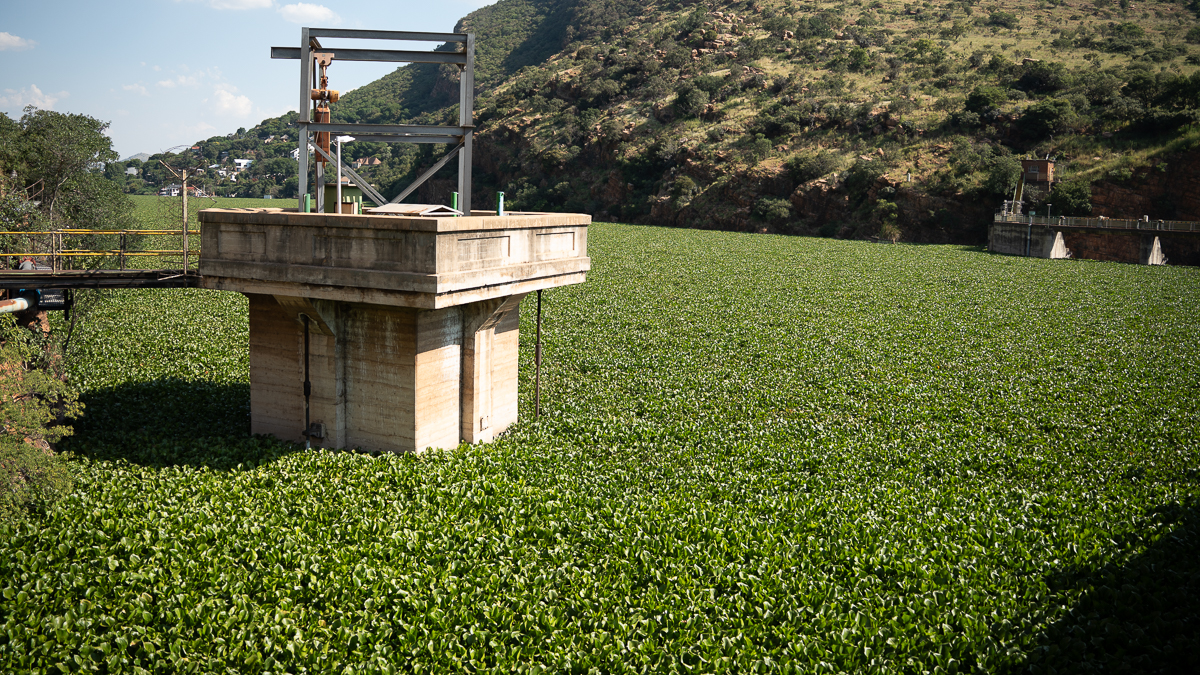
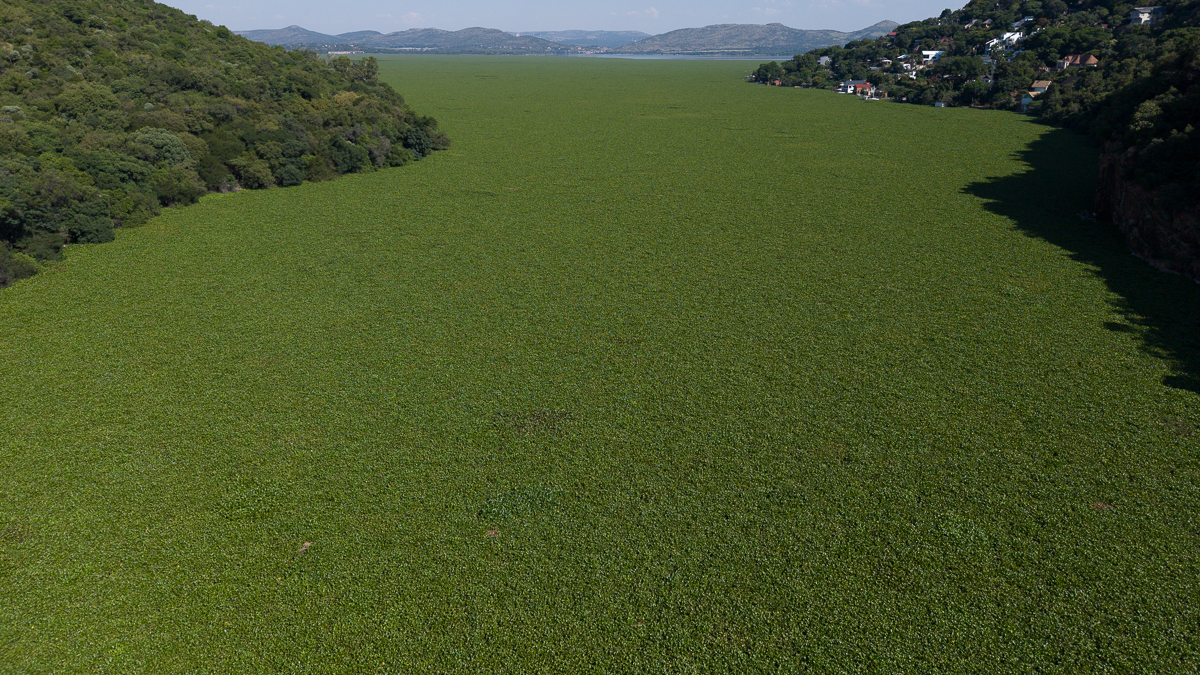
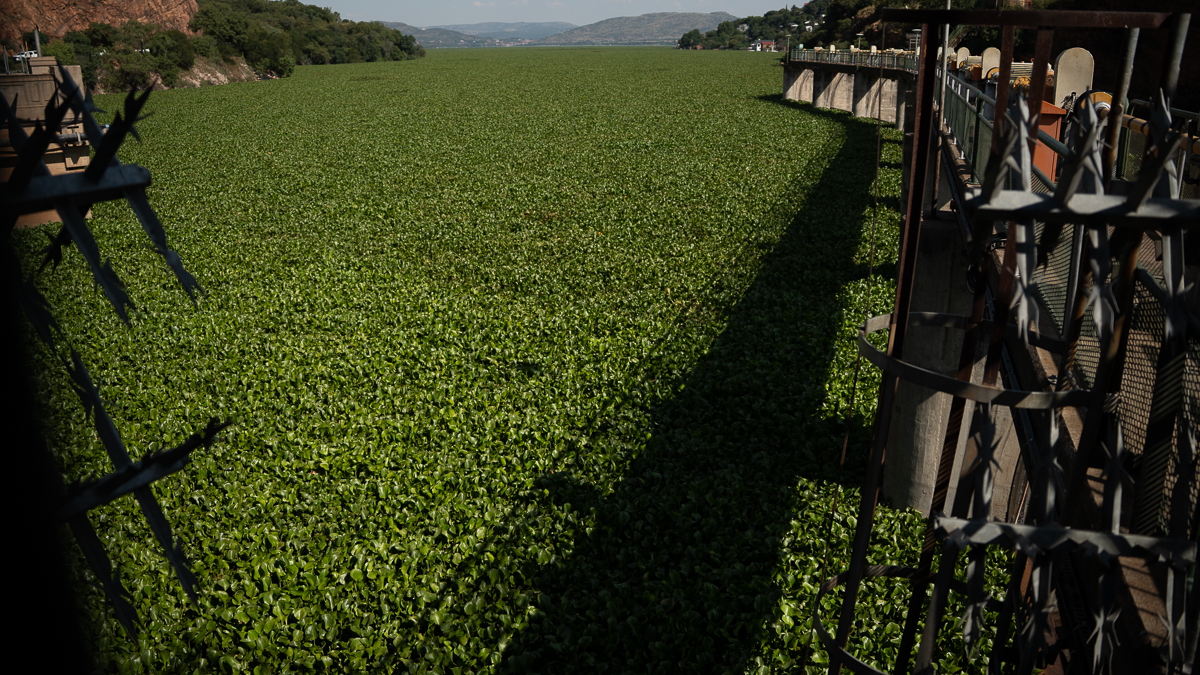
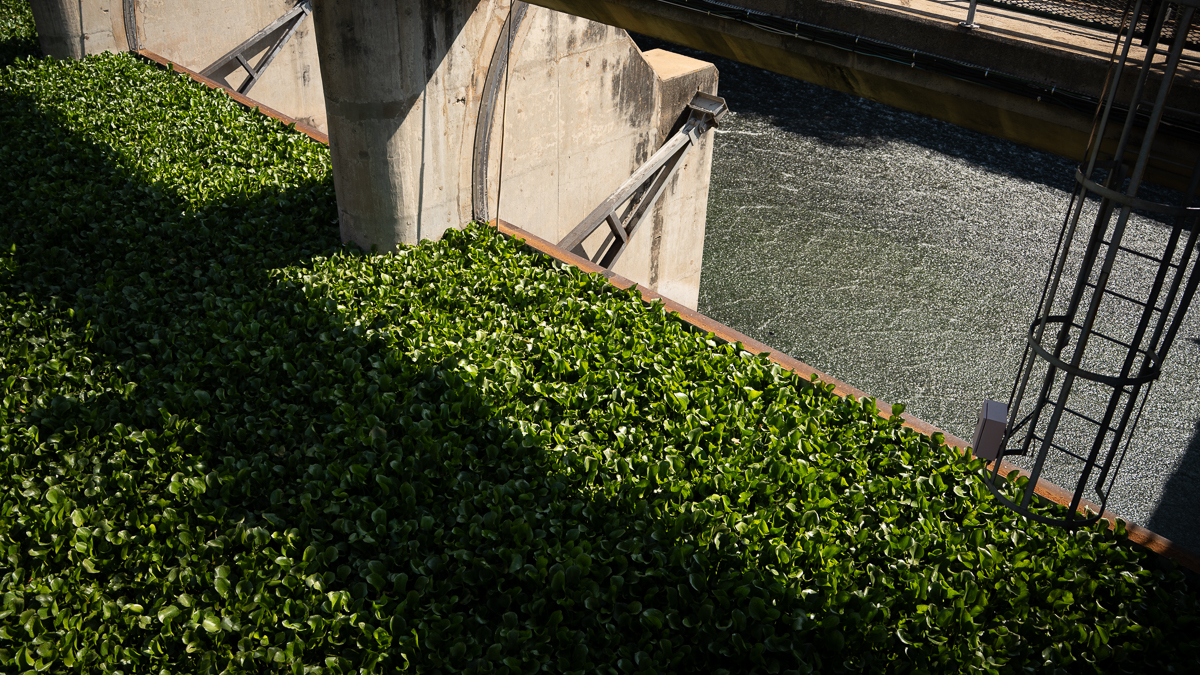
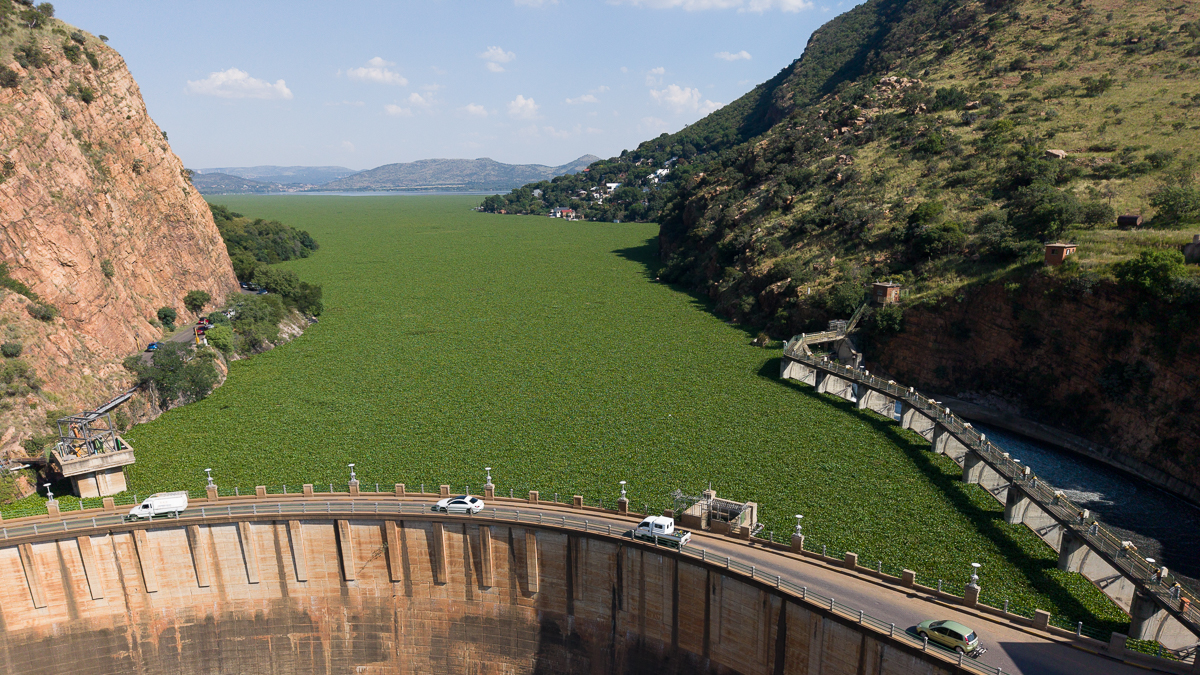
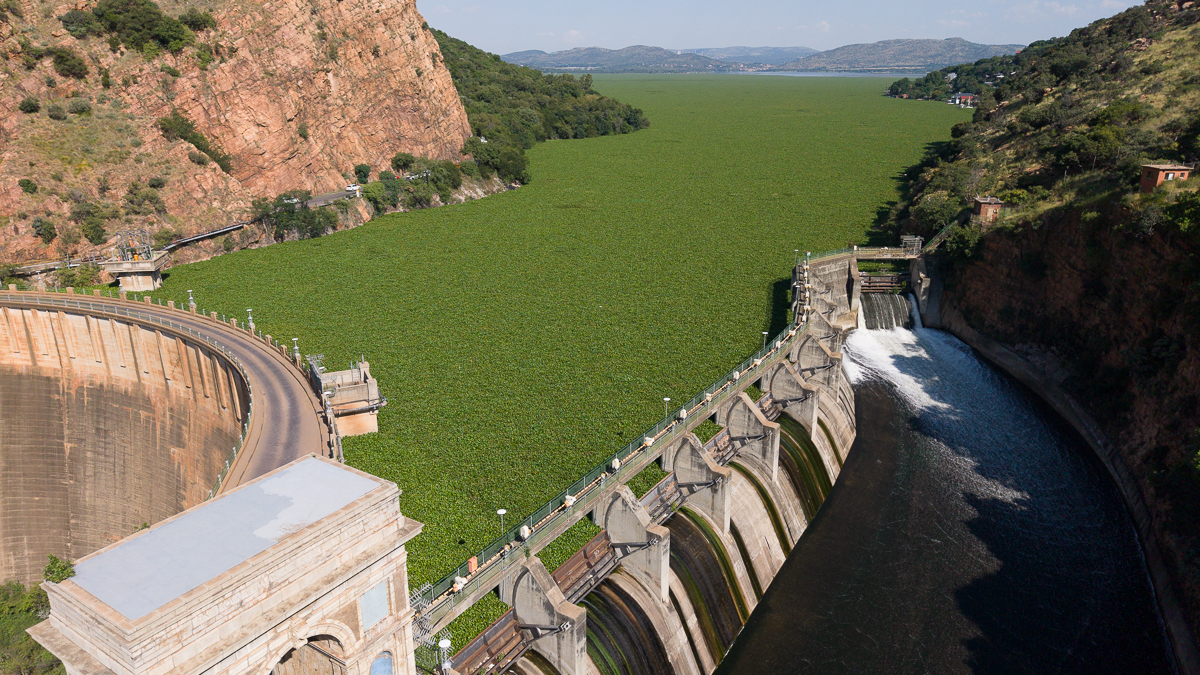
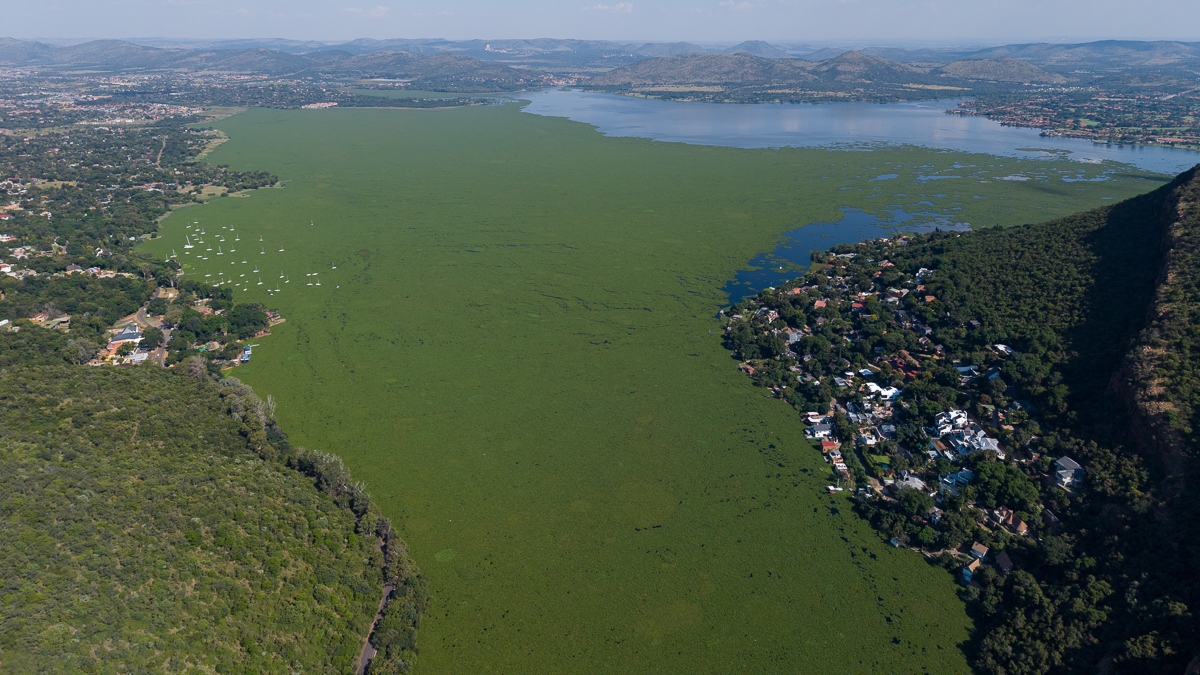
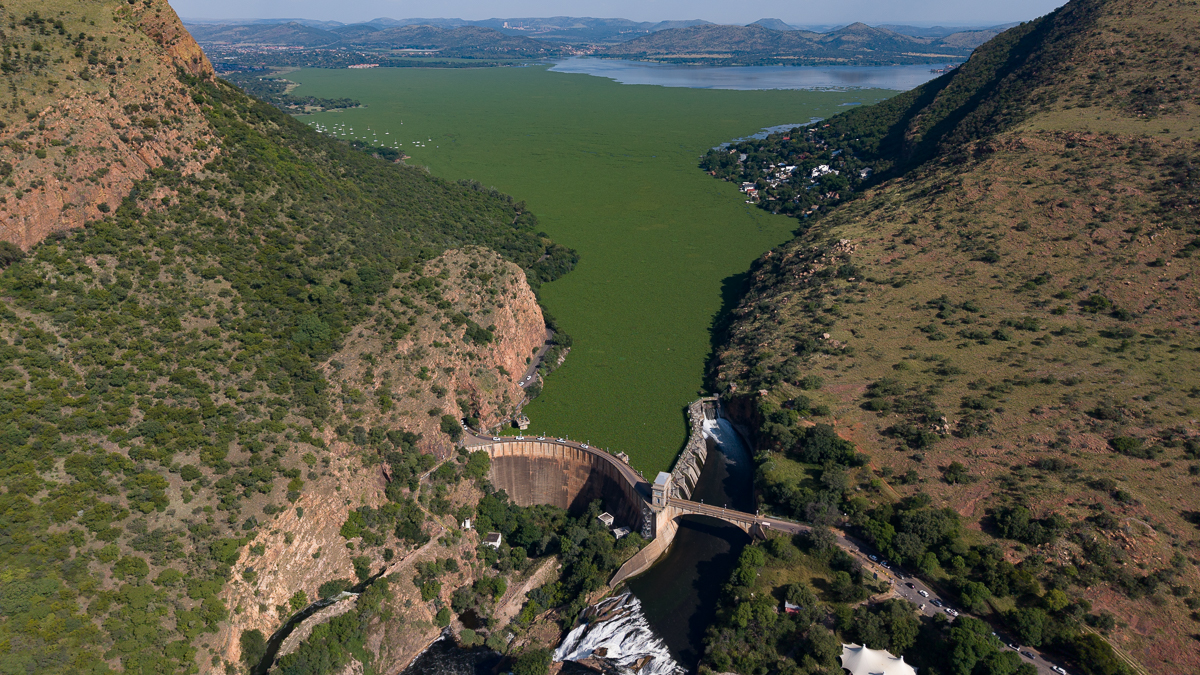
Hartbeespoort Dam, or “Harties” as locals call it, is so polluted that hyacinths have taken over, creating a green mat that covers the surface.
This spoils the once pristine historical landmark, which has been a central hub for weekend getaways near Pretoria and Johannesburg for decades.
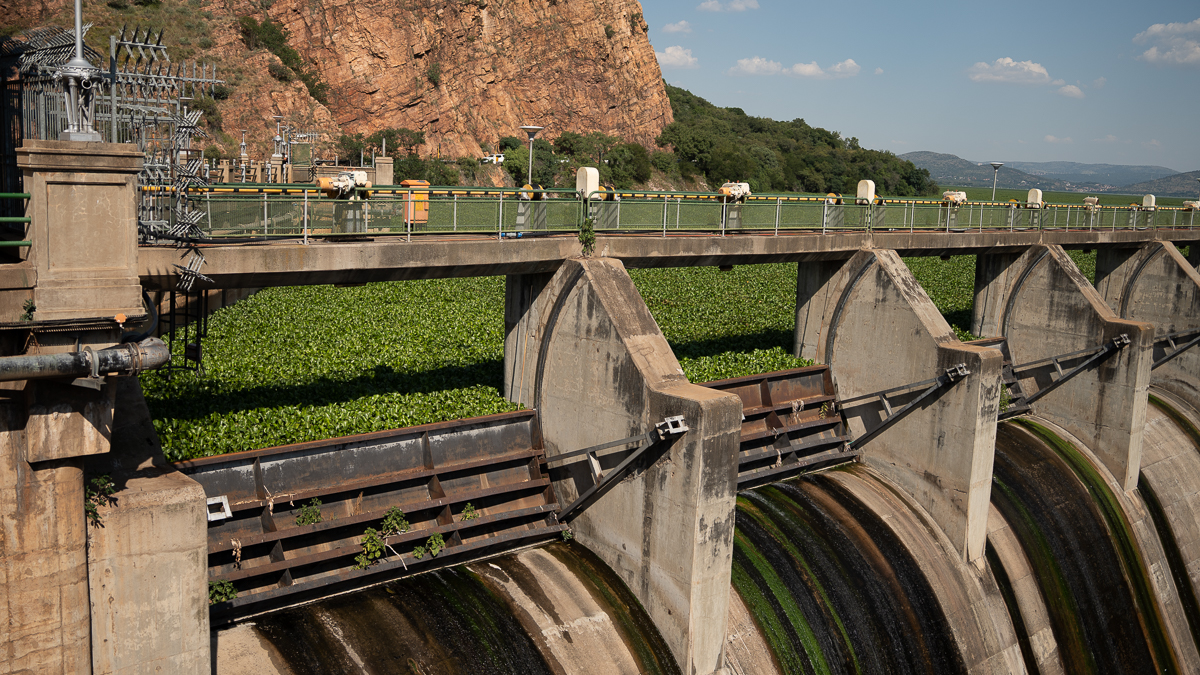
Hartbeespoort Dam was completed in 1923 and was renovated in 1969. It is widely recognized as an engineering feat.
One of its most famous features is the Roman-style triumphal arch on the dam wall, modeled after the Arc de Triomphe in Paris.
The dam wall is 149.5 metres long and 59.4 metres high, and it can store 195 million cubic metres of water.
It is built across a gorge cutting through the Magaliesberg, and the Crocodile and Magalies Rivers feed the dam.
To reach the dam wall from the Pretoria side, you drive through a narrow, curved tunnel. It is a nostalgic highlight for many visitors.
Apart from the excellent environment it created, the Hartbeespoort Dam is also one of South Africa’s most important water reservoirs.
The dam was originally conceived as the Hartbeespoort Irrigation Scheme, a project of state modernization. It remains a crucial agricultural water source.
It supplies water through a network of canals to farms which grow tobacco, wheat, lucerne, fruit, and flowers.
It feeds a staggering 544 km network of canals and provides water to roughly 160 square kilometers of farmland.
It also supports significant mining developments north of the Magaliesberg mountains and provides potable water to more than 22,000 people in the surrounding area.
NSRI Station 25, located at the dam, is one of only three National Sea Rescue Institute inland stations and provides a water rescue service.
Hartbeespoort Dam pollution
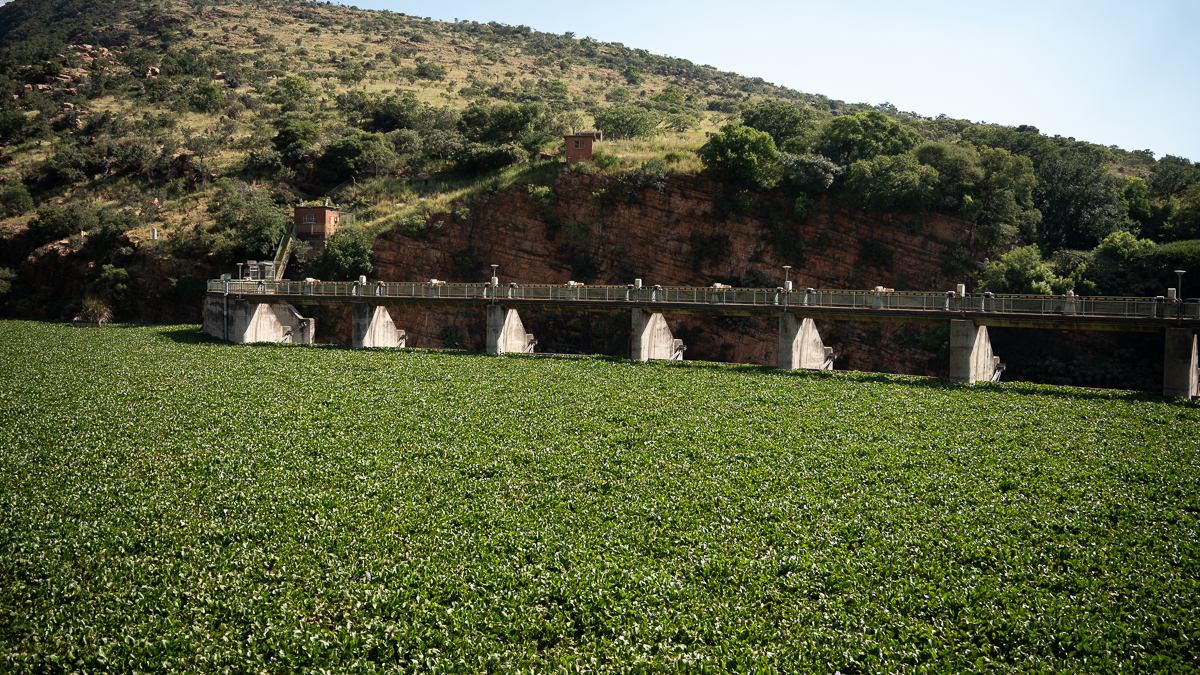
The Hartbeespoort Dam has become so polluted and overgrown with hyacinths that it is no longer safe for water sports.
Water hyacinth is known as the world’s worst water weed. It is an invasive plant that grows in polluted water, further compromising water quality.
Newsday visited Hartbeespoort Dam in February 2026 to assess the situation, and it was clear that the water quality and hyacinth problems remain.
The green hyacinth mat persists, and, apart from the water weeds, there are clear signs of water pollution.
In August 2025, Groundup reported that Hartbeespoort Dam is becoming increasingly polluted, with high levels of nutrients, including nitrogen and phosphorus.
This contributed to the growth of invasive plant species and deprived the water of oxygen, harming aquatic life.
Apart from the harmful nitrogen and phosphorus, plastic bottles, polystyrene, and even shoes could be seen caught in the floating vegetation.
John Wesson from the Wildlife Society of South Africa (WESSA) explained that the problems originate from the surrounding area.
He said rivers that feed into the dam, like the Jukskei and Crocodile, are heavily polluted by municipal, industrial, and agricultural waste.
“Often we find with municipalities that their sewage treatment plants are not functioning,” he said.
“Their manholes get blocked, or their pumps and cables get stolen, and all that raw sewage gets dumped into the river that flows into the dam.”
WESSA conducts monthly independent water tests, which show extremely high levels of ammonia and phosphates, far above the standard minimum acceptable levels.
“We don’t even test for E. coli because we know that the E. coli levels in the dam are going to be through the roof,” said Wesson.
Sello Seitlholo, water and sanitation deputy minister, said the crisis is predominantly caused by municipalities.
He called on Madibeng Local Municipality to address the inadequately treated effluent being released at its water treatment plant into the Hartbeespoort catchment area.
Hartbeespoort Dam photos – February 2026





 Loading ...
D_I_S_G_U_S_T_I_N_G