
South Africa’s richest city probing alleged water tanker mafia



The City of Johannesburg has launched an internal investigation into allegations that staff members of Johannesburg Water (JW) and employees from some service providers demand payment for water delivered by tankers.
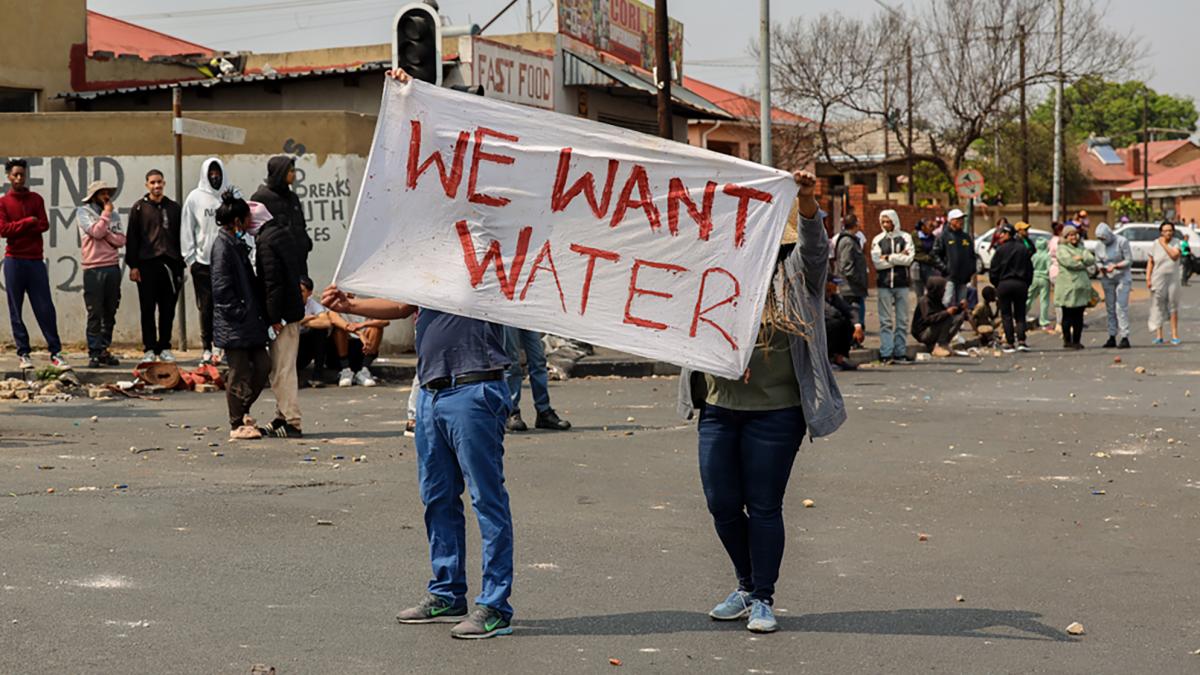
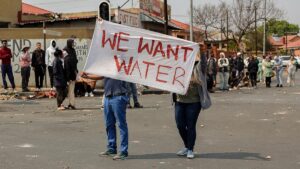
Many areas across the economic hub of Johannesburg, are in a full-blown water crisis. Neighborhoods like Westbury, Ebony Park, and parts of Soweto have endured dry taps for weeks, going on months, but the wallets of those hired to assist are flooding.
This prompted Parliament to haul the city management before them. As such, many areas in the metro, home to over 6.4 million people, require water tankers to meet their daily needs.
For South Africa’s richest city, it is alleged that water tanker mafia-like incidents are occurring, with allegations of staff members and employees of certain service providers having demanded or accepted payment for water delivered by tankers.
“Johannesburg Water reiterates that water supplied through official tankers is free of charge,” the entity said in a statement.
In response to these allegations, the internal audit division is investigating claims and control weaknesses. One employee from Johannesburg Water has been suspended while the investigation proceeds, while a second suspension is being considered.
So far, two employees from involved service providers are implicated, and Johannesburg Water said that their companies are conducting investigations.
“Should wrongdoing be confirmed, appropriate actions will be enforced. It is essential to emphasise that tanker water is free, and any payment request is both unlawful and contrary to City policy.”
Johannesburg Water spokesperson Nombuso Shabalala told Newsday that “at this stage, there is no factual evidence of a water mafia operating in Johannesburg.”
“What we are currently dealing with are isolated incidents and allegations of wrongdoing linked to a small number of individuals. As such these are being investigated thoroughly.”
The bigger water tanker mafia picture in South Africa

Water and Sanitation Minister Pemmy Majodina said that the water tanker syndicates are rife across the country.
She explained that they secure contracts through bribery and intimidation, vandalise infrastructure to prolong contracts, illegally charge residents for access, and even contaminate supplies to ensure future tenders.
The Department of Water and Sanitation (DWS) has noted this increase and warned that vandalism of water infrastructure sets the government back and deprives communities of the essential service.
A GroundUp investigation found that in Adams Mission, a town in eThekwini, nearly every resident interviewed had purchased water sold illegally by tanker mafias.
Mafias will illegally charge residents up to 15 times the city-set rates. Some estimate that a tanker holding 28,000 liters of water can earn over 1 million rand in a few days in areas of the province where municipal trucks have not visited.
In Gauteng alone, municipalities have spent R2.367 billion over five years (2018 – August 2023) on hiring water tankers.
These ‘tanker mafias’ often exacerbate the plight of communities already struggling with inadequate water supply by deliberately sabotaging municipal water supplies to boost their own businesses.
An investigation by the South African Human Rights Commission (SAHRC) noted that though the modus operandi of these water mafias vary, the common objective is the deliberate sabotage of water infrastructure for the purpose of profiteering.
It is alleged that it usually involves the direct vandalisation of water pumps or water valves, with the objective of a self-created water supply crisis.
“These water mafias then step in, and their services are enlisted to provide water supply through tankering… these so-called water mafias are sometimes in cahoots with municipal officials,” noted commissioners Dr Henk Boshoff and researcher Peacemore Mhodi.
Former chairperson of Parliament’s Portfolio Committee on Water and Sanitation, Robert Mashego, echoed these alarm bells during his tenure.
Mashego said that the ‘tanker’ mafia is pertinent all over the country and is “very well organised,” adding that many of those in the water tank mafias are the businesspeople and entrepreneurs that municipalities already contract and use to provide water to affected communities.
“We are worried because when [we] install infrastructure today, two days thereafter, the infrastructure is gone or is back to unworking conditions,” the former chairperson said earlier this year.
“In actual fact, they are in cahoots most of the time with the officials of the municipalities where they are operating – sometimes you find even the trucks are owned by municipal officials themselves.”
“This has become a business transaction rather than a service delivery process.”
Although these mafia groups are contributing to the water shortage across parts of the country, Dr Ferrial Adam of WaterCAN that the main culprits of the crisis are failing infrastructure and lack of skilled personnel.
Non-revenue water (NRW) is the volume of potable water distributed for which the municipality receives no income, including through leaks from decades of underinvestment in infrastructure, among other things.
The target is less than 25% but in Johannesburg, it is 48.4%.






 Loading ...
And somewhere behind it is an ANC cadre.