
No white men: Technically insolvent state-run company excludes white males from employment equity statistics


The Road Accident Fund’s latest employment equity statistics excluded white males, which substantiates the argument that this group ‘may not be mentioned’.
The new Employment Equity Regulations took effect in September 2025, and the targets must be achieved over the next five years.
What stands out, Sakeliga CEO Piet le Roux said, is that there are no targets for white men, making them a group ‘which may not be mentioned in employment equity’.
“The name that must not be named, that category of human that isn’t even allowed to have a name, that is the white men who remain alongside foreigners,” he said.
“So, white men and Zimbabweans. You are equally restricted on how many of them you are allowed to appoint.”
The 2026 annual report from the Road Accident Fund (RAF) illustrates Le Roux’s point by excluding white men in its employment equity statistics.
In the report, the Road Accident Fund said that it continuously monitors and reports employment equity targets.
This, the fund explained, was in line with the RAF’s employment equity obligations through employment equity committees.
“This forms part of the Road Accident Fund’s wider people management transformation effort,” the organisation said in its annual report.
The RAF added that it had submitted a five-year Employment Equity plan with targets for the next five years to ensure demographic representivity.
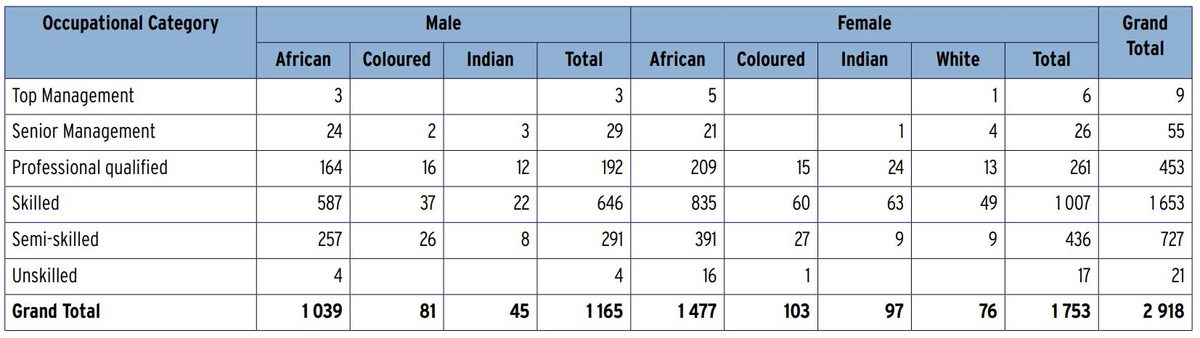
What stood out in the Road Accident Fund’s employment equity statistics is that white males were excluded.
This was the only race and gender group that was excluded, substantiating Le Roux’s view that white males ‘may not be mentioned in employment equity’.
The table below shows the Road Accident Fund’s Employment Equity reporting in its 2026 annual report.
The Road Accident Fund is in serious trouble
The Road Accident Fund (RAF) is a South African state-backed social security insurance scheme that provides compulsory cover to all users of South African roads.
It insures road users against injuries or death resulting from motor vehicle accidents caused by another party’s negligence.
The fund relies on a fuel levy, which drivers pay every time they fill up. This levy currently sits at R1.98 per litre of petrol or diesel.
Despite its importance, it has been plagued by governance crises, protracted legal battles, allegations of corruption, and operational breakdown.
Investigations by the Special Investigating Unit (SIU) uncovered severe vulnerabilities in RAF payment engines.
These problems included instances of duplicate payments, ghost claims, and unmonitored bank accounts.
The fund also faces a large backlog of unprocessed or litigated claims and owes South Africans R21 billion in unpaid claims.
These problems have caused financial distress at the RAF, with liabilities of R452.4 billion that vastly exceed its annual revenue. Simply put, it is technically insolvent.
The situation has reached such concerning levels that the Parliamentary Standing Committee on Public Accounts (SCOPA) launched an inquiry into the fund.
The SCOPA described the organisation as a train wreck characterised by financial leakage, governance failures, and administrative paralysis.



 Loading ...
Racists!!!!!!!!!!