
Bad news about South Africa


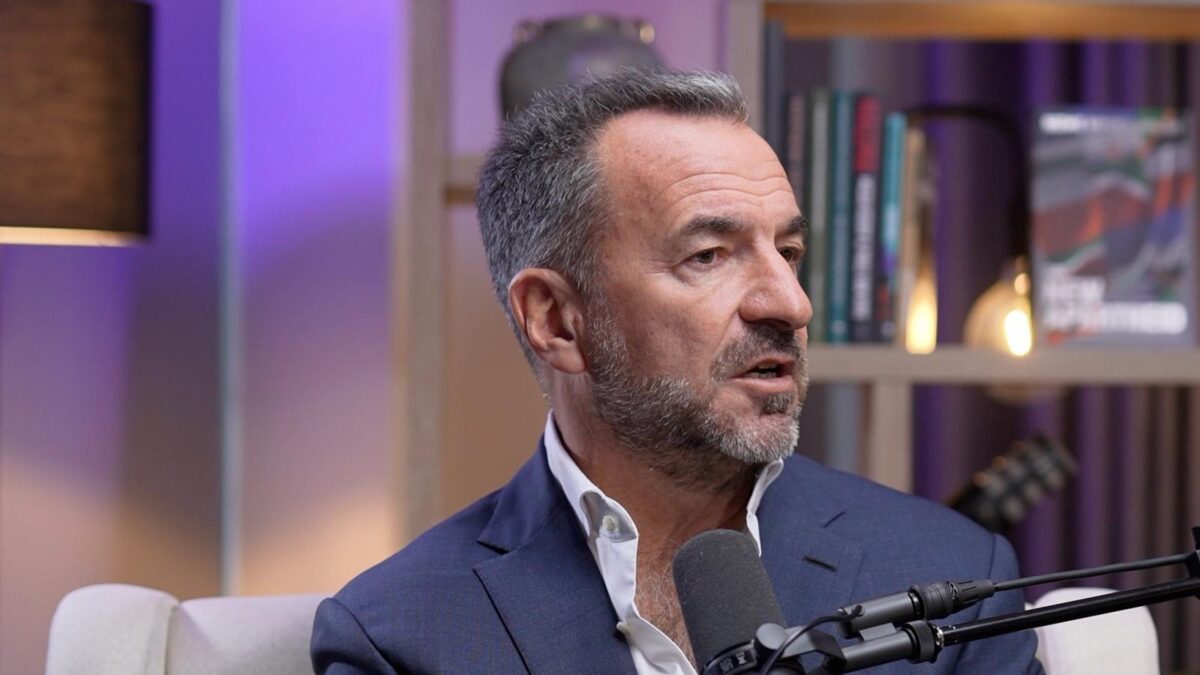
Business leader Colin Coleman said that South Africa’s new poverty figures and high inflation are worrying and signal problems in the economy.
He shared his views on South Africa’s political and economic trajectory in an interview on SMWX with Sizwe Mpofu-Walsh.
Coleman is a South African banker and academic who has held many senior leadership positions at top companies.
He was a partner of Goldman Sachs and served as chief executive of the company’s Sub-Saharan Africa operations until his retirement at the end of 2019.
He is also on the board of The Foschini Group, co-chairman of the Youth Employment Service, and a senior fellow with the Atlantic Council.
Coleman is an adjunct professor at Columbia Business School in New York, where he taught a course, “Doing business in Africa, the next Frontier of Global growth”.
He is recognised as an influential voice on national and African affairs, and has played a key role in events affecting South Africa and the continent.
He told SMWX that two things are particularly worrying about South Africa’s financial and economic trajectory.
The first is Statistics South Africa’s new poverty numbers, showing that over two-thirds of South Africans fall below the poverty line.
The second is that inflation came in higher than expected at around 5%. “Far from seeing green shoots, in many ways things seem to be going backwards,” he said.
He explained that for the African continent to prosper, you need Nigeria, South Africa, and Egypt to be the engines driving growth.
“Nigeria has undertaken structural reforms that are bearing fruit, and Egypt has been much more stable than naysayers predicted,” he said.
“However, South Africa is lagging behind due to our structural unemployment issue and our low-growth trap,” he said.
“On the economic front, we are bouncing along the bottom. It’s hard to imagine things getting much worse than 42% broad unemployment and 66% poverty,” he said.
He said that the continent and the country’s citizens need South Africa to break out. “We can only hope we find a way,” he said.
He praised the South African Reserve Bank for its good monetary policy management and for avoiding knee-jerk reactions.
“The fact that the Reserve Bank exercised caution, accounting for temporary oil price spikes rather than raising rates, shows sophisticated monetary policy management,” he said.
“Unfortunately, I wish I could say the same for our fiscal policy in South Africa. Our overall fiscal strategy and management continue to be a real concern.”








 Loading ...
World-class African economy.