
South Africa has a hidden R1 trillion sector that perfectly mirrors the formal economy


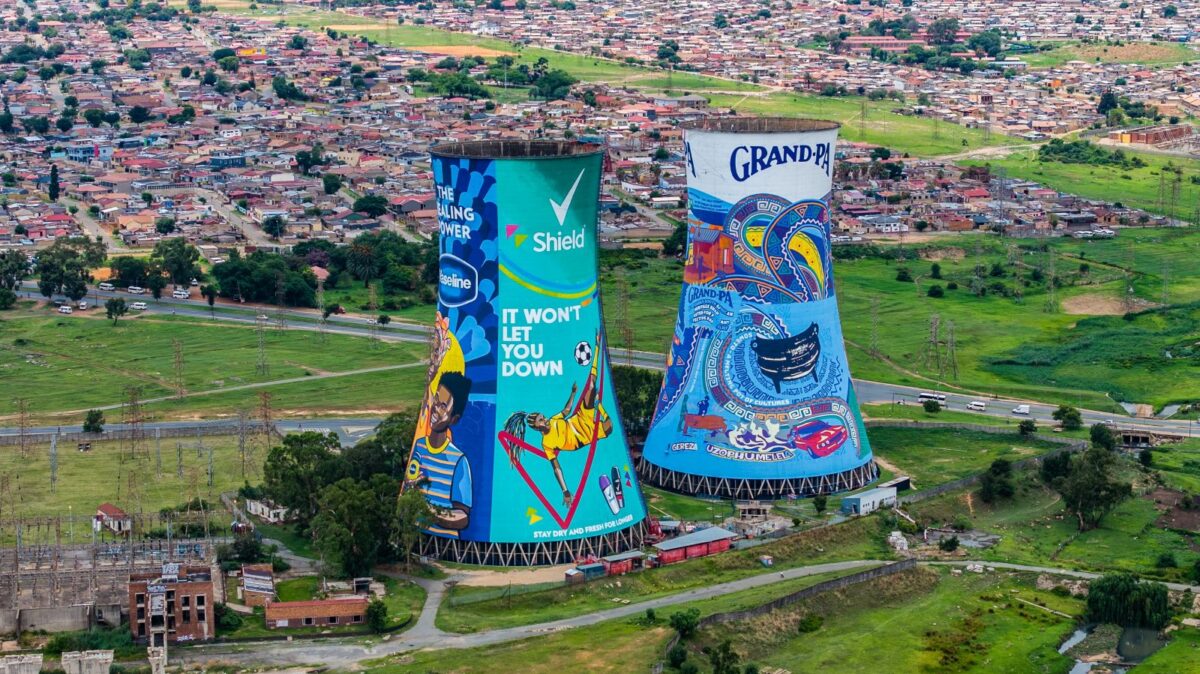
South Africa has a hidden R1 trillion economy where every business type in the formal economy is replicated in the township economy.
This is feedback from GG Alcock, who shared details about the township and informal economy in a discussion on The Common Sense podcast.
Alcock is a South African entrepreneur, author, and economic activist renowned for his deep insights into the country’s informal and township economies.
He is best known for demystifying township markets and advocating for the recognition of informal entrepreneurs as vital drivers of economic growth.
He said there is a misconception that the informal economy is unstructured, small-scale, unsophisticated, low-tech, and low-turnover.
Another mistake many people make is to think that the informal sector is only in the townships and rural areas.
“The informal sector is all around us. It’s in inner cities, it’s in suburbs, it’s in rural areas, as well as, obviously, the townships,” he said.
“It may be invisible, it may be misunderstood, it may be under-measured, but it is almost definitely not informal.”
He explained that it is a sophisticated business environment with an annual turnover of at least R1 trillion.
It consists of many smaller sectors, including the R90 billion-a-year fast-food sector and the R50 billion-a-year taxi industry.
There is also backroom rentals worth R30 billion a year, traditional herbal medicine worth R19 billion a year, and personal care and beauty worth R10 billion a year.
This informal economy is also growing much faster than the formal economy, which clearly illustrates its power.
The official unemployment rate is much lower than official figures
The informal economy has millions of workers, which are mostly not accounted for in official unemployment data.
Alcock said that the real unemployment figure, or lack of income, is closer to 12% to 15% than the government’s official figure of 33%.
“We have 25 million people in our labour force, so the percentages we get are a percentage of the labour force, not the total population,” he said.
“Stats SA says that out of those 25 million people, 8 million are unemployed. My argument is that closer to 2.5 million to 3 million are actually unemployed.”
He said if South Africa genuinely had 8 million people unemployed out of the 19.5 million households, half the households have someone unemployed.
“If that were true, how come township shopping centres are doing three times the trading density of shopping centres in the urban environment?” he asked.
His views are supported by data from former Capitec chief executive Gerrie Fourie, who said the 33% unemployment rate is a myth.
“South Africa’s unemployment rate is definitely not 33%, and nobody will convince me that it is 33%,” he said. “Our unemployment rate is actually between 10% and 15%.”
He explained that one problem is that people receiving social grants are asked whether they are employed or unemployed.
“The moment they say employed, they risk losing their grant. There is no way they are going to answer that they are employed,” Fourie said.
He explained that they have reviewed all of Capitec’s internal data for clients receiving social grants.
“When you compare their social grant income against their other income streams, their other income is actually about five times higher,” he said.
This clearly showed that social grant recipients who say they are unemployed have other sources of income, such as employment or a business.







 Loading ...
Just one question
If there are as many ’employed unemployed’ people as Fourie and Co say there are, why can’t SARS get them into the tax net, so that they also make a contribution to the cost of running the country and the provision of services that they get the benefit of. If Fourie & Co can find them and know who they are, why can’t SARS?