
Ramaphosa’s speech met with protests


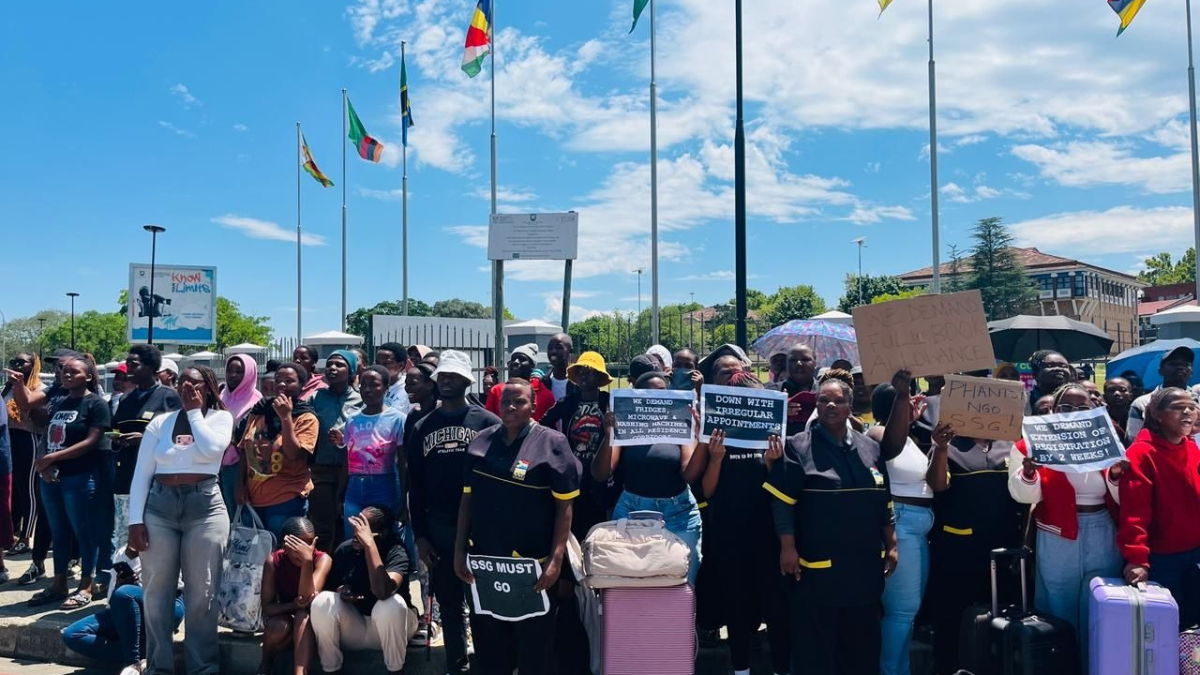
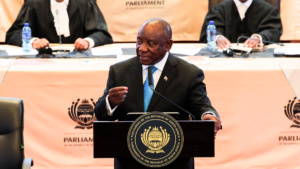
The State of the Nation Address (SONA), which took place on 12 February 2026, was met with multiple protests as groups sought to have their voices heard.
Protests took place merely metres away from Cape Town City Hall and started close to the time of SONA’s conclusion.
Students from the Cape Peninsula University of Technology (CPUT), Operation Dudula and the Stop the Farm Killings movement were among the protest groups.
Approximately 250 CPUT students were protesting the severe shortage of student accommodation and called for urgent measures to resolve the problem.
Tensions surrounding the situation have escalated significantly in the days leading up to SONA.
The protests originated approximately two weeks before SONA at CPUT’s District Six Campus.
On 7 February 2026, CPUT officially declared that its 16,200 campus-owned beds are at maximum capacity. Some students were left to sleep outside or in student centres.
No students currently have a “pending” status for on-campus housing; those without a placement must seek private accommodation immediately.
On the evening of SONA, protests moved from campus to the city hall in an attempt to catch the attention of President Ramaphosa and the national media.
Many protesters carried luggage and blankets to demonstrate their “unhoused” status to arriving dignitaries.
Students demanded that evictions resulting from NFSAS funding delays cease, particularly for those who meet the criteria for campus accommodation. This demand was made alongside the immediate need for housing.
While the President did address this problem in his speech, students are awaiting a response from the Minister of Higher Education, Buti Manamela.
A CPUT spokesperson stated that late Thursday evening, the Vice-Chancellor and senior staff met with individuals who had blocked city roads during the State of the Nation Address.
Before the meeting, the VC briefed the Minister of Higher Education on the university’s accommodation efforts.
Upon review, the spokesperson said that only five attendees were verified students needing accommodation; the rest dispersed.
CPUT will submit an evidence-based report on student accommodation efforts to the Department of Higher Education and conduct an internal investigation into potential breaches of the Student Code of Conduct.
Disciplinary action will be prioritised for any violations, they said.
Operation Dudula
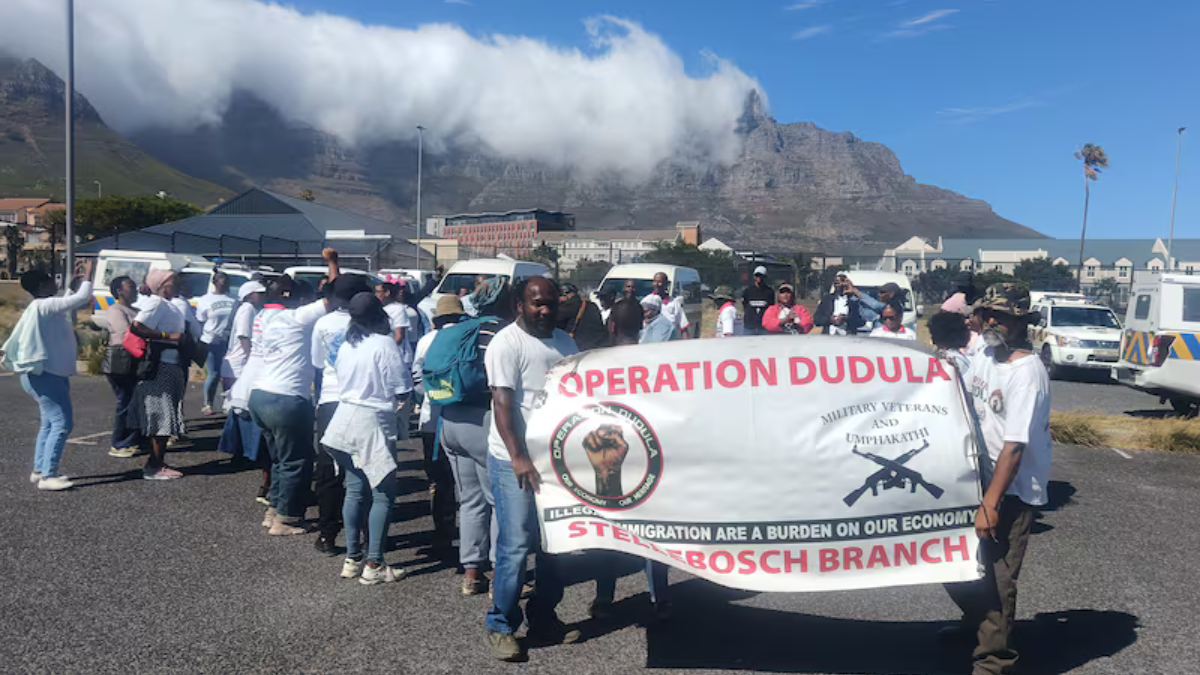
Operation Dudula members protested outside the SONA precinct to highlight their economic grievances and unemployment, which they attribute to illegal immigration.
The protest group, led by Secretary Zodwa Booi, demanded that the President address three “crisis” areas.
They lamented a dying economy and a record-high unemployment rate, which they believe existing government pledges have failed to address.
The schooling system was a primary target. The group demanded that South African children be prioritised for placement in public schools over foreign nationals.
Operation Dudula’s leader, Zandile Dabula, attributed the issues to the influx of foreign, especially undocumented, children enrolling in public schools.
Lastly, they called for improved services in townships and stricter regulations of foreign-owned spaza shops, alleging these shops sell hazardous goods.
The anti-immigration movement and registered political party emerged in 2021. The name, meaning ‘to force out’, reflects its core mission of campaigning against the presence of undocumented foreign nationals in South Africa.
In November 2025, the Gauteng High Court issued major ruling against the group, after attempted patrols at health facilities to prevent non-South Africans from receiving treatment.
The court declared that private citizens have no authority to demand identity documents or block access to public services.
The Chairperson of the Select Committee on Education, Science and Creative Industries, Makhi Feni, condemned the group’s actions in a media statement.
“Stopping foreign nationals from accessing healthcare services borders on illegality and serves no purpose. This is the basis upon which Operation Dudula needs to take stock of what legitimises their existence,” he said.
President Ramaphosa has previously denounced the group’s methods as ‘vigilante-like’ and illegal.
Stop Farm Killings
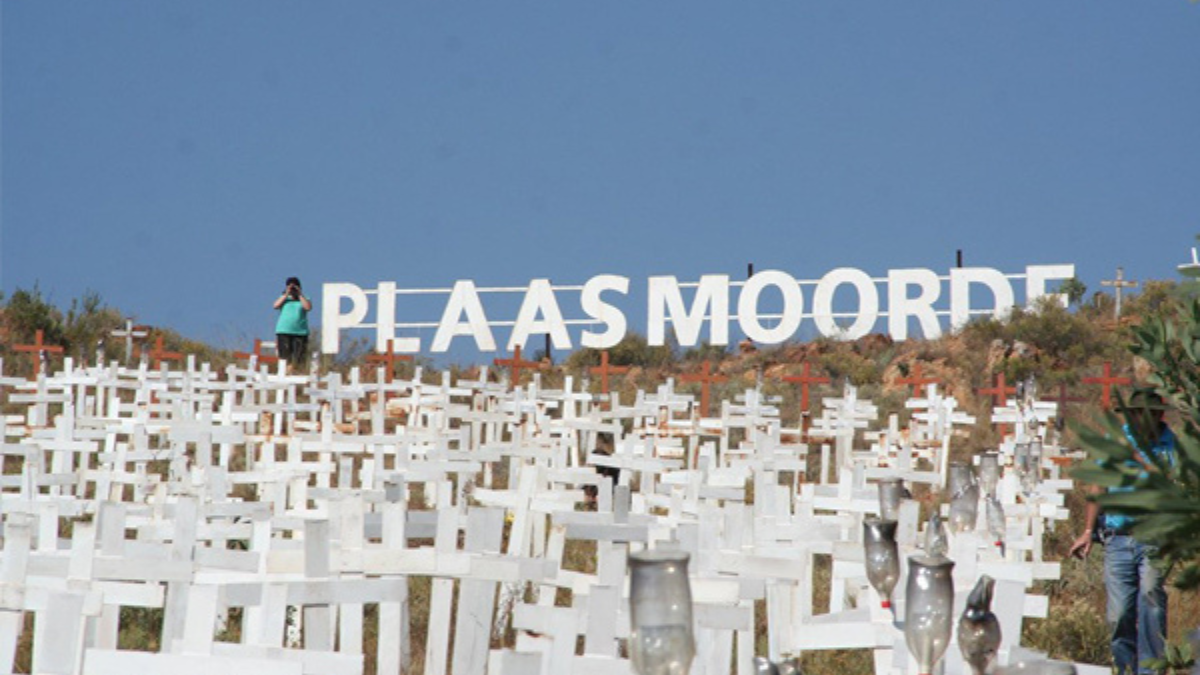
The Stop the Farm Killings (SFK) movement peacefully protested near Cape Town City Hall, demanding that the President acknowledge the “national crisis” of rural violence.
The group, led by Phakamile Sithole, accused the Presidency of intentionally minimising the severity of farm murders to avoid domestic political tension and international scrutiny.
Their primary demand is for farm attacks to be re-categorised as priority crimes, which would require more specialised police resources and investigative urgency.
SFK called for the reintroduction of dedicated rural policing units and increased support for private farm patrols.
The movement’s demands closely parallel those of the Democratic Alliance (DA). The DA has consistently advocated for two key measures: a Commission of Inquiry into farm murders and the creation of a dedicated Rural Safety Unit within the SAPS.
While President Ramaphosa highlighted the battle against organised crime and criminal syndicates in his speech, he did not introduce a distinct strategy to address farm murders.
Nevertheless, recent pressures have prompted the Minister of Agriculture, John Steenhuisen, to announce upcoming collaboration with the Acting Minister of Police, Prof Firoz Cachalia, to develop a comprehensive rural safety plan.
The group gathered alongside Operation Dudula during SONA. This protest followed a march on 10 February at the Union Buildings.
SFK is supported by multiple civil rights organisations and unions, including AfriForum and the African Farmers’ Association of South Africa (AFASA), and by political support from the Freedom Front Plus (FF+).
- By Zané Steyn for Newsday.









 Loading ...