
Afrikaner refugees struggling in the United States



A new investigation has exposed a stark contrast between the political promise of ‘safety’ for Afrikaans South African refugees and the grim reality they face upon arriving in the United States.
Following a Trump administration directive to prioritise Afrikaners as a ‘persecuted group’, over 1,600 have arrived in the US since May 2025.
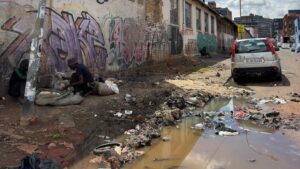
However, an investigation from The Free Press reveals that many of these newcomers are barely scraping by, languishing in cockroach-infested housing, facing food insecurity, and living in high-crime neighbourhoods due to systemic failures in the refugee resettlement process.
In February 2025, President Trump signed an executive order prioritising the resettlement of Afrikaners, citing them as “victims of unjust racial discrimination” in South Africa.
The South African government, primarily through the Department of International Relations and Cooperation (DIRCO), has consistently rejected the programme’s premise, labelling it “fundamentally flawed” and based on “discredited” narratives.
Despite the political contention, the first arrivals in May 2025 were filmed holding American flags with smiles on their faces, hopeful for a new life.
“Languishing” in squaller

According to the in-depth investigation by Madeleine Rowley, which included interviews with ten recent refugees, the government-funded nonprofits tasked with settling them have frequently placed families in unsafe, unsanitary conditions.
One refugee, a former farmer identified as Werner, arrived in Denver only to be placed in a “mouldy, dirty basement apartment” in an area rife with drugs and prostitution.
“There were people slumped over everywhere from using fentanyl and prostitution happening on the street corners,” Werner reported.
Another refugee in Michigan described being steered toward a suburb with a high crime rate, lamenting, “We come from a place where you have to grow a set of eyes on the back of your head, only to move to another unsafe place and be told by the locals you’re now in harm’s way”.
In other cases, refugees are stuck in motels for weeks. Rowley reported that a couple staying in a motel near Detroit walked through the snow to a diner for their only meal of the day because they lacked cooking facilities and winter coats.
The deeper problem

The root of the struggle often lies in the allocation of funds. Resettlement agencies get roughly $2,000 per refugee to cover immediate necessities.
However, refugees report that this money is often immediately exhausted by rent, leaving them with nothing for food, furniture, or transportation.
Because of this, some refugees are eating only one meal a day to save money.
The investigation highlights potential dysfunction within the network of non-profit agencies that hold government contracts to manage resettlement.
These organisations receive hundreds of millions of dollars in federal funding annually.
For example, the US Committee for Refugees and Immigrants (USCRI) spent over $351 million in federal funds in fiscal year 2024, yet refugees under their care report being placed in dangerous neighbourhoods.
When refugees request to be moved to safer housing, they are often told there is “no budget” or a funding shortage.
While the report focuses on the specific plight of Afrikaners, the findings suggest the issue may be widespread across the US refugee system.
The neighbour who assisted the South African family in North Carolina noted that a refugee family from Afghanistan previously living in the same home faced identical challenges.
In response to the allegations, the Office of Refugee Resettlement stated that they take all complaints seriously and that “every effort is made to provide refugees with safe and sanitary housing.”
Though they acknowledged that housing shortages sometimes necessitate temporary accommodations.






 Loading ...
Ja well no fine. Sometimes the terrible horrible “persecution” these *refugees” face at home is better than in Trump land of child rapists…..