
ANC tells members to be careful what they say after Lesufi’s hotel blunder


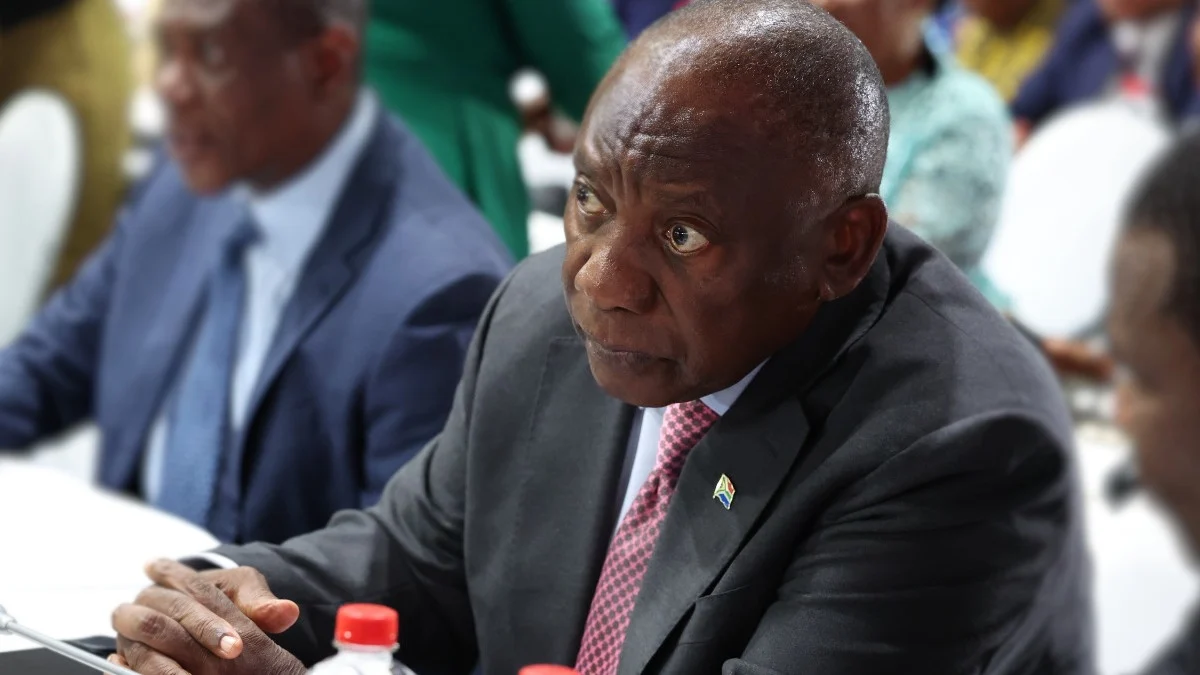
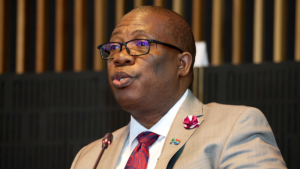
The African National Congress (ANC) has issued a rebuke of its Gauteng Premier, Panyaza Lesufi, after his recent comments caused widespread outrage.
The party says its public representatives should be careful about what they say and aware that they represent the party.
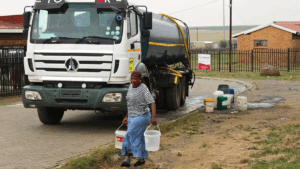
Briefing the media following widespread water outages in the province on 11 February, Lesufi told residents that he too feels their plight of prolonged dry taps, noting that he sometimes has to bathe in a hotel.
“People think that if there is no water, ourselves, our families, we’ve got special water. But we don’t!”
“In some instances, I had to go to a certain hotel so that I bath to go to my commitments. We also go through the same inconvenience like any other person,” he said.
The ANC said that it is now calling on its public representatives and deployees to “exercise disciplined, humble and people-centred communication.”
The party added that its values, enshrined in the Freedom Charter, include that of “servant leadership” and “closeness to the masses”, which should control its members’ conduct and utterances.
“Leaders must at all times reflect empathy, humility and accountability,” the party said. It said that even in the most difficult challenges, the character of the ANC must be evident through its leaders.
“The movement remains fully seized with addressing water infrastructure challenges through coordinated government action, while reminding all its leaders that true leadership is grounded in humility, responsibility and unwavering service to the people,” the ANC said.
“No harm intended”
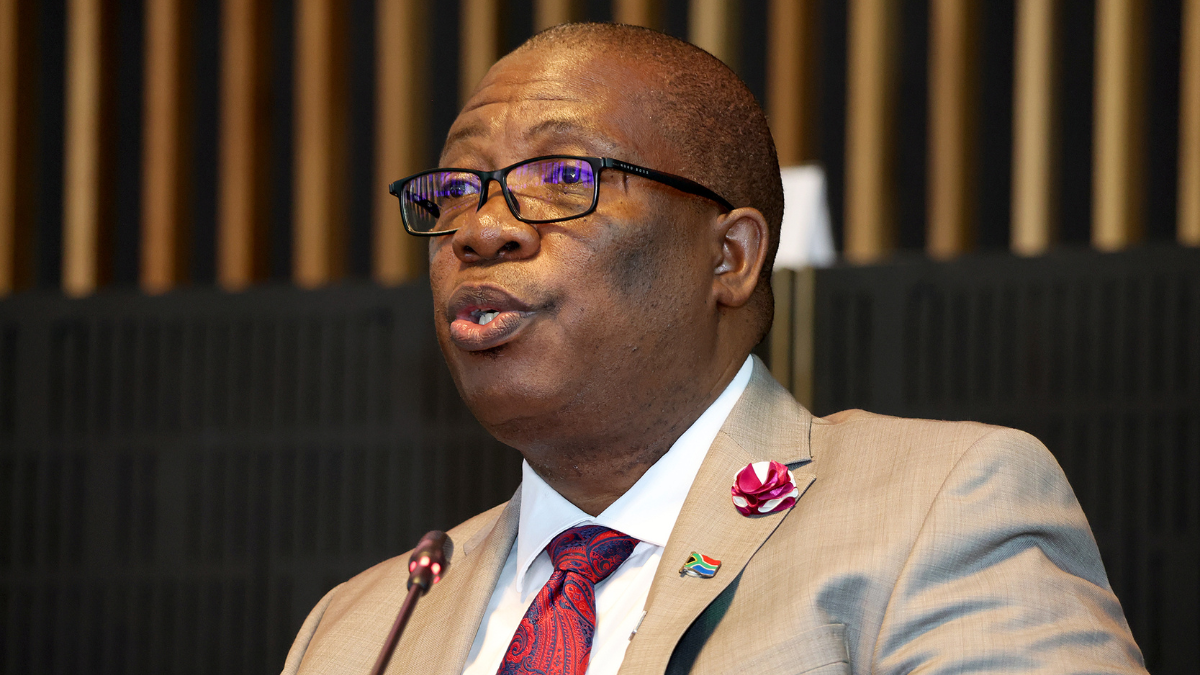
After the statement angered residents, some of whom have gone up to 24 days without water, Lesufi apologised, saying that there was “no harm intended.”
His spokesperson said that the comments “may have been interpreted in a manner that suggested that the impact of water challenges differs based on one’s position in society. This was never his intention.”
“The water challenges we are experiencing inconvenience everyone equally. No one is immune to the frustration and disruption caused by water shortages, and I regret any impression that suggested otherwise,” said Lesufi.
The ANC noted the apology, saying that “we appreciate the accountability demonstrated in correcting the record.”
The party said it wishes to emphasise that water shortages affect all residents, with the working class and the poor often bearing the greatest burden.
Lesufi said he is committed to collaborating with all levels of government, municipalities, and stakeholders to urgently address water infrastructure issues.
He added that resolving water challenges remains a top priority. This was as many Johannesburg residents took to the streets on 11 and 12 February to protest against weeks of dry taps.
While the province’s major dams are not empty, the crisis is being driven by a system under extreme strain, with water infrastructure struggling to keep up with demand and failing to reliably transport water from bulk supply points to households.
Authorities say that pressure has been intensified by overconsumption, particularly in Johannesburg, where daily water usage is estimated at around 1,750 megalitres.
However, critics argue that this figure is attempting to shift the blame to residents, when Johannesburg’s system loses over 45% of its supplied water to burst pipes, illegal connections and leaks.
Authorities have warned that this growing gap between consumption and available supply is pushing the system to breaking point, with ageing pipes, pumps and reservoirs unable to cope with sustained high demand.
The Gauteng water crisis
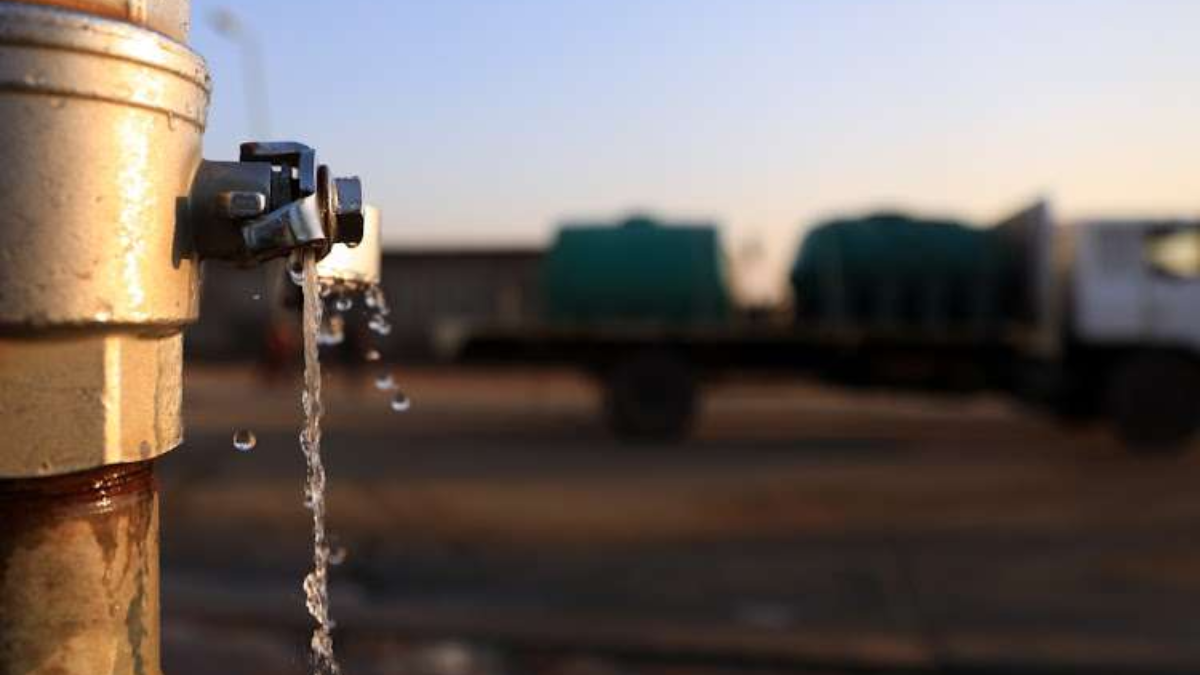
In several areas, including suburbs such as Brixton, Crosby and Hursthill, reservoirs have reportedly been running critically low or sitting empty for extended periods.
Adding to the crisis are allegations of deliberate sabotage linked to so-called “water tanker mafias”, accused of damaging infrastructure in order to profit from the delivery of emergency water supplies through tenders.
In a joint media briefing on February 11, national, provincial and municipal officials outlined immediate measures aimed at preventing a total collapse.
Deputy Minister of Water and Sanitation David Mahlobo announced that Gauteng would move toward “soft water restrictions”, including load shifting, a strategy similar to load shedding, where water is redirected from areas with stable reservoir levels to those facing critical shortages.
Johannesburg Mayor Dada Morero also confirmed that water pressure is being throttled at night, in an attempt to reduce water losses through leaks and allow reservoirs time to recover.
The government has acknowledged that the crisis reflects deeper long-term problems linked to underinvestment in infrastructure.
Water and Sanitation Minister Pemmy Majodina claimed that South Africa requires at least R400 billion to address the country’s municipal water infrastructure backlog.
The City of Johannesburg indicated that new reservoirs and pump stations are being developed in areas including Midrand and Brixton.









 Loading ...