
How the police ‘saved South Africa’s 2010 FIFA World Cup’



Over the past few months, South Africans have seen their criminal justice system and policing structures bombarded by allegations of corruption and criminality.
While most testimonies in the ongoing investigations further elucidate the level of criminality within the country’s policing structures, there are a few revelations that provide some respite to the nation.
One of these was how the police “saved” the country’s 2010 FIFA World Cup, according to former Police Minister Bheki Cele.
“Without the South African Police Service (SAPS), there would be no 2010 FIFA World Cup in South Africa,” he told Parliament’s ad hoc committee investigating the allegations made by General Nhlanhla Mkhwanazi in July.
Cele, who was the SAPS National Commissioner between 2009 and 2011, was telling the committee about his first experience working with General Mkhwanazi.
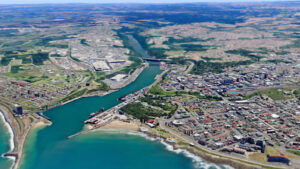
He said that he was in Gqeberha when he received a call from South African Football Association (SAFA) president Danny Jordaan.
The SAFA boss’s instruction was that the two needed to meet urgently regarding the upcoming international football tournament. “He told me there is a crisis coming on and asked if I could see him immediately,” Cele explained.
“I immediately flew to OR Tambo Airport, where I met him. He was with Jérôme Valcke, who was the secretary-general of FIFA. There was a problem that the World Cup was being taken away from South Africa,” he said.
Cele explained that there had been a clash between Valcke and FIFA President Sepp Blatter over whether South Africa was fit to host the tournament, given the rampant levels of crime.
As a result, two countries, Australia and Germany, volunteered to host the World Cup should the opportunity be taken away from South Africa.
“So we spoke to the President, and it was decided that I assemble a team of police generals to go to Zurich and present to FIFA how South Africa would host a safe World Cup,” Cele said.
Most of the team comprised police generals. However, Cele said there were three brigadiers, a lower rank than general, who went along to Zurich.
One of these brigadiers was Mkhwanazi, who was responsible for the country’s Operational Response Services, a division tasked with high-risk and rapid-response policing functions nationwide.
“When we made the presentation in Zurich, most countries were saying that they were not going to come to South Africa for the World Cup. The people who were leading that rebellion were British,” Cele said.
“We then had to fly to Lyon in France to convince the International Police (Interpol) to say that it is safe to come to South Africa. This was to make sure that Interpol also pushed our campaign.”
“That’s how we managed to work on the 2010 World Cup coming to South Africa.”
R1.3 billion spent on policing

Thirty-two nations from across the globe participated in the 2010 edition of the FIFA World Cup.
A total of 3.18 million football fans attended the 64 matches across South Africa, making it the third-highest attended World Cup at the time.
As part of the police deployment for the event, SAPS incorporated 40,000 recruits into its ranks. However, it still required assistance from neighbouring countries, which reportedly sent reinforcements to augment its capacity.
SAPS also established an international police operations centre in Pretoria, which hosted police officials from various neighbouring and participating countries.
All in all, the safety and policing of the event cost South Africa R1.3 billion.
According to a Sunday Times report, the Police Minister at the time, the late Nathi Mthethwa, stated that R665 million had been allocated for equipment, including helicopters and 100 BMW highway patrol cars.
R640 million was spent to deploy 41,000 officers. Mthethwa said that the entire police and defence force would need to be on full alert for the period, meaning all leave had to be cancelled.


 Loading ...