
Zuma back in court to escape corruption charges



After a six-month break and two decades of delays, the trial against Former President Zuma and French arms company Thales is set to resume today in the Pietermaritzburg High Court.
This will be the former president’s latest attempt to prevent the court from proceeding with the arms-deal corruption case.
Thales and Zuma will be applying for leave to appeal a judgment handed down in June, which dismissed their application to halt the prosecution and be acquitted of the charges.
The High Court will also hear the National Prosecuting Authority’s (NPA’s) application to proceed with the case despite the pending applications.
The court proceedings will take place over two days, where Zuma will be supported by uMkhonto WeSizwe (MK) party members and constituents.
The party said on social media that the case is “no longer just a legal process; it is a political battlefield.”
The Arms Deal, a R30 billion military procurement, involved purchasing fighter jets, submarines, frigates, and helicopters from international suppliers, primarily European companies such as BAE Systems, Saab, and Thales.
The former president is accused of, among other things, attempting to receive bribes through convicted Schabir Shaik to shield Thales from investigation.
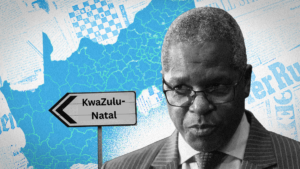
Zuma and Thales’s application, however, is unlikely to succeed, as the June judgment handed down by the KwaZulu-Natal High Court ruled that it is not within the power of the judiciary to stop a prosecution before it begins.
Judge Nkosinathi Emmanuel Chili said that the prosecution of an accused person is “the prerogative of the state” and according to Section 6 of the Criminal Procedure Act, the power to withdraw a charge or stop the prosecution lies only with the state.
Overturning the ruling would rely on the Pietermaritzburg court reinterpreting the act.
Decades of delays

Zuma’s attempt to have the charges against him dropped depends entirely on the success of Thales’s initial application.
The KwaZulu-Natal High Court dismissed Thales’s argument that the deaths of two witnesses, Pierre Moynot and Alain Thetard, have caused “irreparable or insurmountable trial prejudice” warranting the halting of the trial.
Judge Chili stated that this loss of evidence does not constitute unfairness and noted that in 2018, Thales mentioned Thétard refused to testify and would not travel to South Africa or provide assistance in any way.
“In the present application, Thales has now adopted a different stance altogether. It now states that had Mr Thétard been alive, he would have been an invaluable witness for the defence,” said Chili.
The KwaZulu-Natal Court therefore found no grounds to halt the prosecution of Thales, and subsequently, Zuma.
First charged in 2005, Zuma avoided trial for years through legal challenges and political backing within the majority ANC.
On 28 April 2016, the Supreme Court of Appeals reinstated corruption charges against Zuma, ruling the decision to drop them irrational.
They said that dropping the charges in 2009, the year Zuma was inaugurated as President, was “irrational.”
It reaffirmed the counts of corruption, fraud, racketeering, and money laundering, linked to 783 alleged illegal payments.
Timeline highlights:
- 2005: Zuma first charged
- 2009: Charges dropped
- 2016: High Court orders reinstatement
- 2018: Zuma charged again, two months after resigning as president.
Zuma’s criminal trial in this case has been delayed for twenty years, with the NPA accusing him of “serial abuse” of court processes through repeated appeals.
The NPA has consistently said that it is pressing ahead with Zuma’s criminal trial.
The agency contends that additional delays damage public interest in resolving a case that has cost taxpayers millions and exposed systemic corruption.









 Loading ...
He’s like Teflon this showerhead man … with unlimited legal resources. This case will never see the light of day; I’m going to use his methodology for my next Aarto infringement notice.