
South Africa’s former top company goes from hero to zero


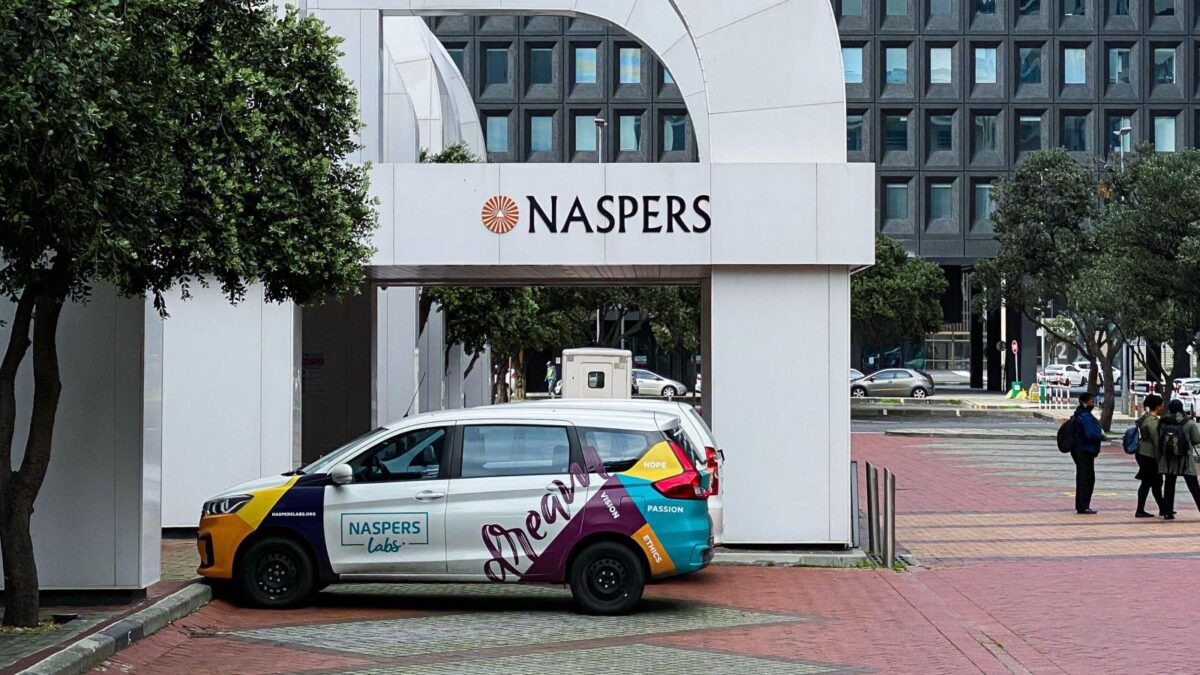
Naspers, which used to be South Africa’s largest company, has lost R420 billion in value over the last year.
Naspers was founded in 1915 as Die Nasionale Pers, a publisher and printer of newspapers, magazines, and books.
The company was listed on the Johannesburg Stock Exchange (JSE) in 1994, from where it transformed into a global internet group.
It invested in numerous technology companies, with a strong focus on China. One of these investments was a 2001 purchase of a 46.5% stake in Tencent for $32 million.
This turned out to be one of the best investments in history. Tencent grew into one of the world’s largest technology companies, making Naspers an investment powerhouse.
Naspers’ growth tracked Tencent’s, and between 2001 and 2025, it was among the best-performing shares on the JSE.
To put its growth in perspective, a R1,000 investment in Naspers in 2001 would be worth R1.6 million at its peak in 2025.
The company continued to invest in technology businesses across the globe, including Takealot, OLX, Delivery Hero, PayU, Stack Overflow, and Udemy.
In September 2019, Naspers unbundled its global consumer internet portfolio into Prosus to reduce its market discount to its net asset value (NAV).
This did not work, and in August 2021, Prosus launched a voluntary share exchange offer to acquire Naspers N ordinary shares.
In September 2023, following shareholder approval, Naspers and Prosus unwound the complex cross-holding structure to simplify ownership and improve liquidity.
Today, the Naspers group is organised into two areas: its media and internet interests in South Africa, and through Prosus, its international internet interests.
In South Africa, Naspers is one of the foremost investors in the technology sector. These include Takealot, Mr D Food, AutoTrader, Property24, Media24, and PayU.
Naspers goes from hero to zero
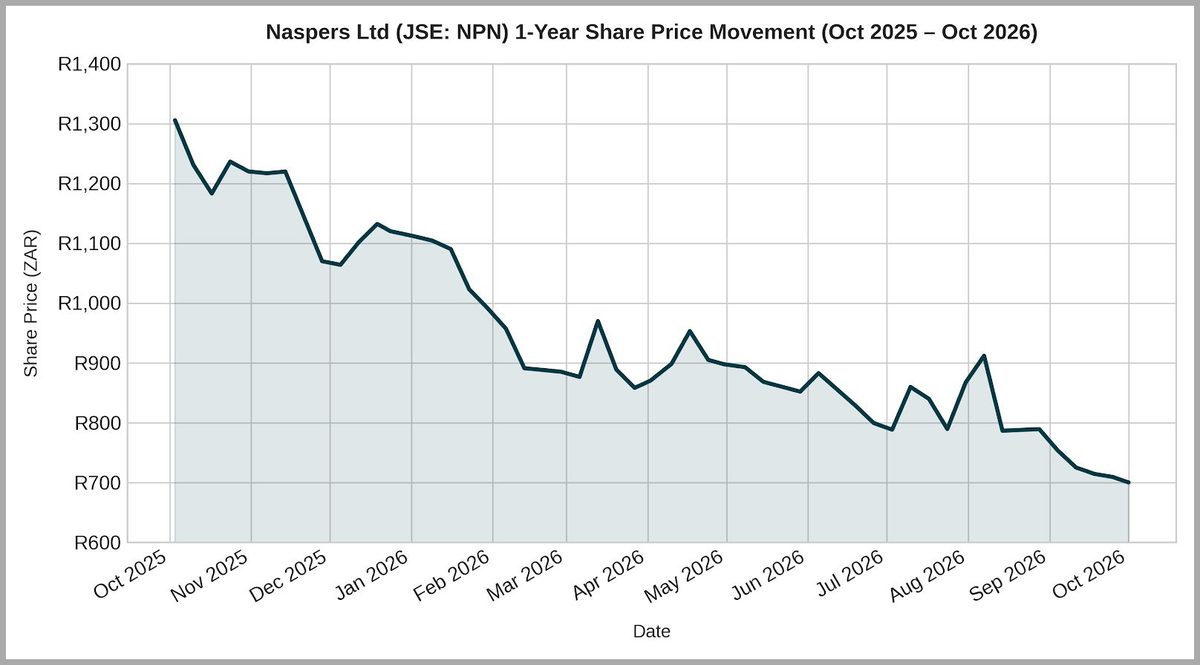
Naspers’ share price peaked at over R1,305 per share in October 2025, which pushed its market cap close to R1 trillion.
However, since then, the Naspers share price has declined by 46%, wiping R420 billion of the company’s market cap.
This decline was driven by a combination of global tech valuation adjustments, concerns surrounding Tencent, and corporate updates.
Investors have voiced concerns regarding Tencent’s aggressive capital expenditure on artificial intelligence infrastructure and compute capabilities.
Broader economic drag in China and regulatory cautiousness across tech platforms have periodically weighed on Tencent’s valuation.
Comments from leadership on investment priorities and a reduced near-term earnings outlook for core assets also triggered selling pressure in Naspers.
Analysts from FNB highlighted that Tencent remains the biggest single risk, as it is discounting significant growth potential.
Any earnings miss could see weakness in the Prosus share price, which, in turn, will affect the Naspers share price.
Despite the tough twelve months, many analysts, including those from FNB, believe there is significant upside in Naspers.
“The company trades at a deep discount to its underlying value. Management is actively taking steps to address the size of the discount,” FNB said.
Naspers’ has also reshaped its strategy to focus on exceptional performance in its ecosystems, concentrated in regions with the greatest growth potential.
“We like the new portfolio management approach from management. Corporate action in the core portfolio can result in a step change in growth,” they say.
Should these returns start to materialise, investors can start to see Naspers trade less like a Tencent proxy and more on its own merits.
“We believe there are significant growth opportunities for several of the group’s assets, as was the case previously with Tencent and Delivery Hero,” they said.









 Loading ...
When Koos Bekker announced they were selling some of the Tencent shares to free up money for building these new hotels of his, I became nervous. It is always concerning if a founding member sells some of the Tencent shares.